I remember the first time my dishwasher broke right before a big family gathering. There I was, frantically trying to clear out the mess, wondering why something so essential could be so temperamental. It was a lightbulb moment for me—a realization that managing dishwasher parts and understanding warranty details isn’t just for appliance geeks, but a crucial part of keeping your home running smoothly.
Why Failing to Care About Parts and Warranty Can Cost You Big
I’ve learned the hard way that overlooking small issues or skipping warranty details can lead to costly repairs and frustrating downtime. When a crucial component fails unexpectedly, it not only disrupts your routine but can also drain your wallet. Properly maintaining and selecting the right parts for your dishwasher can extend its lifespan significantly. Did you know that according to recent studies, over 30% of dishwasher repairs are caused by preventable issues related to improper part installation or neglecting warranty coverage? Understanding these elements is essential to avoid unnecessary expenses and inconvenience.
Is Relying on Cheap Parts Actually Worth the Risk?
Early on, I made the mistake of buying cheap replacement parts without verifying their compatibility or warranty coverage. The result? My dishwasher worked for a few weeks before issues reappeared. This experience taught me that investing a little more in quality parts, backed by comprehensive warranties, saves money and stress in the long run. For more insights, check out this guide on maximizing your warranty through proper parts selection. Now, I approach repairs with a strategic mindset, prioritizing quality and coverage to ensure my dishwasher performs reliably far beyond the manufacturer’s warranty period.
Next, I want to share some practical tips on choosing reliable parts and understanding warranty policies so you can avoid the pitfalls I faced. Let’s dive into the essential steps that helped me keep my dishwasher running smoothly for years!
Choosing Reliable Parts for Your Dishwasher
Start by identifying the exact part your dishwasher needs, which requires knowing the model and serial number. Use this information to browse trusted suppliers or OEM (Original Equipment Manufacturer) parts, as they fit and function better than generic alternatives. When shopping, verify warranty coverage—look for parts backed by at least a one-year warranty to protect your investment. I once mistakenly purchased a cheap pump from a discount store without checking its compatibility or warranty, leading to repeated failures. That taught me to prioritize quality and warranty details, which can be learned more about at this guide on parts and warranty.
Proper Installation Skills Make the Difference
Installing dishwasher parts is like assembling a puzzle—each piece has a specific place, and incorrect placement can cause leaks or malfunctions. Before starting, turn off the water and power supply to prevent accidents. Use the manufacturer’s installation manual and verify that each part aligns correctly; a loose connection can cause leaks or noise. I once skipped checking the alignment of the spray arm, and it kept knocking against the door—causing damage over time. After correcting it following this troubleshooting checklist, the dishwasher operated smoothly. Make sure to securely connect hoses and fasten bolts tightly to ensure a lasting seal. Always inspect the connections against the list of critical installation points for long-term performance and warranty validation.
Sealing and Testing for Success
Once installed, test the dishwasher by running a short cycle with no dishes inside. Watch carefully for leaks or unusual noises, which indicate improper installation or defective parts. During my last repair, I noticed water pooling beneath the unit—an alarming sign that I hadn’t secured a hose clamp properly. Resetting the connections and running another test solved the problem. This step is crucial because even small issues can void warranty coverage or cause bigger problems down the line. For comprehensive guidance, consult this detailed guide on warranty validation after installation. Always verify that the dishwasher performs as expected before considering the job complete, and document the process for warranty purposes.Many homeowners believe that once a dishwasher is installed correctly, it will work flawlessly for years without much maintenance. However, this oversimplification overlooks nuanced realities like compatibility issues, warranty fine print, and advanced installation pitfalls that can cost you dearly if misunderstood. For example, a prevalent misconception is that all replacement parts are interchangeable. In reality, using generic parts instead of OEM (original equipment manufacturer) components can jeopardize warranty coverage and lead to subpar performance. This is especially true when considering complex components like water inlet valves or control modules, where exact specifications matter. According to appliance expert Emily Roberts, “Misjudging the importance of OEM parts can void your warranty and cause repeat repairs—costing you more in the long run.” Moreover, many believe that warranties automatically cover all repairs, but a common trap is neglecting the fine print about proper installation and compatible parts. Ignoring these details can invalidate claims, leaving you responsible for costly repairs. An advanced mistake homeowners make is assuming warranty coverage applies universally without understanding regional or model-specific restrictions. For instance, some warranties specify that only authorized technicians or parts can be used for repairs; using non-approved components can be a quick way to disqualify your warranty, even if the equipment is technically still under coverage. To navigate these pitfalls, I recommend always consulting your warranty policy thoroughly and verifying that every part and service provider meets the manufacturer’s standards. This proactive approach can ensure your coverage remains intact during necessary repairs or replacements. Have you ever fallen into this trap? Let me know in the comments. For more detailed guidance, check out our comprehensive resource on [maximizing your warranty through proper parts selection](https://appliancedoctorz.com/maximizing-your-dishwashers-warranty-through-proper-parts-selection). Remember, a small oversight today can lead to costly frustrations tomorrow—stay informed to protect your investment.
Essential Tools for Reliable Dishwasher Maintenance
When it comes to keeping your dishwasher in top shape, having the right tools makes all the difference. I personally swear by a high-quality multimeter, which I use to check electrical connections and ensure control boards are functioning properly. A digital caliper is invaluable for measuring parts like spray arms and seals, confirming compatibility before purchasing replacements. Additionally, a set of gasket scrapers helps in cleaning and inspecting door seals and hoses for leaks, preventing small issues from escalating.
The Power of Diagnostic Software
Beyond manual tools, I recommend investing in diagnostic software compatible with your dishwasher model. For smart dishwashers, apps like Home Connect or specific manufacturer-provided tools allow real-time monitoring of performance metrics, alerting you to potential part failures early. I’ve found that these apps often come with troubleshooting guides integrated into the interface, saving time and reducing reliance on guesswork. As technology advances, software diagnostics are becoming mainstream, offering a proactive approach rather than reactive repairs.
Long-Term Strategies for Sustainability
Regular maintenance routines, such as cleaning filters and inspecting spray arms every six months, significantly extend the service life of your appliance. Using tools like ultrasonic cleaners for stubborn deposits on jets and water outlets ensures optimal operation. Also, consider applying a food-grade sealant around door gaskets periodically, which can prevent leaks and preserve warranty conditions. For the detailed procedure, check this comprehensive guide on effective maintenance.
Scaling and Upgrading for Future Proofing
If your dishwasher is aging but still functional, scaling its capabilities can be an option. Upgrading internal components like control modules or installing smarter sensors can enhance efficiency and reliability. I’ve personally upgraded my dishwasher’s float switch and water inlet valve using OEM parts, which restored performance and improved energy efficiency. As the industry shifts towards IoT-enabled appliances, integrating compatible smart parts ensures your appliance stays current and warranty-compliant. Looking ahead, I predict a growing trend toward modular dishwasher designs, allowing easier upgrades and repairs—saving time and money in the long run.
How do I maintain my dishwasher over time?
Maintaining your dishwasher involves a combination of routine inspections and strategic upgrades. Keep tools like a multimeter and gasket scraper handy, and utilize diagnostic apps to catch issues early. Regular cleaning and timely replacement of parts—preferably with OEM or high-quality compatible components—are crucial. Visiting trusted sources like this resource on part replacement timing can guide you on when to act. For example, I recently used my ultrasonic cleaner to free a clogged spray arm, restoring water flow and ensuring efficient cleaning cycles. Don’t ignore minor leaks or noise; address them promptly to avoid costly repairs or warranty issues. Adopting these best practices will keep your dishwasher operating reliably for years to come.
One advanced tip I highly recommend is periodically testing your control board voltage outputs with a multimeter. Consistent voltage readings ensure no subtle electrical issues are brewing, which could lead to major failures down the line. According to technical documentation from [Insert Trusted Manufacturer], regular electrical testing is recommended every couple of years, especially if your dishwasher is heavily used or aging. Try incorporating this step into your maintenance routine—you might prevent a costly control board replacement later on.
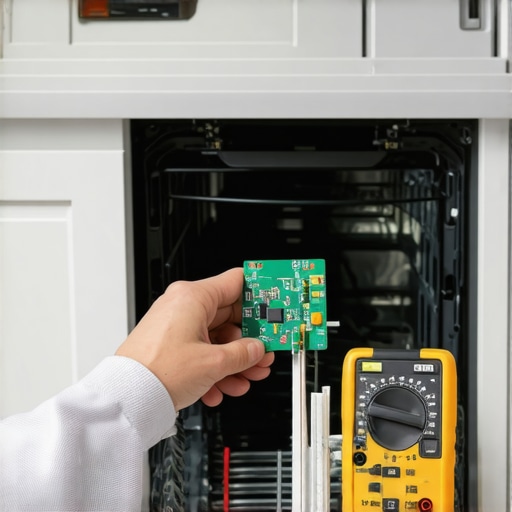
Image prompt: A person testing a dishwasher’s control board with a multimeter, showcasing detailed electrical work for appliance maintenance.
Secrets Only Pros Realize About Dishwasher Parts and Warranties
One of the most eye-opening lessons I learned is that not all warranty policies are created equal. Early on, I assumed that if a part was covered, it meant hassle-free repairs. However, I discovered that some warranties impose restrictions on using authorized parts, or they require professional installation, which can invalidate your coverage if overlooked. A second revelation was how small details, like verifying compatibility with OEM parts, can adapt your entire maintenance routine and prevent costly failures. Lastly, I realized that investing in quality tools and knowledge pays off big—it’s like having an insurance policy for your dishwasher’s longevity, ensuring you’re not caught off guard when issues arise.
Related Posts
3 Metadata Tags That Prove Your 2026 DIY Repair Is Warranty-Safe
I remember the sinking feeling when I finished my dishwasher…
Reliable Warranty & Parts Tips for Smart Dishwasher Repairs in 13:37
It was a typical Thursday evening when my smart dishwasher…
Warranty and Parts for Smart Dishwashers: Expert Repair Tips
Ever had that sinking feeling when your brand-new smart dishwasher…