
There I was, mid-week chaos in my kitchen, and suddenly, I open my dishwasher only to find the door refusing to stay shut. It was that frustrating moment when you realize a simple part — like the door cable — has failed, turning an everyday task into a troubleshooting nightmare. Has that ever happened to you? That sinking feeling that your trusty dishwasher might be on its last legs, just when you need it most? Well, let me tell you, I’ve been there, and I’ve learned a game-changing trick that can get your dishwasher back in action in less than 20 minutes.
Why a Broken Dishwasher Door Cable Can Ruin Your Day
A malfunctioning door cable isn’t just a minor nuisance; it’s a bottleneck that prevents your dishwasher from completing its cycle and can even cause leaks or further damage if ignored. The good news? Replacing this tiny component doesn’t require a professional’s help or expensive tools. If you’re tired of calling in service techs for small issues, I’ll show you how to handle it yourself, swiftly and successfully.
What Makes Replacing a Door Cable Worth Your Time?
Many folks overlook the importance of understanding dishwasher parts. Did you know that knowing the purpose of parts like the door cable can prolong your appliance’s lifespan? Visit this guide to learn more about essential components. I’ll share my tips from personal experience on how to replace the cable quickly, avoiding common mistakes early on, such as reassembling parts incorrectly, which can lead to more issues down the line.
So, if your dishwasher door isn’t latching properly or is sagging, don’t rush to replace the entire unit. With a few tools and some basic instructions, you can fix this in a fraction of the time, saving you money and avoiding the frustration of waiting for a repair appointment.
Ready to troubleshoot and fix your dishwasher door? Let’s get started and restore order to your kitchen!
Gather Essential Tools and Parts
Start by collecting a Phillips-head screwdriver, a pair of pliers, a new door cable compatible with your dishwasher model, and a clean cloth. Remember, using the correct replacement part is crucial; consult the manufacturer’s guide or visit this resource for part specifications. I once attempted a repair with a generic cable and ended up with mismatched fittings, delaying my repair and causing frustration. Double-check part numbers before proceeding.
Disconnect Power and Water Supplies
Always unplug the dishwasher or turn off the circuit breaker to prevent electrical shock. Shut off the water supply to avoid leaks during disassembly. This step might seem obvious, but neglecting it led me to a small flood once when I overlooked the water valve. Use a damp cloth to wipe any residual moisture around the door area for safety and cleanliness.
Access the Door Components
Remove the screws securing the inner door panel using your screwdriver. Carefully detach the panel, exposing the door cable and associated pulleys. Be mindful of the wires connected to the door lock switch; disconnect them if necessary. During my first attempt, I forgot to note wire positions, which made reassembly confusing. Take photos or make notes as you go.
Remove and Replace the Cable
Locate the damaged door cable—a frayed or slack cable indicates failure. Use pliers to detach the cable from pulleys and hooks. Loosen any tension mechanisms carefully to prevent additional damage. When I did this messy step, the cable snapped, but I managed to retrieve the broken end, preventing further mishaps. Install the new cable by reversing these steps, ensuring it is routed correctly along the pulleys and hooks.
Ensure Proper Tension and Alignment
Adjust the cable tension so that the door latch functions smoothly without excess slack. Proper alignment prevents the door from sagging or latching improperly. I tested this by manually opening and shutting the door several times, watching for smooth operation. Misalignment resulted in a door that wouldn’t stay shut, so pay close attention here. For detailed guidance, check this article.
Reassemble and Test
Secure the inner door panel with screws, reconnect any disconnected wires, and restore the water and power supplies. Before running a full cycle, do a test run with the door open to check if the latch engages correctly and the cable pulls smoothly. I once forgot to tighten a screw, which caused the door to misalign during operation, so double-check all fastenings. Observe the door’s movement and listen for unusual noises.
Final Inspection and Maintenance Tips
After confirming the repair’s success, wipe down the door and surrounding area to remove any debris. Regularly inspect the door cable and pulleys for signs of wear, especially if your dishwasher is several years old. Replacing components proactively can extend your appliance’s lifespan, saving money and preventing future breakdowns.
Remember, when in doubt, consulting detailed guides like this resource can help ensure your fix is durable. A well-maintained door cable not only restores your dishwasher’s function but also preserves the integrity of the entire unit.
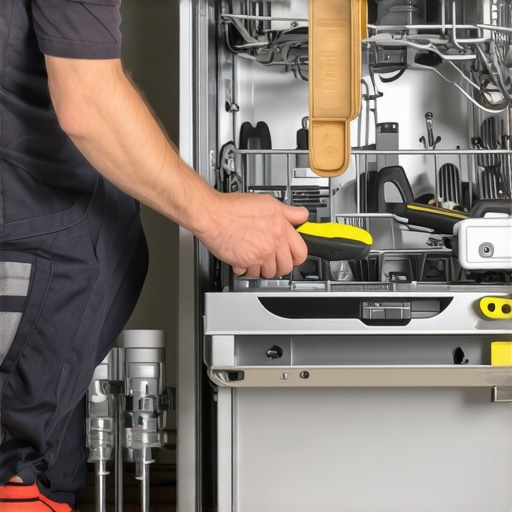 Many homeowners assume that all parts of a dishwasher are created equal when it comes to repairs and warranties, but this is a dangerous oversimplification. In my experience, one common misconception is believing that generic replacement parts are just as good as OEM (Original Equipment Manufacturer) components. While it might seem cost-effective, using non-standard parts can void your warranty or lead to more frequent breakdowns. According to appliance expert sources, OEM parts are designed to meet strict quality standards, ensuring compatibility and durability—see this comprehensive guide on understanding dishwasher parts. Why does this matter? Because a cheap imitation may look similar but can fail prematurely or damage other components, resulting in costly repairs or warranty denials. Another nuance many overlook is the critical importance of proper installation. For example, installing a dishwasher without correctly securing water supply lines or not verifying the grounding connection can lead to electrical shorts or leaks that scare even seasoned DIYers. This minor oversight can invalidate warranty claims, as highlighted in installation checklist tips. Advanced troubleshooting also hinges on understanding detailed diagnostic signals. For instance, when a dishwasher displays error codes, it’s tempting to replace parts based on assumptions. However, many times, the real issue stems from overlooked factors like clogged filters or faulty float switches. Dive into diagnosing during warranty periods to get better at pinpointing actual problems. One ‘oops’ you definitely want to avoid is neglecting to verify the compatibility of parts before purchase; mismatched fittings may seem minor but can compromise seals or lead to leaks, damaging your floor and ruining your warranty eligibility. Don’t learn this lesson the hard way—double-check part numbers or consult manufacturer guides beforehand.
How can advanced diagnostic knowledge prevent costly mistakes?
Leveraging detailed error logs and understanding manufacturer specifications empower you to make informed decisions, reducing unnecessary part replacements and downgrade risks of warranty problems. Studies, such as those cited in warranty coverage guides, show that well-informed DIYers have higher success rates in warranty claims and long-term appliance health. Remember, the devil is in the details—deciphering error codes, choosing quality parts, and ensuring proper installation are key to a trouble-free dishwasher experience. Have you ever fallen into this trap? Let me know in the comments.
Invest in Quality Diagnostic Tools for Longevity
One of the best investments I made was purchasing a digital multimeter capable of testing continuity and resistance in heating elements and sensors. I personally rely on the Fluke 115 True-RMS Digital Multimeter because of its precision and durability. Accurate diagnostics save time and prevent costly part replacements. For instance, when diagnosing a sporadic dishwasher error, I use the multimeter to test the heating element’s resistance, confirming whether it needs replacement or if the issue lies elsewhere. As technology advances, we can expect smart diagnostic tools integrated with app-based monitoring, making maintenance even more straightforward in the future.
Use Device-Specific Software for Deep Diagnostics
Another game-changer is utilizing manufacturer-provided diagnostic software or apps. For example, some modern dishwashers can be connected via Wi-Fi to a dedicated app, revealing detailed error codes and operational logs. I’ve found that referencing the appliance’s error log through these tools often points directly to faulty components like float switches or water inlet valves, which you can verify with a multimeter. This detailed insight reduces guesswork and accelerates repairs. Be sure to keep your firmware updated for optimal functionality, as software updates can resolve bugs and improve diagnostic accuracy. Looking ahead, AI-driven diagnostic platforms may soon offer predictive maintenance alerts based on usage patterns, further extending appliance life.
Maintain Clearly Documented Troubleshooting Records
Keeping a digital log of repairs, parts replaced, and diagnostic results is invaluable. I utilize a simple cloud-based note system to track every troubleshooting step, including photos and serial numbers of installed parts. This documentation not only speeds up future repairs but also strengthens warranty claims. For instance, if I ever need to invoke my warranty, having the detailed records, including dates and part specifications, makes the process far smoother. This proactive approach is especially useful when managing multiple appliances or rental properties. According to this guide, detailed records can be the difference between a denied and a successful warranty claim. If you’re serious about long-term appliance health, start building your troubleshooting archive today.
How do I maintain my dishwasher over time?
Regular inspections and proactive part replacement are essential. Check this resource for guidance on identifying signs that parts like seals, hoses, or filters may need attention before they cause major issues. Applying advanced tools and systematic record-keeping will significantly extend your appliance’s lifespan and performance. I recommend trying the step of testing critical components like the heating element with your multimeter—it’s a straightforward process that can prevent unexpected breakdowns. Remember, staying ahead with maintenance saves money and frustration in the long run.
Secrets the Pros Won’t Tell You About DIY Repairs
One of my biggest surprises was discovering that even minor parts like the door cable hold the key to your dishwasher’s longevity. I once replaced a cable without checking the tension, only to find the door still sagging. That taught me that understanding the nuanced workings of components can prevent repeated repairs. Furthermore, I learned that investing in quality OEM parts—despite the tempting cheaper options—can save significant trouble down the line, as inferior parts often lead to leaks or failure. Lastly, I realized that meticulous documentation during repairs not only streamlines future fixes but also fortifies warranty claims, turning a simple repair into a strategic move for appliances’ health.
Related Posts
The drain pump noise that means you have a coin stuck
One day, as I was unloading the dishwasher after a…
The $15 Pressure Switch That Fixes Overfilling Fast
Imagine standing in your kitchen, emptying the dishwasher, only to…
How to test your thermal fuse with a basic multimeter
Picture this: It's Sunday night. You have just finished a…