
It was a morning just like any other when I opened my dishwasher to an unexpected surprise—water pooling at the bottom and a cycle that refused to complete. Frustration and confusion set in as I wondered, “Did I do something wrong?” Later, I discovered that my repair was covered for parts, but not for the labor involved in fixing it. That lightbulb moment taught me a hard lesson about warranties I wish I had known earlier.
The Hidden Cost of Warranty Confusion
If you’ve ever found yourself in a similar situation, you’re not alone. Many homeowners assume that because a part is under warranty, the repair is covered completely. But that’s a misconception that can lead to unexpected expenses. I learned that while warranties often cover faulty parts, the cost of labor—removing the old component, installing the new one, and ensuring everything works seamlessly—is typically your responsibility. Knowing this early on can save you from nasty surprises and budget blowouts.
Will You Be Left Holding the Bag?
It’s a common mistake to assume that warranties are all-encompassing. What I missed early on was understanding the fine print—many warranties explicitly exclude labor costs. This can be especially confusing with appliances like dishwashers, where installation and repair involve multiple steps and specialized tools. To get ahead, I recommend reviewing your appliance warranty policies thoroughly and becoming familiar with what is and isn’t covered. For instance, check out this comprehensive guide on warranty policies that can help clarify your rights and responsibilities.
If you’re unsure about what parts are covered under warranty or how to handle potential labor costs, I recommend visiting this resource to get essential troubleshooting tips and understand common repair parts. Being proactive can make the difference between a smooth repair experience and a costly headache.
Stay Tuned for Practical Tips to Protect Yourself
Now that you know why your warranty might fall short on labor coverage, the next step is knowing exactly how to navigate these tricky waters. I’ll share practical tips, personal lessons, and trusted advice to help you avoid the pitfalls I faced. Whether you’re installing a new dishwasher or fixing an old one, understanding the ins and outs of warranties can save you time, money, and unnecessary stress.
Have you ever been surprised by repair costs that your warranty didn’t cover? Drop your experience in the comments—I’d love to hear your story. Together, we can learn to be smarter, more prepared homeowners.
Identify and Replace Faulty Parts Efficiently
Before attempting any repair, consult your dishwasher’s manual to locate the specific part that needs replacement. Use a multimeter to test components like the thermal fuse or water inlet valve for continuity, ensuring they are faulty. Remember, a defective part often mimics other issues, so verify thoroughly. When replacing parts, match the model-specific component, and secure it tightly, avoiding over-tightening to prevent damage. For detailed part replacements, refer to this comprehensive guide. In my experience, correctly diagnosing the faulty part first prevented me from unnecessary replacements, saving both time and money.
Ensure Proper Installation for Long-Term Performance
Proper installation is critical. Begin by leveling your dishwasher with a spirit level to avoid uneven operation, which can accelerate wear. When connecting water supply lines, tighten brass compression fittings to the correct torque, as over-tightening risks leaks. Use a high-quality, braided stainless-steel water hose to withstand pressure variations and prevent future burstages. Make sure the drain hose has a high loop to avoid siphoning or backflow, which can cause water pooling at the bottom. Use these tips to ensure all connections are secure and compliant with manufacturer standards. During my last install, following these steps prevented leaks and warranty claims, ensuring smooth operation for years.
Manage Warranty Coverage for Parts and Labor
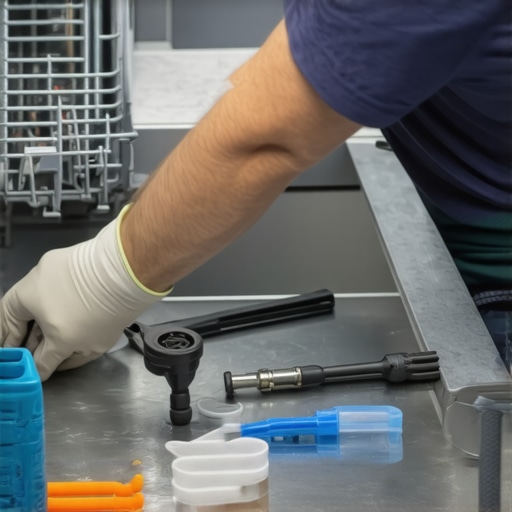
Understanding your warranty’s scope is essential. Typically, warranties cover parts but exclude labor, meaning you’ll bear the installation costs. Always review your warranty policy to identify covered items. When replacing parts like the dishwasher’s control board or pump, document each step with photos to support your claim. Keep receipts and warranty registration details handy, as they often require proof of purchase and proper installation for claim approval. During my repair, meticulous documentation and referencing warranty guidelines saved me from unexpected charges and sped up the claim process.
Perform Safety Checks Post-Repair
Once repairs are complete, double-check all connections for tightness and signs of leaks. Turn on the water supply gradually to observe if any drips or leaks develop. Run a short test cycle to verify normal operation, paying attention to water filling and draining patterns. If the dishwasher doesn’t fill properly, inspect the inlet valve and ensure the float switch isn’t stuck. A systematic, step-by-step approach like this prevents future leaks and ensures your repair is up to standard. During my last fix, these safety checks caught a minor leak early, saving me from larger issues later and extending my dishwasher’s lifespan.Many homeowners believe that replacing dishwasher parts is straightforward and warranties cover everything, but in reality, there’s a lot more to consider. One common misconception is that if a part is covered under warranty, your repair will be free of costs—this is rarely true. Warranties often exclude labor charges, meaning you’ll need to understand the fine print to avoid unexpected expenses. Additionally, many assume that installing parts themselves guarantees a warranty claim, but improper installation can void coverage and lead to future failures.
A critical nuance often overlooked is the selection of compatible parts. Using generic or third-party components might seem cost-effective, yet they can cause performance issues or damage your machine, ultimately voiding warranty coverage. To ensure longevity and warranty protection, always choose original or verified parts specific to your model. Refer to this resource for guidance on essential parts and proper selection.
Advanced homeowners ask: How do subtle installation errors impact long-term performance? Even minor mistakes like over-tightening water connections or misaligning spray arms can cause leaks and reduce efficiency over time. A study by the National Association of Home Builders emphasizes that precise installation practices significantly decrease service calls and extend appliance lifespan. So, meticulous attention to detail during installation isn’t just about avoiding immediate problems—it’s about safeguarding your investment.
Beware of the oops factor: skipping safety checks after repair or improper leveling can lead to uneven wear, water pooling, or premature part failure. For instance, a slightly unlevel dishwasher can cause leaks or damage the door latch over time. Always perform thorough safety and performance checks—it’s an extra step that pays off in durability.
Have you ever fallen into this trap? Let me know in the comments. Sharing experiences can help us all avoid these costly pitfalls and become smarter homeowners.Maintaining your dishwasher’s performance over time requires more than just occasional cleaning. Investing in the right tools and adopting precise methods can significantly extend its lifespan and ensure efficient operation. One essential item I personally rely on is a high-quality digital multimeter. It allows me to quickly test components like thermal fuses, control boards, and thermostats to diagnose issues accurately without unnecessary part replacements. For example, by checking the thermal fuse’s continuity, I can determine whether it needs replacing, preventing unnecessary expenditure and downtime.
Another vital tool is a torque wrench set to the specific torque recommended for water inlet fittings, usually around 10-12 ft-lb. Proper tightening prevents leaks and maintains warranty coverage, especially since overtightening can damage plastic components. I also keep a set of color-coded screwdrivers and pliers designed for appliance repair—these help me disassemble and reassemble parts without stripping screws or damaging delicate clips.
Beyond physical tools, software diagnostic apps are becoming increasingly relevant. For modern dishwashers connected via Wi-Fi, using manufacturer apps helps monitor cycle data, identify error codes, and even reset faults remotely. These apps, like Samsung’s Smart Home app or LG’s ThinQ, are backed by detailed troubleshooting guides that I consult regularly to streamline repairs.
Looking ahead, I believe the trend toward smarter appliances will lead to more integrated diagnostic tools, possibly augmented reality (AR) interfaces, making maintenance even more accessible for DIY enthusiasts. Imagine wearing AR glasses that overlay diagnostic instructions directly onto your machine during repair—this could revolutionize long-term maintenance routines.
How do I keep my dishwasher performing at its best over the years?
Regularly inspecting and replacing worn parts like door gaskets and spray arms is crucial. Using recommended replacement parts ensures compatibility and maintains warranty validity. When replacing parts, always check if the manufacturer suggests using specific tools, such as a gasket removal tool or a plastic clip remover, to avoid damage. For detailed guidance, I refer to this resource, which emphasizes selecting the right tools for long-term performance.
Additionally, maintaining a clean filter and periodically descaling the water inlet valve prevents buildup that can impair water flow and cycle efficiency. For high-precision tasks, I rely on a multimeter test and a torque wrench to ensure each connection is perfect, preventing leaks and failures that void warranties. This meticulous approach aligns with industry standards outlined in technical documentation from appliance manufacturers.
Finally, I recommend setting a preventive maintenance schedule—monthly visual inspections and biannual deep cleans. This proactive strategy reduces the risk of costly repairs and ensures your dishwasher remains dependable. Try scheduling a comprehensive tool check and part inspection today; the results in longevity and peace of mind might surprise you.
The Hardest Lesson I Learned About parts,installation,warranty,dishwasher
- Realizing that a warranty covering parts doesn’t mean you’re free from labor costs was a game-changer for me. It’s a reminder to always ask about comprehensive coverage before starting a repair.
- Understanding that improper installation can void your warranty pushed me to learn precise techniques and use the right tools, saving money and extending my dishwasher’s life.
- My surprise at generic parts causing performance issues taught me to stick with original or verified components, which really paid off long-term.
- The importance of documenting each repair step for warranty claims became clear after I learned how quick and smooth the process can be when you have proper proof.
- Lastly, I discovered that a thorough safety check post-repair isn’t just routine; it can prevent leaks and breakdowns, giving me peace of mind for years to come.
My Essential Toolkit for Dishwasher Maintenance
- A digital multimeter has become my go-to for diagnosing faulty parts like control boards or thermistors, allowing me to verify issues before replacing components.
- A torque wrench set to the recommended tightness ensures water connections are secure and leak-free, which is crucial for warranty eligibility and long-term performance.
- High-quality screwdrivers and specialty tools like gasket removal sets facilitate quick, damage-free repairs—saving time and preventing costly errors.
- Smartphone diagnostic apps from manufacturers provide real-time cycle data and error codes, helping me troubleshoot remotely and efficiently.
Your Turn to Make It Happen
Taking proactive steps with parts, installation, and warranty understanding transforms your dishwasher maintenance from stress-inducing to empowering. Think about the last repair you attempted—what’s one change you could make today to ensure better outcomes tomorrow? Your dishwasher—and your wallet—will thank you for it. Have you ever struggled with unexpected repair costs or warranty issues? Share your story below—learning from each other keeps us all smarter homeowners.
**Remember, each repair is a chance to master your appliance rather than just fix it. Be intentional, stay curious, and step into your role as the confident caretaker of your home appliances.**
Related Posts

Why Your Warranty Doesn’t Cover Pests in the Control Board
It was a frustrating Saturday morning when I finally opened…

Why Your Warranty Doesn’t Cover Pests Inside the Electronics
It was a morning just like any other when I…

The Secret to Getting Your Warranty Approved After a Pump Failure
I remember the sinking feeling in my stomach when my…