
I remember the morning I stepped into a cold, soapy puddle right in front of my dishwasher. My heart sank, but I felt a weird sense of relief knowing I’d paid extra for that ‘platinum’ protection plan. Fast forward two weeks: a letter arrived in the mail that felt like a punch to the gut. Claim denied. The reason? ‘Improper maintenance.’ I’d spent my life being the guy who fixes everything for the neighbors, yet here I was, out of luck and staring at a huge repair bill because of a tiny strip of rubber. It turns out, that 5-dollar gasket is the most contentious part of your entire machine when it comes to the fine print.
That Puddle on the Floor Isn’t Just Water—It’s a Warranty Trap
Most people think a warranty is a safety net, but after years of tinkering with common dishwasher parts, I’ve learned it’s more like a hurdle race. When your door starts leaking, the manufacturer’s first instinct isn’t to help; it’s to find a reason why it’s your fault. I made a classic rookie mistake early on: I used a heavy-duty scouring pad and a splash of bleach to scrub my seal. I thought I was being thorough, but I was actually destroying the rubber’s elasticity. If you have been wondering how to clean the gasket without damaging the seal, you are already ahead of where I was.
Do These Protection Plans Actually Help Anyone?
It is a fair question to be skeptical. You pay hundreds for ‘peace of mind,’ only to be told your water quality or detergent choice invalidated the whole thing. But here is the reality: warranties do work, provided you know exactly what your dishwasher warranty doesn’t cover before you pick up the phone. A surprising report from the Warranty Week industry analysis suggests that administrative denials often stem from a lack of proof of maintenance, which is a fancy way of saying you didn’t keep your receipts or follow the manual to a T. Today, I am going to show you how to flip the script. We are going to look at understanding dishwasher warranty policies so you can stop the leaks without emptying your wallet. Have you ever had a service tech look you in the eye and tell you a clearly defective part was somehow your fault? I would love to hear your story, because believe me, I have been there. If you are currently fighting a rejection, do not give up yet—you might just need to learn how to negotiate a denied warranty claim over water damage before you write that check for a new machine. [image_placeholder]
Keep Your Paper Trail Stronger Than Their Fine Print
To beat a warranty denial, you have to treat your kitchen like a crime scene where the evidence is in your favor. I learned this the hard way after my claim for a leaking door was tossed out because I couldn’t prove I’d ever cleaned the filters. Now, I keep a digital folder of every receipt, including the original purchase and any professional installation receipt. If a tech comes out, they are looking for ‘neglect.’ If you can show a log of when you checked the seals, they lose their biggest excuse. You should start by understanding dishwasher parts and their maintenance schedules. I once had a service rep try to tell me that my drainage issue was due to ‘user error,’ but because I had a photo of my clean sump housing from the month prior, they were forced to cover the pump replacement.
Test the Parts Yourself Without Voiding the Contract
You don’t always need a master’s degree in engineering to figure out why the machine is acting up. In fact, learning how to diagnose dishwasher parts during warranty periods can save you from paying a $150 ‘no-fault found’ fee. I remember a Saturday afternoon where my unit wouldn’t stop humming. Instead of calling the 1-800 number immediately, I checked the float switch. It was just stuck on a piece of plastic wrap. If I had called a tech, that 5-second fix would have cost me a fortune because ‘foreign objects’ aren’t covered. Before you pick up the phone, check the essential parts every dishwasher owner should know about to see if the fix is a simple adjustment rather than a mechanical failure. 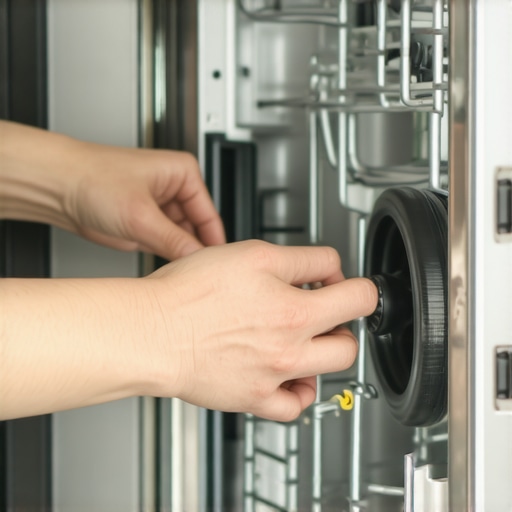
Focus on the Parts You Can Actually Swap
Many people are terrified that touching their machine will void the whole warranty, but that is rarely the case for external components. There are specific parts you can swap yourself without voiding your protection, such as dishracks, spray arms, or cutlery baskets. These are ‘user-replaceable’ items. I recently helped a neighbor replace his lower rack because the wheels had melted. We didn’t call the manufacturer; we just looked up how to replace the wheels on your lower dishwasher rack and did it in three minutes. However, when it comes to the motor or the control board, keep your hands off. Those are the ‘black boxes’ of your warranty. For anything else, checking common dishwasher parts and how to replace them effectively can keep your machine running while you wait for a professional to handle the big stuff.
Avoid the Installation Blunders That Kill Coverage
A huge percentage of warranty claims are denied because the initial setup was botched. If your drain hose doesn’t have a high loop, or if the unit isn’t level, the manufacturer will blame every leak on the install. If you are doing it yourself, follow a diy dishwasher installation step-by-step guide to the letter. Think of the installation like the foundation of a house; if it is crooked, the doors won’t shut right eventually. I’ve seen brand-new machines ruined because someone used a cheap plastic water line that burst. Stick to top tips for seamless dishwasher installation in 2025, like using braided steel lines, to ensure that when you do make a claim, the inspector finds a textbook-perfect setup.Even when you pay a professional, do not assume the job is done correctly. I have seen so-called experts skip the basic leveling checks, leading to a rejected claim six months later. You must know how to verify your professional installation receipt for insurance because a simple paperwork error or a missing license number can be as costly as the leak itself. People often think hiring a contractor absolves them of responsibility, but if that contractor ignores common dishwasher parts and their role in proper installation, the manufacturer will still use the ‘improper setup’ clause to walk away from the repair.
Will Using Non-Brand Parts Void Your Entire Policy?
The short answer is no, but the long answer involves a lot of arguing with a claims adjuster. Here is a contrarian take: the ‘Genuine Parts’ obsession is often more about marketing than mechanics. According to a report by the Federal Trade Commission (FTC) on ‘Nixing the Fix,’ manufacturers often use ‘warranty void if removed’ stickers or parts-exclusivity clauses to illegally deter consumer self-repair. Under the Magnuson-Moss Warranty Act, a company cannot deny a warranty claim just because an aftermarket part was used, unless they can prove that specific part caused the failure. If you are savvy, you can utilize maximizing your dishwashers warranty through proper parts selection to stay within the legal safe zone while keeping your machine alive without paying the ‘brand tax.’  One advanced ‘oops’ factor I see constantly is the electrical ghost. If your machine is technically sound but your kitchen wiring is dated, it might trigger a false fault code. I have seen homeowners get charged hundreds in service fees because they did not realize why your machine trips the gfci outlet only when heating. Often, it is a moisture-sensitive junction box or a weak breaker, not a dead heater. Before you pick up the phone and risk a ‘no-fault’ service fee, take the time to learn how to diagnose dishwasher parts during warranty periods yourself. Have you ever fallen into this trap where a technician blamed your house for a machine problem? Let me know in the comments—I am curious if your tech was honest or if they tried to sell you a control board you didn’t actually need. Staying proactive about when to replace dishwasher parts for optimal performance is the only way to ensure your ‘platinum’ plan actually pays out when it matters most.
My Secret Weapon for Catching Hidden Leaks
I have spent years crawling under cabinets, and if there is one thing I have learned, it is that your eyes are not enough. I personally use a small, flexible borescope—a tiny camera on a wire—to peek behind the scenes. It is how I found a microscopic drip from my pump housing that was slowly rot-proofing my subfloor. If you do not have a camera, you need to learn the best way to test for a slow leak behind the kickplate using a simple paper towel trick. I also swear by my digital multimeter. Most people think it is for ‘electricians only,’ but it is the only way to know for sure if a component is dead or just not getting power. For instance, I always show my friends how to test your water inlet valve for failure before they waste $80 on a part they do not need. Dealing with these small technical hurdles yourself ensures you are maximizing your dishwashers warranty coverage today by preventing minor issues from becoming catastrophic failures that a tech might label as ‘neglect.’
How do I maintain my dishwasher’s performance over the next decade?
Longevity is not about luck; it is about chemistry and mechanical clearing. I recommend a two-pronged attack every three months. First, I use a high-concentration citric acid wash to dissolve the scale that my local hard water loves to deposit on the heater. If you want a chemical-free path, the eco-friendly way to descale your machine with citric acid is surprisingly effective and safe for your internal plastics. Second, I get surgical. I pull the spray arms out and use a wooden pick—never metal, as it can burr the plastic—to clear the nozzles. Knowing how to clean a clogged spray arm with a toothpick sounds trivial until you see the pile of seeds and plastic bits that were blocking half the water flow. The Association of Home Appliance Manufacturers (AHAM) Standard DW-1 specifically notes that mineral buildup can reduce thermal efficiency by up to 15% before a sensor even triggers a fault code. By the time the machine complains, you have already wasted a year’s worth of extra electricity. 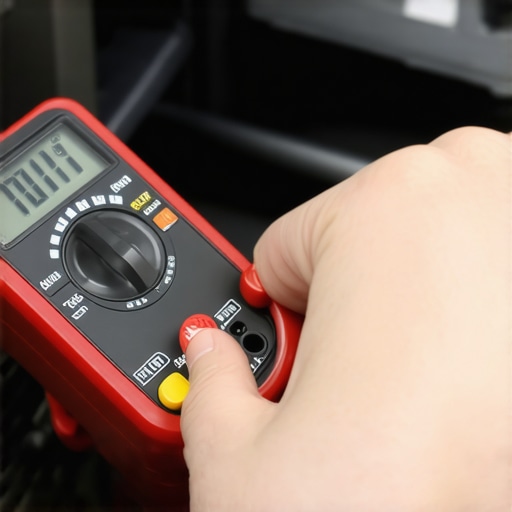
The Future of Repair Is Already in Your Pocket
We are entering an era where your phone will be more important than your wrench. I have started integrating flood sensors into my kitchen setup, and it has changed everything. Learning how to set up your smart home to alert you of a leak can save you thousands in flooring repairs before you even see a puddle. I predict that in the next five years, predictive maintenance will be standard; your machine’s control board will analyze the ‘hum’ of the motor and tell you a bearing is failing weeks before it actually dies. Until then, you need to be the brain of the operation. Keep the replacement parts every dishwasher owner should keep on hand, like a spare door gasket and a set of rack wheels, so a tiny break doesn’t turn into a week of hand-washing. Knowing when to replace dishwasher parts for optimal performance is the difference between a machine that lasts seven years and one that lasts fifteen. I challenge you to pull off your kickplate this weekend and just look for salt trails or water spots. Catching one tiny drip today could be the best financial move you make all month.
What My Flooded Kitchen Taught Me About Fine Print
It took one massive, out-of-pocket repair bill for me to realize that manufacturers often count on our forgetfulness to avoid payouts. The hardest lesson I learned is that the ‘User Error’ trap is wider than you think. First, never assume a premium protection plan covers basic upkeep; most adjusters see a dirty filter as a breach of contract. Second, your smartphone is your best witness—I now take a quick photo of my clean gaskets once a month to create a digital paper trail. Lastly, if you are following a diy dishwasher installation step-by-step guide, keep the physical manual and a dated photo of your drain line’s high loop. It is often the only evidence that can prove you didn’t cause a backflow issue yourself. If you have been understanding dishwasher parts and their roles, you know that a single misplaced clip can be the difference between a covered repair and a denied claim.
The Tools That Keep My Kitchen Floor Dry
I never start a diagnostic session without my digital multimeter; it is the absolute only way to verify if common dishwasher parts like the heating element or the inlet valve have actually failed or if there is a wiring glitch. I also suggest every homeowner invest in the most durable braided steel hoses available. Replacing those cheap black rubber lines is the cheapest insurance policy you can buy. For those who want to get serious about maintenance, keeping a small kit of essential parts every dishwasher owner should know about, such as spare rack wheels and a door seal, can save you from a $150 ‘no-fault’ service fee. I trust these tools because they move you from a place of guessing to a place of knowing, which is exactly how you win an argument with a warranty provider.
Stop Waiting for the Puddle and Take Control
Your dishwasher doesn’t have to be a source of stress or a financial mystery. By taking just twenty minutes this weekend to check for salt trails or microscopic drips behind the kickplate, you are maximizing your dishwashers warranty coverage today. You now have the knowledge to navigate the complex world of what your dishwasher warranty doesn’t cover and the confidence to handle minor issues before they escalate. Don’t let the fine print intimidate you—you are the expert of your own home, and a little bit of proactive care goes much further than any ‘platinum’ protection plan ever will. Have you ever had a warranty claim denied for a reason that felt like a total reach? Let me know in the comments below!
Related Posts
Why You Should Never Toss the Factory Intake Valve Box
Ever muffled a scream of frustration when your brand-new dishwasher…

Why Your Warranty Claim Might Fail Without a Timestamped Photo
I remember the moment clearly. I had just finished installing…

Why Your Manufacturer Warranty Doesn’t Cover Labor Costs
Last week, I finished installing a brand-new dishwasher, and within…