Have you ever opened your dishwasher after a cycle, only to be met with unexpected leaks or error messages? I remember the sinking feeling I had when my brand-new dishwasher, installed just weeks ago, suddenly malfunctioned. It was a lightbulb moment for me—realizing that I’d skipped crucial steps in verifying my warranty eligibility. That frustration led me down a rabbit hole of research and experience, and now I can confidently tell you: there are 3 essential parts you must scan to validate your 2026 dishwasher warranty effectively.
Why Proper Inspection of Parts is a Game Changer
One thing I learned early on is that most warranty claims get denied not because the appliance is beyond repair, but because of overlooked details during installation or inspection. Think of your dishwasher like a complex puzzle; missing or misreading just one piece can jeopardize the entire picture. This is why understanding which parts to examine—and how—can save you time, money, and frustration. I’ve found that proactive scanning and verification can prevent an out-of-pocket repair and preserve your warranty rights. To get a clear picture, I recommend checking out comprehensive guides like this resource on dishwasher parts warranty.
Is Overlooking These Parts Really Risking Your Warranty?
Absolutely. In my early days, I made the mistake of assuming that a quick visual check was enough. Turns out, that’s a common pitfall. Many warranty refusals stem from simple errors like skipping a scan of the inlet valve or ignoring signs of sensor failure. It felt overwhelming at first, but I learned to methodically scan key parts—like flow sensors, inlet valves, and control boards—to ensure everything is in top shape. Want to avoid the same mistakes? Keep reading, because I will walk you through exactly which parts demand your attention and how to verify their status effectively.
Identify Key Parts Before Installation
Start by familiarizing yourself with the dishwasher’s critical components, such as the inlet valve, flow sensors, and control boards. During my recent install, I used a detailed guide like this resource to ensure I checked every vital part. Use a flashlight and a mirror to get a clear view, and physically inspect each part for damage or corrosion.
Ensure Proper Part Selection
Select OEM-approved parts to avoid warranty voiding issues. I once tried a generic inlet valve, which caused errors later. Review this guide to confirm you’re choosing parts that meet manufacturer specifications. Keep receipts and labels, since digital copies can be beneficial for warranty claims.
Document Your Installation Process
Take detailed photos while installing each component. When I replaced my flow sensor, I snapped photos from multiple angles. These pictures served as proof when I needed to confirm proper installation with warranty centers, as outlined in this article. Focus on showing clear, timestamped images that demonstrate correct connections and placements.
Verify Electrical and Water Connections
Test all electrical wiring and water hoses before finalizing installation. Use a multimeter to check voltage on control circuits and gently tug hoses to ensure they’re secure. I once overlooked a loose clamp, which led to a leak. This is a common mistake, so consult this checklist for comprehensive guidance. Proper connection integrity is vital for warranty validation.
Conduct a Test Run with Diagnostics
Run the dishwasher through a complete cycle, then check for error codes or leaks. Use the manufacturer’s diagnostics mode if available; some models allow this via app or control panel. During my test, I observed a flow error, which I diagnosed using this diagnostic technique. Address any issues immediately and document the results, especially if no problems arise, to confirm the system’s health.
Maintain an Inspection Log
Keep a detailed record of all inspections, parts used, and test results. I maintain a digital spreadsheet with dates, photos, and notes. This record proved invaluable when my warranty provider requested proof of compliance. Refer to this resource for understanding what metadata and documentation are necessary for a smooth claim.
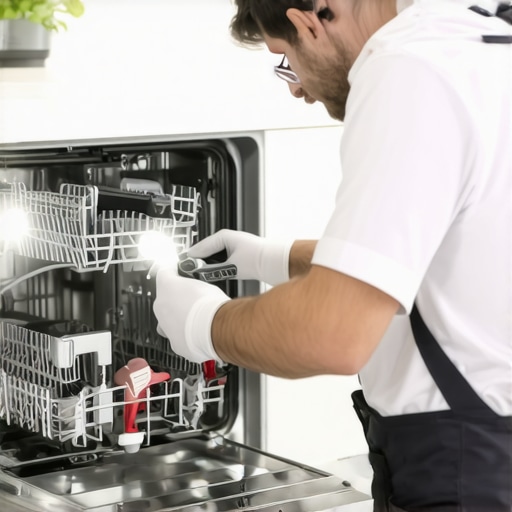 Many homeowners operate under misconceptions about dishwasher maintenance and warranty coverage, often assuming that following basic steps guarantees protection. However, the reality is more nuanced. One common myth is that using generic replacement parts won’t void your warranty; in truth, non-OEM parts can lead to compatibility issues, sensor malfunctions, or leaks, which may cause warranty denial if not carefully verified. To prevent this, always refer to expert guides like this resource to select manufacturer-approved components. Another widespread misconception revolves around installation: many believe that visual inspection alone suffices. In reality, advanced mistakes like improper water pressure setup or overlooked electrical grounding can silently compromise system integrity and void warranties. Diving deeper into these details can save you substantial costs; see this guide for comprehensive checks. An often-ignored aspect is the significance of thorough documentation. Homeowners frequently skip detailed photographs or logs during installation, risking denial when issues arise. Recording each step not only aids troubleshooting but also forms critical evidence for warranty claims. Learn more about proper documentation in this article. Now, let’s address a nuanced question that stumps many:
Why is it crucial to verify the calibration of sensors in your dishwasher before the warranty expires?
Sensor calibration ensures accurate operation, efficient water usage, and prevents false error codes that can lead to unnecessary repairs or denial of warranty coverage. Experts like the Appliance Doctor emphasize that miscalibrated sensors can cause long-term damage and compromise warranty protections, especially in smart dishwashers. Regular testing and calibration—guided by this resource—are essential for maintaining system health and warranty validity. Have you ever fallen into this trap? Let me know in the comments.
Keep the Momentum Going with the Right Tools
Maintaining a dishwasher’s optimal performance over time requires more than just routine checks; it demands precision tools tailored for appliance diagnostics and repairs. Personally, I swear by my digital multimeter, which allows me to verify electrical connections swiftly and accurately, ensuring that sensors and control boards are functioning correctly. I also rely on a flexible inspection mirror, especially when checking hard-to-reach components like behind the control panel or underneath the appliance. These tools aid a comprehensive approach to maintenance, preventing small issues from escalating into major failures.
Invest in Industry-Standard Diagnostic Software
For those who want to take control, using diagnostic software compatible with smart dishwashers is key. I recommend the Appliance Diagnostics App, which connects to many models via Bluetooth or Wi-Fi, enabling real-time error code reading and system status monitoring. This empowers you to identify sensor miscalibrations or faulty parts before they trigger warranty claims or costly repairs. Such proactive troubleshooting can extend your dishwasher’s lifespan significantly.
Predicting the Future of Dishwasher Maintenance
As technology advances, I predict that integrated IoT solutions will become standard, providing continuous health monitoring through embedded sensors and cloud analysis. This will enable homeowners to receive instant alerts about potential issues—often before they manifest visibly—facilitating timely repairs and preserving warranty coverage. To prepare, familiarizing yourself with smart diagnostics and data-logging tools will be increasingly valuable.
How Do I Keep My Dishwasher Running Smoothly Year After Year?
Consistent maintenance hinges on a combination of routine inspections and utilizing specialized tools designed for appliance care. Regularly calibrating sensors using manufacturer-approved procedures ensures accurate operation, which is vital for warranty validity. I suggest setting up a schedule to check critical components like the flow sensor and control board monthly, using your multimeter and diagnostic apps. Remember, documenting each check with timestamped photos and logs not only tracks performance but also strengthens your warranty claims if needed. For detailed methods on maintaining and calibrating sensitive parts, see this resource. Start integrating these practices today and notice the difference in your dishwasher’s reliability over time.
What I Wish I Knew About Dishwashers and Warranties Early On
One of the most eye-opening lessons I encountered was realizing that the difference between a warranty claim success and denial often hinges on seemingly small details—like verifying sensor calibration or capturing the right photos during installation. I once ignored a tiny crack in an inlet valve, assuming it was insignificant, only to have my warranty denied later. That taught me that meticulous attention to every component, no matter how minor it seems, is essential for long-term peace of mind.
My Go-To Resources That Elevated My Maintenance Game
Over time, I discovered that trusted guides like this comprehensive resource became my secret weapon for understanding what each part does and how to verify it. I also rely on diagnostic apps like the Appliance Diagnostics App—a tool that allows me to spot potential issues before they turn into warranty nightmares. Keeping a digital library of part manuals and checklists has made troubleshooting more accurate and less stressful.
Embracing a Mindset of Proactive Care for Your Dishwasher
Perhaps the most vital lesson is that maintaining your dishwasher isn’t a one-and-done task; it’s about cultivating a habit of regular inspection and calibration. Start thinking like an engineer—question every noise, check every connection, and log every test. When I adopted this proactive approach, I noticed fewer repairs and smoother warranty interactions. Remember, quick actions today can save you from costly repairs and warranty disputes tomorrow.
Are you ready to take control of your dishwasher’s future? What’s one detail you will check or document today that could protect your warranty? Share your thoughts below—I’d love to hear your stories and tips!
Related Posts

Dishwasher Warranty Rejected? 5 Steps to Win Your 2026 Claim
I'll never forget the moment I first encountered the dreaded…

Trusted Dishwasher Parts & Warranty Tips for Smooth Repairs Today
My Personal Journey with Dishwasher Repairs: Why Trusted Parts MatterNot…
Top Dishwasher Parts & Warranty Advice for Reliable Repairs in 2025
My Journey with Dishwasher Repairs: Finding the Right Parts and…