
It was a typical Saturday morning when I finally heard it—the unmistakable growl from under my dishwasher that I had somehow ignored for too long. At first, I thought it was just a weird noise, but then the dreadful realization hit me: my drain pump was sounding like a pissed-off monster ready to explode, and I was risking a flooded kitchen if I didn’t take action. That moment of panic is something I won’t forget. Since then, I learned that ignoring that grumble could have led to an expensive disaster. If you’ve ever faced a similar unsettling sound from your dishwasher, you know exactly what I’m talking about.
The Hidden Danger of a Noisy Drain Pump
Imagine walking into your kitchen after a long day only to find water pooling on the floor, furniture soaked, and your favorite rug ruined—all because that noisy pump was warning you of impending failure. This isn’t just about annoying sounds; it’s about your safety and your wallet. A failing drain pump can start a chain reaction, resulting in water damage, mold growth, and expensive repairs. The good news is, you don’t have to wait until the floodwaters arrive to act.
Is It Really Worth Fixing a Noisy Drain Pump?
Early on, I made the mistake of dismissing that strange noise as a minor issue—anything but urgent. I thought, “It’s probably just a bit of debris or normal wear and tear.” That was my first mistake. As it turned out, that sound was the precursor to a complete pump failure. Ignoring it cost me a costly repair and a near catastrophe. Experts warn that the longer you let a noisy pump go unchecked, the higher the risk of water damage. Want to avoid my mistake? Regularly inspecting your dishwasher’s components and recognizing the signs of trouble can save you hundreds. For detailed troubleshooting tips, check out [this comprehensive guide](https://appliancedoctorz.com/how-to-diagnose-dishwasher-parts-during-warranty-periods).
Don’t wait for the pump to scream its last warning. Addressing the issue early can ensure your dishwasher keeps working smoothly and your floors stay dry. In the next section, I’ll walk you through how to identify the signs of a failing drain pump and what steps to take to fix it—before the floodgates open.
Start with a Visual Inspection
Pull out your dishwasher and examine the drain area for debris, blockages, or loose components. Use a flashlight to check the pump and its surrounding hoses for visible damage or buildup. I once found a tangled hairball obscuring the pump, which I cleared out to reduce noise immediately.
Identify the Noisy Component
Turn on your dishwasher or manually start the drain cycle to listen for where the noise originates. A grinding or rattling sound typically indicates a failing pump or impeller. Remember, the drain pump is a common culprit, especially if it’s making odd noises during operation.
Check the Pump for Obstructions
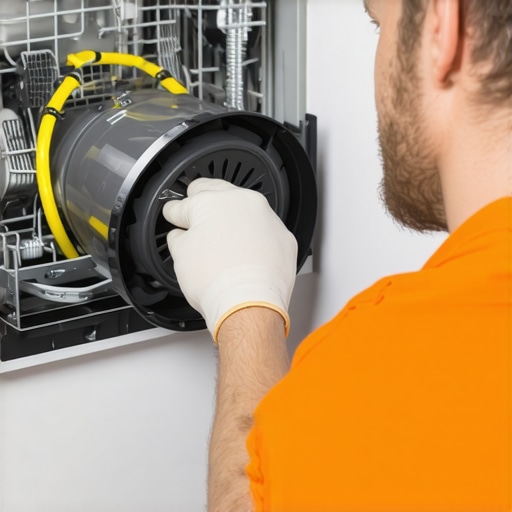
Disconnect the power and access the drain pump according to your model’s manual, often by removing the lower kick panel. Remove the pump cover and visually inspect the impeller for debris or damage. It’s like cleaning a clogged filter — removing obstructions can restore smooth operation and eliminate noise.
Use a Multimeter to Test the Pump Motor
For a more definitive diagnosis, test the motor windings with a multimeter set to resistance. A reading of zero or infinite indicates a short or open circuit, meaning the pump needs replacement. I once tested a pump this way, confirming it was dead, and ordered a new one. To understand warranty coverage for parts, review this guide.
Replace or Repair the Drain Pump
If the pump is faulty, sourcing the correct replacement is critical. Opt for OEM parts to ensure compatibility and longevity. Use a top tips for selecting parts to choose a durable pump. Remember, a proper installation not only fixes the noise but also prevents future issues — check installation parts for long-term performance.
Properly Install and Test
Secure all connections tightly, ensuring no leaks or loose fittings. Reassemble the dishwasher, restore power, and run a test cycle. If the noise persists, recheck for obstructions or errors. Document your work with photos to support any warranty claims, following tips from this documentation guide.
 When it comes to maintaining your dishwasher, many homeowners operate under misconceptions that can lead to costly mistakes. Let’s dig deeper into some of the most pervasive myths and reveal the nuances that can save you money and headaches. One widespread belief is that manufacturer warranties cover all repair parts and labor indefinitely. In reality, warranties are often narrowly scoped, excluding certain parts or conditions—so understanding the finer print is essential. For example, parts like the door gasket or control panel may have limited coverage, and improper installation can void your warranty altogether. Don’t assume that simply having a warranty guarantees free repairs; familiarize yourself with the coverage detailed at https://appliancedoctorz.com/guide-to-dishwasher-parts-warranty-what-you-need-to-know to avoid surprises.
Many homeowners also think replacing parts themselves always preserves warranty validity. However, DIY repairs—especially if not performed correctly—can risk voiding your warranty. A common trap is incorrectly installing a new pump or misaligning the door latch, which might cause leaks or damage that warranty providers will deny. This is why consulting professional guidance or verifying your warranty terms at https://appliancedoctorz.com/how-to-diagnose-dishwasher-parts-during-warranty-periods is crucial. Failure to do so may leave you footing the bill for issues that could have been covered.
Advanced users often question whether aftermarket parts are a safe choice. The misconception is that all aftermarket parts are equal, but the reality is that inferior substitutes can compromise performance and warranty eligibility. For example, using non-OEM gaskets or spray arms might seem cost-effective initially but can lead to leaks or poor cleaning, ultimately voiding warranty coverage. To ensure compatibility and durability, review professional recommendations at https://appliancedoctorz.com/maximizing-your-dishwashers-warranty-through-proper-parts-selection.
Now, consider the nuances that often go unnoticed in installation procedures. Even a minor misstep—like not securing the drain hose correctly or failing to add a high loop—can cause persistent drainage problems or siphoning issues, which might be mistaken for faulty pumps. These issues are often overlooked because they are subtle but have real consequences. Proper installation is vital; see detailed expert advice at https://appliancedoctorz.com/parts-to-check-when-installing-a-dishwasher-for-long-term-performance to avoid these pitfalls.
On top of all this, many assume that warranty claims are straightforward. In truth, documentation is everything. Failure to keep detailed records, such as purchase receipts and photographic evidence of professional installation, can derail your claim process. As noted at https://appliancedoctorz.com/the-secret-to-reducing-dishwasher-energy-use-during-peak-hours, meticulous record-keeping and understanding your warranty’s fine print are key steps often neglected by homeowners.
Hopefully, this deep dive exposes some hidden pitfalls in the common assumptions about dishwasher warranties and repairs. Staying informed and cautious can save you both time and money. Have you ever fallen into this trap? Let me know in the comments.Maintaining your dishwasher effectively requires more than just knowing what parts to replace; it hinges on having the right tools and a disciplined routine. One tool I personally swear by is a high-quality multimeter. I use a Fluke 115 for testing motor windings and circuits because of its accuracy and durability. This device helps me confirm if a pump motor truly needs replacing, saving me time and unnecessary purchases. Additionally, a digital inspection camera can be a game-changer. I use a flexible boroscope to peek into tight areas like the drain pump housing or the interior of spray arms without disassembling the entire unit. This allows me to find hidden debris or damage early, preventing costly repairs down the line.
When it comes to routine checks, I rely on a set of precision screwdrivers and nut drivers, specifically designed for appliance repair. These tools ensure that I can access and tighten fittings securely without damaging delicate components. For more advanced diagnostics, I employ a basic computer diagnostic program compatible with smart dishwashers, which helps identify firmware glitches or error logs that are not visible externally.
Looking ahead, I predict that the integration of smart diagnostic tools—like app-connected multimeters or AI-powered inspection devices—will become standard. These innovations could streamline maintenance, making it possible to diagnose issues remotely or even automatically order replacement parts when sensors detect a fault.
< h3 > How do I maintain optimal dishwasher performance over time? < /h3 >
Keeping your dishwasher humming requires a consistent schedule of inspections and part replacements. Regularly checking the status of critical components such as the inlet valve, drain pump, and float switch can prevent unexpected breakdowns. Using diagnostic tools periodically, even on a functioning appliance, ensures early detection of potential issues. For example, testing the pump motor with a multimeter once a year helps confirm it’s operating within specifications, which can extend its lifespan and avoid a sudden failure.
Properly documenting your maintenance routine is another crucial step. Take photos of component replacements and keep a log of diagnostics and repairs. This can be invaluable when dealing with warranties or troubleshooting persistent problems. Review your warranty coverage at https://appliancedoctorz.com/guide-to-dishwasher-parts-warranty-what-you-need-to-know to confirm that your maintenance practices align with warranty requirements.
Don’t underestimate the power of a well-stocked toolbox tailored for appliance repair. Invest in quality tools like a multimeter, inspection camera, and precision screwdrivers, and develop a routine checkup schedule. Not only will your dishwasher work more reliably, but you’ll also save money by catching issues early. Try integrating an inspection camera into your routine—it’s a surprisingly affordable and practical step that can reveal hidden problems before they turn into expensive repairs.
What I Didn’t Expect About Warranty Myths and DIY Repairs
One of my biggest lightbulb moments was realizing that warranty coverage isn’t as comprehensive as I assumed. Reading the fine print revealed hidden exclusions, especially for DIY repairs, which can inadvertently void your protection. It’s a reminder that understanding warranty nuances, like in this detailed guide, is key to safeguarding your investments.
The Pitfalls of Aftermarket Parts and Improper Installation
I learned the hard way that not all replacement parts are created equal. Using non-OEM components or rushing installations often leads to leaks or component failure, which might void your warranty. Investing in quality, as emphasized in this expert article, saves money and hassle in the long run. Proper installation techniques, like ensuring a high loop in the drain hose from this resource, are non-negotiable.
Developing a Maintenance Routine That Truly Works
Routine inspections, including testing components with reliable tools like multimeters or inspection cameras from this toolkit, have transformed how I approach dishwasher health. These proactive measures can catch issues early, prevent costly repairs, and ensure warranty validity. Consistency is your best friend—regular checks often reveal problems before they escalate.
Insider Wisdom for a Leak-Free Dishwasher Experience
After years of experience, I’ve realized that small details—like correctly sealing connections, avoiding silicone on fittings, or securely anchoring the unit—makeAll the difference. Neglecting these can lead to leaks or failures that complicate warranty claims, as discussed in this article. Learning to identify and fix subtle issues saves you from headaches later.
Related Posts
Why Your Machine Stays Wet Inside Even After the Heat Cycle
Ever stood in front of your dishwasher, feeling the warm…
Why Your Detergent Pod is Still Whole After a Full Cycle
If you've ever run your dishwasher expecting sparkling clean dishes…
Why Your Brass Compression Fittings Keep Leaking
It was a slow Saturday morning when I finally snapped.…