
I remember staring at a mountain of crusty lasagna pans, hand-scrubbing for the third time that week while my expensive dishwasher sat silent. My $900 machine had become a giant, stainless steel paperweight because of a single sensor. The manufacturer’s customer service rep—who was perfectly polite but clearly reading from a script—informed me that the part was backordered indefinitely. ‘Maybe next month?’ she suggested. It was already month two. I felt defeated, trapped in a cycle of ‘checking the status’ while my warranty clock ticked away. That’s when I realized that being the ‘patient customer’ was exactly why I still didn’t have a working appliance. I had to change my strategy from waiting for a part to demanding a solution.
Stop Waiting for Parts That Might Never Arrive
The biggest mistake I made early on was believing that the ‘system’ would eventually take care of me. I assumed that if I just followed the rules and stayed in the queue, my part would arrive. It didn’t. In fact, many manufacturers are currently struggling with supply chain complexities that leave consumers in a state of ‘warranty limbo.’ According to a report by the Public Interest Research Group (PIRG), the lack of readily available spare parts is one of the leading causes of premature appliance disposal. If you are stuck, you need to start understanding dishwasher warranty policies for peace of mind and knowing when to pivot. Today, I’m going to show you exactly how to escalate your case so you can stop washing dishes by hand and start getting the value you paid for. We aren’t just looking for a repair anymore; we are looking for a replacement or a refund.
Is Demanding a Brand New Unit Actually Realistic?
You might think that the manufacturer will never just give you a new machine because of a backordered part, but you’d be surprised. When a repair is deemed ‘unfeasible’ due to time constraints, most warranties have clauses that allow for replacement. I’ve learned the hard way that you have to be the one to point this out. If you don’t know how to get your warranty claim approved on the first try, you often end up at the bottom of the priority pile. I once spent four months waiting for a simple door latch because I didn’t realize I could argue that the ‘reasonable time’ for repair had passed. Don’t let that happen to you. You need to be firm, use the right terminology, and know exactly what your dishwasher warranty doesnt cover and how to avoid fees during the process. Have you ever been told a part was out of stock with no end in sight while your kitchen remained a mess? If so, it’s time to stop asking and start negotiating.
Build a Paper Trail They Cant Ignore
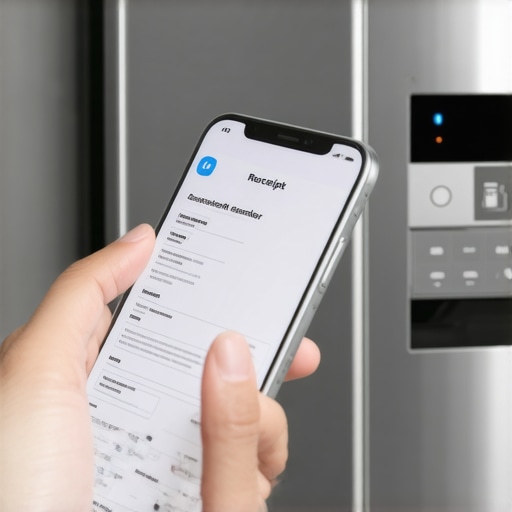
When you call the manufacturer, the representative is looking at a screen that tells them one thing: the part is out of stock. To them, it is a binary problem. To you, it is a kitchen full of dirty dishes. The first thing I learned is that verbal promises are worthless in the world of appliances. You need to start how to diagnose dishwasher parts during warranty periods yourself so you can speak their language. If you tell them ‘it is broken,’ they put you on hold. If you tell them ‘the circulation motor has failed and the diagnostic code is E15,’ they realize they are dealing with someone who knows the machine. I remember a specific instance with a faulty control board where the tech kept saying they were ‘waiting on a shipment.’ I finally stopped asking for updates and started emailing a log of every call, including names and timestamps. This forced them to acknowledge that my case had been open for 45 days without a resolution. Remember, why your warranty claim fails without an authorized receipt is usually the first hurdle, so keep that PDF or paper copy at the top of your folder. You cannot win an argument without proof of purchase.
Ask for a Case Manager Immediately
The first person who answers the phone is a gatekeeper, not a decision-maker. Their job is to follow the script. If you want a real solution, you need to move past them. I use the ‘Three-Strike Rule.’ If the agent tells me ‘no’ or ‘I dont know’ three times, I politely ask for a Case Manager or an Escalations Specialist. These individuals have the authority to authorize a ‘buy-back’ or a unit swap. They are also the ones who can explain why your warranty covers parts but not the 150 service trip fee, which is a common point of frustration. During one of my worst repair sagas, I got a manager on the phone and explained that the cost of my time and the service fees now exceeded 50% of the machines value. By framing it as a financial loss for both of us, I persuaded them to ship a brand-new unit instead of waiting for a $30 sensor that was stuck on a cargo ship in the Pacific.
Force a Decision Based on Reasonable Time
Most state consumer protection laws and many manufacturer agreements mention a ‘reasonable time’ for repairs. While ‘reasonable’ is a gray area, 30 days is the industry standard for a breaking point. If you have been waiting longer, you need to reference the guide to dishwasher-parts-warranty-what-you-need-to-know and specifically mention that the product is no longer providing the utility it was sold for. I once had a client who was told a door hinge would take three months. We didn’t wait. We filed a formal complaint through the manufacturer’s corporate portal citing ‘failure to provide warranty service in a timely manner.’ Within 48 hours, they found a part at a local warehouse that ‘suddenly’ became available. It’s like a chess game; you have to put their reputation in check to get them to move. Knowing essential parts every dishwasher owner should know about helps you identify if they are stalling on a simple fix or a major component. Be firm, stay calm, and never accept ‘we dont know’ as a final answer.
One of the biggest myths I see in the appliance world is the belief that ‘all coverage is equal.’ I’ve had neighbors boast about their 5-year protection plan, only to find out during a pump failure that it was actually a third-party insurance contract, not a manufacturer extension. There is a massive difference in how claims are handled. According to a 2023 Consumer Reports reliability survey, nearly 25% of all dishwashers develop a problem within the first five years, yet many ‘protection plans’ use loopholes like ‘pre-existing conditions’ or ‘improper maintenance’ to deny help. You need to know why your appliance insurance might not be a real warranty before you trust it to save your kitchen from a flood.
Your Extended Protection Plan Might Just Be a Fancy Insurance Policy
True manufacturer warranties are backed by the people who built the machine; insurance plans are backed by bean counters. If you are dealing with a third-party provider, they often prioritize the cheapest possible fix over the most effective one. This is where people get tripped up on the ‘maintenance’ clause. I once saw a claim for a failed heating element get denied because the homeowner had excessive scale buildup. The provider argued it was ‘owner neglect’ due to hard water. This makes the impact of hard water on your warranty eligibility a critical factor you must address with a water softener before the tech even walks through the door. If you don’t document your maintenance, they will use any excuse to close your file without a payout.
Stop Reusing Your Old Brass Fittings if You Value Your Kitchen Floor
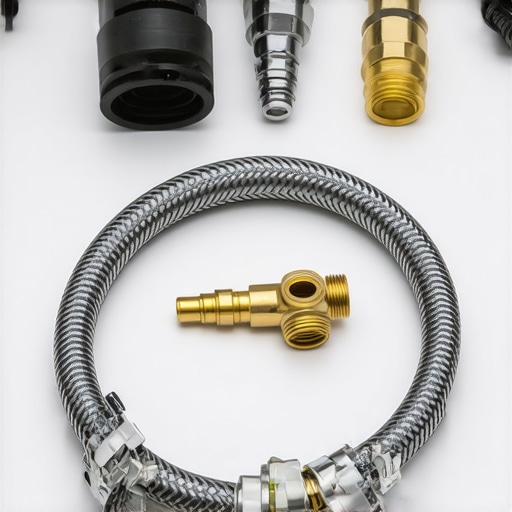
The ‘Oops’ factor often happens right at the start during installation. I’ve seen seasoned DIYers—and even some budget contractors—reuse the old supply line or brass fittings to save $20. This is a nightmare scenario for your future self. Most manufacturers explicitly state in the fine print that using non-new components during setup voids the tub and motor coverage. This is why your installer refuses to reuse your old brass fittings and insists on a fresh, braided steel kit. If that old hose bursts three months later, you aren’t just out a dishwasher; you’re dealing with a flooded subfloor that your home insurance might refuse to cover because of the ‘improper installation’ clause. Always insist on new common dishwasher parts and their role in proper installation to keep your liability at zero.
Does Using a Local Repair Shop Kill Your Factory Coverage?
This is a sophisticated nuance that trips up even the most careful owners. Many people assume any licensed plumber can fix their machine while it’s under warranty. However, if a non-authorized technician opens that chassis, you’ve likely just killed your remaining 10-year motor or tub warranty. Manufacturers are incredibly protective of their proprietary tech. I always tell people to check the complete list of dishwasher parts covered by warranty before they let anyone touch the machine. If it’s a major component like the circulation motor, you must use a factory-certified tech, or you’ll be paying the full $400 bill yourself next time something breaks. Have you ever fallen into this trap of assuming a ‘pro’ was an ‘authorized pro’? Let me know in the comments. We need to be smarter than the fine print to get the service we actually paid for.
I’ve spent hundreds of hours under kitchen sinks, and if there is one thing I’ve learned, it’s that a $20 tool can save you a $500 repair bill. I never walk into a kitchen without my digital multimeter. Most people assume a dead dishwasher means a fried control board, but often it’s just a $15 thermal fuse that tripped to protect the system. If you know how to test your thermal fuse with a basic multimeter, you can prove to a warranty tech exactly what is wrong before they even arrive, preventing them from ‘guessing’ with your time. I also swear by a telescopic inspection mirror. It allows you to see the best way to test for a slow leak behind the kickplate without pulling the entire unit out and risking damage to your hardwood floors.

How can I keep my dishwasher running like new for a decade?
The secret isn’t some expensive chemical; it’s consistency. I’ve seen $2,000 European units die in four years because the owner ignored the hidden drain screen you probably forgot to clean. According to Chris Zeisler, Technical Service Supervisor at RepairClinic, modern high-efficiency machines use much less water, meaning food particles are more likely to recirculate if your filters are clogged. This puts immense strain on the wash motor. You need to stop the ‘deep clean’ every six months and start a ‘rinse and check’ every two weeks. Also, please stop using vinegar in your high-end smart machine. The acidity can degrade the rubber gaskets over time, leading to those ‘mystery leaks’ that warranties love to blame on owner error. Instead, focus on understanding dishwasher parts a key to effective maintenance to target the areas that actually fail, like the spray arm nozzles.
Prepare for the Era of Self-Diagnosing Appliances
We are moving toward a future where your dishwasher will be smarter than the person fixing it. I predict that by 2030, ‘predictive maintenance’ will be standard. Your machine will monitor the amperage draw of the drain pump and send a push notification to your phone—and the manufacturer—saying, ‘Part failure imminent in 30 cycles.’ This will completely change how we handle when to replace dishwasher parts for optimal performance. Until that day comes, you need to be your own sensor. I highly recommend installing the 20 smart sensor that detects leaks before your kitchen floods. It’s a tiny investment that provides an insurance policy no manufacturer can match. My advanced tip for you this week: take 10 minutes to pull off your kickplate and check for any salt-like crust around the motor housing; it’s the first sign of a slow leak that could void your warranty if left to rot the frame.
Hard Truths About Why Your Service Request Is Still Pending
After years of dealing with manufacturers, I’ve realized that the ‘parts backorder’ is often a test of your persistence. One of the biggest lightbulb moments I had was discovering that local authorized shops sometimes have ’emergency stock’ they don’t list on the main corporate portal. If you can how to spot a failing wash motor before it siezes, you can often bypass the generic ‘wait and see’ advice from phone reps. Another hard lesson? Silence is interpreted as satisfaction. If you aren’t calling every 48 hours once that 30-day window passes, you are effectively telling the company that your broken appliance isn’t an emergency. Finally, always document the ‘consequential damages.’ If a delayed repair leads to a leak, you need to know how to claim compensation for flooring damage caused by a faulty part immediately.
Build Your Professional Grade Maintenance Kit
If you want to stop being at the mercy of a service schedule, you need a few key items in your utility drawer. First, stop guessing about electrical failures and learn the most reliable way to test a thermal fuse; it’s the difference between a five-minute fix and a two-week wait. I also never recommend a DIY setup without the most durable braided steel hoses for long term safety. These are vastly superior to the plastic lines that come in the box. To protect your subfloor, I swear by the 20 smart sensor that detects leaks before your kitchen floods. It’s the cheapest insurance policy you’ll ever buy. Lastly, ensure your drainage is handled correctly by checking why your drain hose needs a high loop to stop the smell and prevent backflow.
#IMAGE_PLACEHOLDER_E#
Stop Stressing and Start Demanding Better Service
You bought a dishwasher to save time, not to create a new part-time job as a claims negotiator. By staying firm, keeping a paper trail, and maximizing your dishwashers warranty coverage today through proactive communication, you shift the power back to yourself. Don’t let a missing $40 sensor ruin your kitchen experience for months on end. You have the right to a working machine, and now you have the tools to make it happen. Have you ever been stuck in ‘backorder limbo’ for months? Let me know your story in the comments below!
Related Posts

Why your dishwasher warranty claim hinges on a $5 drain hose clamp
It was a quiet Sunday afternoon when I heard the…

How to Prove Professional Installation to Avoid Denied Warranty Claims
I remember the moment it hit me—after meticulously installing my…

Why Your Manufacturer Warranty Doesn’t Cover Labor Costs
Last week, I finished installing a brand-new dishwasher, and within…