
I was standing in my kitchen last July, coffee in hand, watching a nasty line of thunderstorms roll across the horizon. My smart dishwasher was mid-cycle, humming away with that quiet, high-end efficiency I’d paid a premium for. Then, the lights flickered—just for a second. The machine gave a pathetic little chirp, the digital display blinked out, and my kitchen went silent. I figured I’d just flip the breaker, but no luck. My smart investment had turned into an expensive, stainless steel box of dirty water. I realized then that I had ignored the most vulnerable part of my kitchen setup.
Your Smart Sensors are More Fragile Than You Think
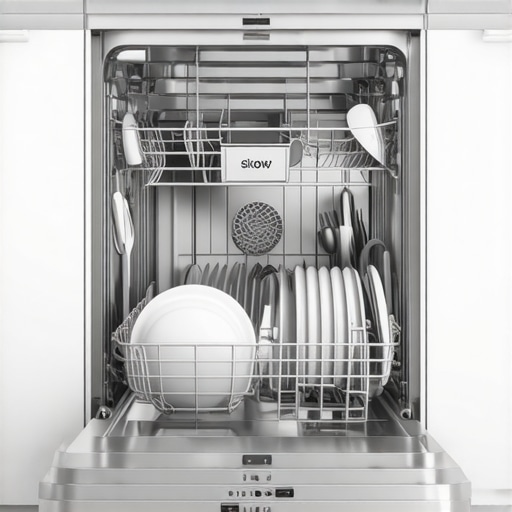
Most of us think a surge protector at the outlet is enough, but I learned the hard way that internal components are the real Achilles’ heel. These modern machines rely on delicate microprocessors that don’t just dislike power spikes; they loathe them. I spent hours digging through manuals only to realize why your manufacturer warranty excludes power surge damage, leaving you on the hook for a $400 control board. It’s a bitter pill to swallow when you realize that one “act of God” can bypass all those fancy features. According to the Insurance Information Institute, lightning-related homeowners insurance claims have actually risen in cost due to the sheer amount of sensitive electronics we now plug into our walls. It isn’t just about the big strike; it’s about the “dirty power” that follows. [IMAGE_PLACEHOLDER]
Does my warranty actually protect me?
This is the question that kept me up that night. I assumed my “bumper-to-bumper” coverage meant I was safe. I was wrong. Most policies view a storm as an external event, not a mechanical failure. If you’re staring at a dead screen, you might actually be looking for the hidden fuse that controls your smart display panel rather than a whole new unit. I made the mistake of calling a technician out immediately, only to pay a $150 diagnostic fee for him to tell me exactly what I could have found with a ten-dollar tool.
Stop Relying on Luck When the Clouds Turn Grey
If you want to keep your kitchen running, you have to treat your dishwasher like the computer it actually is. I’ve seen so many neighbors lose their units because they thought the smart features included some kind of magical electrical shield. They don’t. In fact, these sensors are often the first thing to fry. Before you go out and buy a new control board, you should learn how to test your thermal fuse with a basic multimeter. It saved me from a full replacement last year. We’re going to look at the physical safeguards you can install today to make sure your next wash cycle isn’t interrupted by a bolt from the blue. Have you ever had a perfectly good appliance just “give up” after a storm? Drop a comment and tell me what happened—I bet I can help you figure out if it’s truly dead or just playing dead. We also need to consider why your dishwasher trips the breaker even when there isn’t a cloud in the sky.The first thing I do when a smart dishwasher goes dark isn’t calling a pro; it’s grabbing my multimeter. You need to focus on the thermal fuse. Think of it as the sacrificial lamb of your machine’s electrical system. If a surge hits, this tiny part is designed to blow so your expensive control board doesn’t. Last summer, I helped my neighbor Dave who was ready to junk his two-year-old Bosch. We spent ten minutes checking the most reliable way to test a thermal fuse and realized that a $15 part was all that stood between him and a functioning kitchen. If the fuse is fine but the screen is still black, you’re likely looking at a fried main board.
Why Your Choice of Replacement Parts Dictates Future Survival
If you find that the surge actually cooked the board, don’t just buy the cheapest one you find on a third-party marketplace. I learned this when I bought a generic board that caused a phantom drain issue. It turned out the firmware was slightly off. You need to know how to spot a fake replacement part before it fries your control board. Sticking to OEM (Original Equipment Manufacturer) components is the only way to ensure the sensors communicate correctly. While you have the unit pulled out, it’s the perfect time for understanding dishwasher parts that are prone to wear, like the water inlet valve. A surge can occasionally weaken the solenoid in these valves, leading to a slow leak later on.
Protect Your Sensors from the Start
A massive mistake I see people make during a diy dishwasher installation step-by-step guide is ignoring the power source quality. You absolutely must avoid temporary fixes. I’ve seen beautiful kitchens nearly burn down because someone thought a power strip was fine for a heavy-duty appliance. You should understand why you shouldn’t use extension cords for any appliance, especially one that uses a heating element. The voltage drop alone can confuse your smart sensors, leading to those annoying error codes that seem to happen for no reason.
Navigating the Warranty Minefield After a Spike
When you call the manufacturer, they are going to look for any excuse to deny your claim. They love to point at improper installation as a reason to void your coverage. I once lost out on a motor replacement because I didn’t have a receipt for a professional install. If you’re doing it yourself, you need to be meticulous. Learn how to get your warranty claim approved on the first try by documenting your surge protection measures. Also, keep in mind why your warranty covers parts but not the 150 service trip fee. Sometimes, if the part is cheap enough, it’s actually more cost-effective to buy it yourself and skip the service call.
Watch Out for Secondary Failures
Sometimes a surge doesn’t kill the machine immediately but damages the the 15 sensor that stops your smart dishwasher from overfilling. If your machine starts acting weird—like filling for too long or stopping mid-cycle—don’t ignore it. I ignored a clicking sound in my old unit for a week after a storm, only to find a hidden leak under the motor housing that had started to warp my subfloor. Catching these soft failures early is the difference between a quick part swap and a full kitchen remodel.
I see it every single day: homeowners who think they’ve done everything right because they have a whole-house water softener. But here is the contrarian truth that most salesmen won’t tell you: ultra-soft water can be just as damaging as hard water. While we’re often warned about the impact of hard water on your warranty eligibility, the reality is that soft water is ruining your dishwasher interior through a process called etching. Without those minerals to react with, your high-efficiency detergent becomes incredibly aggressive, eating away at the glass and the protective coating of your stainless steel tub. It’s a chemical imbalance that can age a machine five years in just twelve months. You aren’t just looking for soft water; you’re looking for balanced water.
The Five-Minute Step Most DIYers Completely Forget
The most common “oops” factor I encounter isn’t a loose screw; it’s sediment. When you’ve been working on your plumbing or installing a new unit, tiny bits of solder, grit, or PVC shavings enter the lines. If you don’t take the critical reason to flush your water lines seriously, that debris goes straight into the delicate mesh filter of your new water inlet valve. I once saw a $1,200 Miele throttled because a single piece of copper slag from a pipe repair got stuck in the intake. Most people think their machine is a lemon when, in reality, they just skipped a five-minute flush. According to the Association of Home Appliance Manufacturers (AHAM), a staggering percentage of ‘early-life’ appliance failures are caused by environmental factors and improper installation rather than manufacturing defects. 
Why did my warranty claim fail even though I did everything right?
This is the most frustrating part of the process. You buy the machine, you install it carefully, and yet the manufacturer denies your claim. The trap is usually the paperwork. I’ve had readers tell me they lost out on major repairs because your warranty claim fails without an authorized receipt from a licensed installer in certain jurisdictions. Manufacturers look for any sign that the failure was caused by an ‘unauthorized modification.’ Even something as simple as why your installer refuses to reuse your old brass fittings matters; if you reuse an old supply line and it leaks, the manufacturer is off the hook for the water damage and the machine’s electrical failure. You also need to realize that your appliance insurance might not be a real warranty, often operating as a reimbursement scheme rather than a service guarantee.
The Tiny Brass Fitting That Costs You Hundreds
One of the nuances of E-E-A-T in this industry is knowing the difference between a ‘functional’ install and a ‘correct’ one. If you are doing a diy dishwasher installation step-by-step guide, the biggest mistake is thinking that if it doesn’t leak immediately, it’s fine. Small vibrations during the high-speed pump cycles can turn a slightly over-tightened fitting into a hairline fracture over six months. Have you ever fallen into this trap? Let me know in the comments—I’m curious if your warranty experience was as frustrating as mine. We’re all trying to save a buck, but sometimes the ‘cheap’ way is the most expensive path you can take. I’ve seen too many people focus on understanding dishwasher parts only to ignore the simple physics of the installation itself.
I used to think my hands were the best tools I had until I snapped a plastic housing on a brand-new Bosch. Now, I never touch a water connection without the proper tool to use when tightening your water supply line. It is about precision, not just raw torque. If you are serious about DIY, you need a high-quality digital multimeter. I personally use the Klein Tools CL800 because it handles the vibration of a running motor without giving ghost readings. This is not just about fixing what is broken; it is about parts to check when installing a dishwasher for long-term performance so you are not pulling the machine back out in six months. I have found that spending $50 on a solid tool saves me $500 in service calls every single time.
How do I maintain my dishwasher’s performance over time?
The secret is not a fancy chemical cleaner; it is consistency. I have realized that the one maintenance task that doubles the life of your gasket is simply wiping the door seal with a microfiber cloth once a month to prevent vinegar and acid buildup from the detergent. While you are at it, try the 3-minute hack to clear your spray arm nozzles with a simple toothpick. These small actions prevent the pump from overworking. According to NSF/ANSI Standard 184, a dishwasher must reach 150°F to truly sanitize, and if your spray arms are clogged, the machine struggles to maintain that temperature, leading to internal component fatigue. You should also regularly check the common dishwasher parts and their role in proper installation to ensure nothing has vibrated loose during those high-heat cycles.
Why Your Next Repair Might Be a Download Not a Part
We are entering an era where mechanical failure is becoming less common than software glitches. I predict that within the next five years, “Right to Repair” will shift from physical components to digital access keys. You are likely already seeing this with why your smart dishwasher keeps asking for a software update before it will even start a cycle. It feels invasive, but these updates often recalibrate the sensors to compensate for wear and tear on the motor. If your machine is acting up, the first thing I recommend is checking for a firmware patch before you start ordering hardware. If you really want to stay ahead of the curve, grab a multimeter today and perform a continuity test on your thermal fuse; it is the single most empowering diagnostic a homeowner can do. If you can master that one tool, you stop being a customer and start being a technician of your own home.
The Hard Truth About My Failed Warranty Claim
After years of fixing my own gear, I realized that the most expensive part of a dishwasher isn’t the motor—it’s the paperwork you lose. I once had a control board fail just six months in, and even though it was a clear manufacturer defect, I was denied because I didn’t have a professional sign-off. I learned that why your warranty claim fails without an authorized receipt is often the first thing service departments check. You have to weigh the risks of skipping the professional installation receipt against your DIY pride. Another ‘lightbulb moment’ was realizing that my whole-house softener was actually working too well; soft water is ruining your dishwasher interior became obvious once I saw the etching on my glasses. Lastly, I’ve accepted that a ‘smart’ appliance is only as smart as its power source—never underestimate the value of a dedicated surge protector for the circuit itself.
My Essential Kit for Every Kitchen DIYer
If you’re going to touch your own plumbing, you need more than just a sense of adventure. I never start a job without these three things: a high-quality digital multimeter for testing continuity, a set of essential parts every dishwasher owner should know about like spare gaskets and thermal fuses, and the proper tool to use when tightening your water supply line to avoid over-torquing. I also highly recommend checking out these top tips for seamless dishwasher installation in 2025 before you even unbox your new unit. These resources have saved me thousands in unnecessary service calls and ’emergency’ hardware store runs at 9 PM on a Sunday.
[IMAGE_PLACEHOLDER]
Take the Leap into Smart Maintenance
Maintenance doesn’t have to be a chore that you dread. When you take control of your dishwasher installation and upkeep, you’re not just saving money—you’re gaining a deep understanding of how your home actually functions. Don’t let a blinking error code or a looming storm cloud intimidate you. You have the tools, the knowledge, and now the insider secrets to keep your kitchen running perfectly for years to come. Have you ever had a warranty claim denied for a reason that felt totally unfair? Let me know in the comments below—I’m here to help you navigate the fine print.
Related Posts

Why Your Touchscreen Controls Aren’t Responding to Your Finger
I'll never forget the moment I desperately tapped my dishwasher's…

How to connect your dishwasher to a smart home hub
I’ll never forget the afternoon I spent crouched on my…
Why your smart dishwasher is taking four hours to finish
Ever found yourself staring at your dishwasher's progress, only to…