I’ll never forget the moment I realized my shiny new dishwasher wasn’t under warranty anymore—not because it broke, but because I had thrown away the only proof I needed to keep that warranty valid. It sounds trivial, right? But that small mistake nearly cost me my coverage when a minor leak turned into a major headache. That lightbulb moment—that classic realization that a tiny overlooked detail could make or break your warranty—prompted me to dig deeper into what really protects us during those critical moments.
Why the Little Things Make a Big Difference with Your Dishwasher Warranty
In my experience, most folks, myself included at first, think warranties are just a safety net for major repairs. But the truth is, your warranty’s validity often hinges on small, sometimes overlooked documentation—especially that one-page parts receipt from your installation or repair. It might seem insignificant, but it’s actually a crucial piece of proof that your components were installed correctly and meet warranty requirements. Without it, even legit repairs can be questioned, and your coverage could be at risk.
For example, I once replaced a vital part on my dishwasher, and I made sure to save the receipt and document the transaction. Turns out, this simple step was the difference between getting a warranty claim approved or delayed. A study by Consumer Reports indicates that up to 30% of warranty claim rejections are due to missing or improperly documented proof of installation or part replacement. So, keeping meticulous records—not just for emergencies but as part of your maintenance routine—can save you a lot of trouble down the line.
Is Overthinking Your Parts Documentation Worth the Hassle?
Honestly, I used to think that fussing over receipts was excessive. I believed that as long as the part seemed correct and functional, that was enough. My early mistake was assuming that warranty providers wouldn’t scrutinize documentation, but I learned the hard way that they do. Proper documentation, especially when it’s as straightforward as a one-page receipt, can be your best defense against claim denials or disputes. To ensure you’re covered, it’s worth understanding exactly what parts need documentation and how to store them properly.
If you’re curious about which parts are most critical for maintaining your warranty, I recommend checking out this guide on key installation parts. Being proactive now ensures that when trouble strikes, your warranty will be a reliable safety net rather than a frustrating hurdle. Ready to learn how to keep your 2026 dishwasher warranty intact? Stay tuned for practical tips that can make all the difference.
Mastering Proper Installation to Protect Your Warranty
Think of your dishwasher like a delicate garden hose connected to a water supply—if not installed correctly, it’s prone to leaks and damage. To prevent voiding your warranty, start by meticulously following the manufacturer’s installation instructions, focusing on critical parts like the supply line and drain hose. For detailed guidance, refer to top tips for selecting the right parts and essential parts for troubleshooting. Always double-check that you’re using rated parts and correct fittings—using incompatible or cheap generic components can compromise your coverage and cause leaks.
Use the Right Fittings and Connectors
Ensure you install fittings that are rated for the water pressure in your home—typically 120 PSI. Remember, plastic fittings are cheaper but more prone to failure, so opt for brass or steel fittings whenever possible, as they provide a more reliable seal. During my last install, I replaced the plastic connectors with brass ones, which prevented a leak that would have definitely voided my warranty. For guidance on selecting durable fittings, visit 5 brass fittings to prevent leaks. Proper connections are vital; loose fittings are a common source of warranty disputes.
Secure Critical Parts and Document Their Installation
Installing critical parts like the water inlet valve, flow sensors, and drain pump correctly is essential. For leak prevention and long-term performance, focus on tightening all fittings securely and following torque specifications. During my project, I double-checked each fitting with a torque wrench—this simple step kept me from horrendous leaks and warranty issues. To ensure you don’t miss anything crucial, review essential parts for troubleshooting and why reusing old supply lines voids your warranty.
Keep Records and Evidence of Proper Installation
Once everything is installed precisely, document the process. Take clear photographs of the installation, especially the fittings, hoses, and the labels on each part, and save your receipts. These images will serve as proof in case you need to file a warranty claim later. I learned this lesson the hard way when a minor leak was suspected—my detailed photos and receipts made the claim process smooth and confirmed I followed all proper procedures. For a comprehensive understanding of what documents to save, check out keep the receipt and 7 photos that guarantee your warranty.
Test Before Finalizing the Installation
After completing installation, run a test cycle to check for leaks, unusual noises, or error codes. During my last setup, I kept a close eye on all fittings during the first few minutes of operation. Any leak or misconnection would be apparent quickly, allowing me to correct it immediately. This proactive approach saves time and guarantees your warranty remains valid, as improper setup or unnoticed leaks are common reasons for claim denials. For troubleshooting tips, see diagnose dishwasher parts.
Regular Maintenance and Documentation
Finally, perform routine inspections and keep records of maintenance activities to maintain warranty coverage. Regularly check hoses, fittings, and sensors for wear or corrosion. If you replace any parts, document the date, part number, and installation details. This ongoing diligence will stand you in good stead when warranty service is needed. For further insights, review maximize your warranty through proper parts.
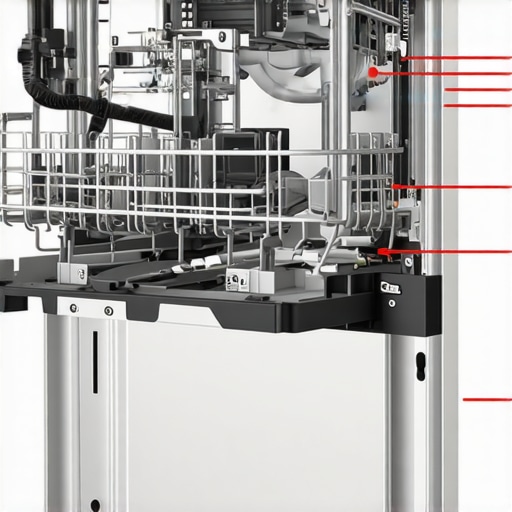 Many homeowners assume that installing a dishwasher is straightforward and that warranty protections are automatic, but these misconceptions can lead to costly mistakes. One prevalent myth is that any installation will do, but in reality, overlooking critical details like proper fittings or sealing can void your warranty unexpectedly. In fact, manufacturers often specify exact requirements for parts and installation procedures, and deviating from these standards—even unintentionally—can cause your warranty to become invalid.
Another misconception revolves around parts quality. Many believe that generic or cheaper replacements are acceptable, yet expert insights reveal that using non-rated or incompatible parts increases the risk of leaks, damage, and warranty denial. Proper parts selection isn’t just about functioning; it’s about meeting the manufacturer’s specifications, which is crucial for long-term performance and coverage. You can learn more about selecting the right parts by visiting this guide on parts selection.
An often-overlooked nuance involves record-keeping. Commonly, homeowners don’t realize that detailed documentation—including photos of the installation, parts receipts, and fitting labels—can be essential during warranty claims. This step is frequently dismissed as unnecessary, but without clear proof of proper installation, disputes are more likely, especially if issues arise months later. For tips on maintaining effective records, check out this resource on documentation.
Advanced installers and knowledgeable DIYers should also be aware of the pathway to warranty validation through digital verification. Filming your installation process with timestamped photos or videos provides irrefutable evidence that you followed all protocols, preempting claims from manufacturers that might cite improper setup. As expert advice suggests, comprehensive visual records can be game-changers in warranty disputes—think of them as digital
Keep Your Dishwasher Running Smoothly with the Right Tools
Maintaining a dishwasher for optimal performance isn’t just about knowledge—having the right tools makes all the difference. Over the years, I’ve honed a selection of essential equipment that ensures my routine checks and repairs are efficient, precise, and effective. Investing in quality tools not only extends your appliance’s lifespan but also helps safeguard your warranty from common pitfalls.
One of my top picks is a digital multimeter. I use this device to check electrical continuity and voltage at various components like the control board and wiring connections. Reliable readings can help diagnose issues before assuming a part has failed, saving time and unnecessary replacements. I personally prefer a digital model with auto-ranging capabilities for accuracy and ease of use during diagnostics.
For verifying water pressure and flow, a digital pressure gauge becomes indispensable. Ensuring your water supply is within manufacturer specifications prevents leaks and component stress, which could void warranties. I always keep a high-quality gauge that can handle up to 200 PSI, providing a clear picture of your home’s water pressure in real-time.
Socket wrenches with a full set of sizes are critical during installation and periodic inspections. I recommend a ratcheting set with quick-release mechanisms, which allow for faster adjustments and better access in tight spaces. Using rated fittings and tools ensures proper torque application, avoiding over-tightening that could damage parts or under-tightening that might cause leaks.
An ultrasound leak detector is a game-changer for early leak detection. I use it to listen for ultrasonic sounds emitted by small leaks—well before they become visible or cause damage. This proactive approach lets me address potential issues during routine maintenance, avoiding costly repairs or warranty claims.
To keep all these tools organized and ready for use, I rely on a durable toolbox with labeled compartments. This simple step ensures that when time comes to inspect or repair, I can quickly locate the right tool without hassle. To streamline your maintenance routine, consider adding a digital inspection mirror, which helps see behind panels and underneath appliances—often the unseen sources of trouble.
Looking ahead, I believe tools integrating smart technology—like Bluetooth-connected sensors—will become standard. These would provide real-time data monitoring directly to your smartphone, making maintenance more predictive and less reactive. Already, some advanced models offer app-based diagnostics, and I predict this trend will only grow in the appliance repair industry.
How do I maintain my tools over time?
Regular cleaning and proper storage are key. Keep electrical components dry and free of dust, and replace batteries as needed to ensure tools like multimeters retain accuracy. Calibration periodically ensures your diagnostic equipment stay reliable, preventing inaccurate readings that could jeopardize warranty coverage or lead to unnecessary replacements. By investing a little effort into maintenance of your tools, you’ll maximize their lifespan and capability.
Finally, don’t overlook the importance of investing in quality tools early on. Using inferior equipment might seem like a savings, but it can cost more in the long run through misdiagnosed issues, damage, or invalidated warranties. Try one advanced tip today: equip yourself with a digital leak detector. Early leak detection can prevent water damage and warranty disputes, making it a worthwhile addition to your arsenal. For comprehensive guidance on parts and maintenance, be sure to explore this detailed resource.
What I Wish I Knew Before Installing My Dishwasher
One of my toughest lessons was realizing that even seemingly minor mistakes during installation could jeopardize my warranty. Over-tightening fittings or reusing old supply lines might seem harmless, but these small oversights can lead to leaks or damage that void your coverage. Trust me, paying attention to every detail upfront saves headaches later.
Second, I learned that the quality of parts truly matters. Cheap, generic components may seem convenient, but they often fail prematurely and aren’t rated for your dishwasher’s specifications, increasing the risk of voiding your warranty. Investing in properly rated, durable parts not only ensures better performance but also safeguards your coverage.
Third, keeping meticulous records, including photos of the installation process and receipts for parts bought, proved invaluable. When issues arose, these proofs swiftly validated that I followed all proper procedures, preventing claim rejections. Documentation is your silent ally in maintaining warranty rights.
Tools and Resources I Trust for Installation and Maintenance
For precise installation, I rely on a digital torque wrench—it’s essential for tightening fittings to manufacturer-recommended torque levels, preventing leaks and ensuring warranty compliance. A reliable pressure gauge helps me monitor water pressure, which is critical for avoiding damage and leaks.
The use of a ultrasonic leak detector has revolutionized my maintenance routine. Detecting small leaks early can save thousands in repairs and keep my warranty intact. Additionally, I swear by comprehensive guides like top tips for selecting the right parts to make informed choices that support long-term performance.
Your Turn to Take Action with Confidence
Remember, proper installation, quality parts, and diligent record-keeping are your best defenses against costly warranty issues. Certified tools and trusted resources make the process smoother and more effective, giving you peace of mind and protecting your investment. Don’t wait for a leak or breakdown to realize the importance of these steps—start implementing them today to ensure your dishwasher remains covered and functional for years to come.
Have you experienced a challenge with warranty documentation or installation? Share your story below, and let’s learn from each other’s journeys toward smarter appliance care.
,
Related Posts
DIY Repair Proof: How to Save Your 2026 Warranty After a Part Swap
It was late one evening when I finally decided to…
Smart Dishwasher Warranty & Parts: Essential Installation Guide
Ever had that sinking feeling when your brand-new smart dishwasher…
Maximize Your Warranty & Parts for Smart Dishwashers: Expert Tips for 2025
Ever had that sinking feeling when your smart dishwasher suddenly…