
I was sitting on my damp kitchen linoleum at midnight, staring at a puddle that was slowly creeping toward my living room rug. I had just spent four hours on a DIY dishwasher installation, feeling like a hero. Then, the drip started. When I called the manufacturer’s ‘VIP’ line the next morning, the reality check hit hard: because I hadn’t used their certified pro, my shiny one-year warranty was essentially void for anything related to the leak. It is a gut-punch many of us face, but it is also the moment I started looking at extended protection plans not as a scam, but as a necessary shield against the fine print.
The Truth About the Manufacturer Safety Net
Most of us treat that basic one-year manufacturer warranty like a holy relic. We think it covers everything. It does not. In my early days of homeownership, I made the classic mistake of reusing an old power cord to save twenty bucks, only to find out later that such shortcuts can give manufacturers an easy ‘out’ when a circuit board fries. The standard factory coverage is often hyper-focused on ‘defects in materials,’ which sounds great until you realize it rarely covers the $150 service fee just to get a technician to your front door. This is exactly why your warranty covers parts but not the labor in many cases. According to a study by Consumer Reports, modern appliances are more complex and prone to electronic failure than ever, with repair costs often exceeding 50% of the original purchase price.
Is that extra protection plan actually worth the money?
I used to be the person who scoffed at the cashier offering an extended plan. I would say I would take my chances with a smirk. But after dealing with backordered components and being told I had to wait three weeks for an ‘authorized’ repairman, my tune changed. Extended warranties, especially third-party ones, often include ‘lemon’ clauses and faster service windows that the big brands ignore. You need to know how to get your warranty claim approved on the first try by keeping the right records, because the extended providers are often more flexible than the factory suits. Have you ever felt the sting of a denied claim because of a technicality in the manual? I want to know if you have faced this specific frustration—tell me your story. Today, I am going to show you why that extra couple of dollars a month might actually be the smartest investment you make for your kitchen’s sanity and peace of mind.
Protect Your Investment with Proper Paperwork
The single biggest hurdle between you and a successful repair is a missing piece of paper. You might think having the digital confirmation on your phone is enough, but in the world of claims, physical or PDF proof of a professional installation is the ultimate currency. This is why your warranty claim fails without an authorized receipt more often than for actual mechanical failures. When my first unit’s control board went haywire six months in, the first thing the adjuster asked for wasn’t the serial number—it was the invoice from the plumber. Without it, they treat the machine as a DIY project, and DIY is the ‘get out of jail free’ card for manufacturers.
Documenting the Professional Touch
If you are hiring a pro, do not just pay them and wave goodbye. You need an itemized list. Ensure the receipt explicitly mentions that they installed a new water line and tested for leaks. This paper trail is the way to protect your warranty during a kitchen remodel or a simple upgrade. I keep a dedicated ‘Home Tech’ folder in my kitchen drawer specifically for these. It feels old-school, but when you are arguing over a $400 motor, that folder is your best friend. 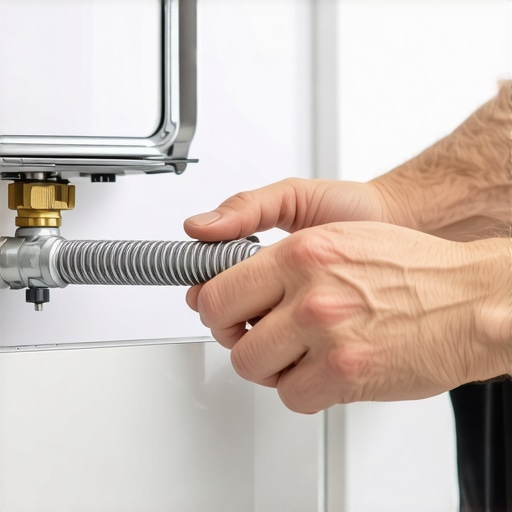
Why New Components Are Non-Negotiable
Think of your dishwasher as a high-performance engine. You wouldn’t put dirty, used oil into a brand-new Ferrari, yet many people try to hook up a thousand-dollar appliance using a five-year-old water valve. This is precisely why your professional installer insists on a new water valve every single time. Reusing old components is the easiest way to introduce a slow drip that goes unnoticed until your subfloor is ruined. Manufacturers know this, and they will check for ‘reused hardware’ the moment a leak-related claim is filed.
Avoid the Trap of Reusing Old Hardware
I learned this lesson the hard way during a ‘quick’ weekend swap. I tried to save $15 by keeping a crusty brass fitting from my 2012 model. It looked fine to the naked eye, but the threads were slightly warped. Three days later, I was cleaning up a gallon of water from under my cabinets. This is a classic example of the most common mistakes professional installers see when homeowners try to take shortcuts. It is also why your installer refuses to reuse your old brass fittings—they don’t want the liability, and neither should you.
Test Every Function Before the Installer Leaves
Don’t let the technician walk out the door the moment the power turns on. You need to verify that every component covered in the complete list of dishwasher parts covered by warranty is functioning under pressure. Run a short cycle, check the heat, and verify the drainage. I once had an installer leave before the drain cycle finished, only to find out my garbage disposal plug hadn’t been knocked out. It resulted in a flooded kitchen and a service fee I could have avoided. By catching these issues immediately, you ensure that if something like a pump fails later, you can spot a failing wash motor before it seizes and have a clear record that the initial setup was perfect.
While everyone warns you about lime scale, here is the contrarian truth: over-softened water can be just as destructive to your unit’s internal health. I have seen machines where the interior looks like it was sandblasted because the owner used heavy-duty pods in a soft-water environment. This is exactly why soft water is ruining your dishwasher interior faster than hard water. The chemistry is simple but brutal; without minerals to react with, the detergent turns its chemical aggression toward your racks, glass, and protective coatings. The Association of Home Appliance Manufacturers (AHAM) has highlighted in various studies that detergent-to-water ratios are the most overlooked factor in modern appliance longevity. Over-softened water makes detergents hyper-active, leading to ‘etching’—a permanent cloudiness that no cleaner can remove and that manufacturers often label as ‘user error.’
How Does Your Local Water Quality Affect Your Claims?
You might think a failure is a failure, but manufacturers often scrutinize the impact of hard water on your warranty eligibility when a heating element or pump burns out prematurely. If you haven’t been using the recommended salt or descalers for your specific ZIP code, they can claim ‘negligent maintenance’ and deny a $300 part replacement. It is a sophisticated trap that relies on your lack of knowledge about local parts-per-million levels. Have you ever fallen into this trap? Let me know in the comments. 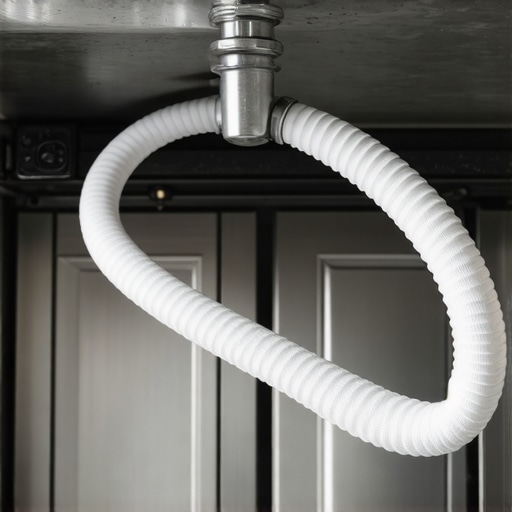 One of the most common ‘oops’ factors I see involves the drain setup. I’ve walked into kitchens where a premium unit was failing because of a simple lack of a ‘high loop.’ This is why your installer insists on a high loop drain or a dedicated air gap. Without it, dirty sink water can be siphoned back into your clean machine, causing a smell that no amount of chemicals can fix. In fact, you should stop using vinegar in your high-end smart machine altogether, as the acidity can degrade the sensitive gaskets you’re trying to save. Instead, focus on the one maintenance task that doubles the life of your gasket: a simple manual wipe-down with warm water once a month to remove detergent film. Advanced users often forget that modern smart units keep internal error logs. If you’re tech-savvy, knowing how to recover data logs from your smart control board can provide the smoking gun you need if a manufacturer claims a power surge was your fault when it was actually a faulty capacitor. Finally, stop being afraid of the heavy cycle. Most people stick to ‘Normal’ or ‘Eco’ thinking they are saving the machine, but why the heavy cycle is actually better for your machine health comes down to thermal management. Higher temperatures prevent the buildup of fatty deposits in the pump housing. If you want to know how to get your warranty claim approved on the first try, show the technician a clean sump and a well-maintained interior. It signals that you are a responsible owner, making it much harder for them to blame you for a mechanical failure.I don’t just wing it anymore when it comes to appliance maintenance. I keep a dedicated ‘Go Bag’ in my utility closet specifically for the kitchen. I used to think a standard crescent wrench was a universal solution, but after stripping a soft brass fitting, I learned that using the proper tool to use when tightening your water supply line—specifically a dedicated flare nut wrench—is the difference between a bone-dry floor and a midnight flood. If your unit suddenly loses power, knowing how to test your thermal fuse with a basic multimeter can save you from a $200 service call for a part that costs less than a latte.
Build a Toolkit That Actually Protects Your Floor
My maintenance routine isn’t about deep cleaning every day; it is about having the right gear to catch failures before they become catastrophes. I always keep a few the most durable braided steel hoses for long-term safety on hand because rubber hoses are a ticking time bomb in high-pressure systems. Beyond the physical tools, I have started relying on tech. I’ve installed a the 20 dollar smart sensor that detects leaks before your kitchen floods right under the motor housing. It’s a small price to pay for a notification on my phone that could save my hardwood floors.
How do I keep my dishwasher running like new for a decade?
Consistency is the secret sauce. You need to know when to replace dishwasher parts for optimal performance rather than waiting for a total breakdown. For instance, I swap my water inlet valve every five years regardless of how it looks. It is one of those parts to check when installing a dishwasher for long-term performance that people ignore until it’s too late. According to the Bosch Technical Service Manual for the 800 Series, internal sensors are calibrated for specific flow rates; even a slight clog in an old valve can throw off the entire wash logic, leading to the dreaded ‘cloudy glass’ syndrome. 
Why Generic Parts Are a Gambling Mans Game
When a component does fail, the temptation to buy a $12 knock-off from a random online marketplace is huge. Resist it. There is a technical reason why OEM pumps outlast cheap alternatives every time: they are built to the exact electrical specifications of your control board. I’ve seen third-party spray arms melt because the plastic wasn’t rated for high-heat sanitize cycles. You must learn how to spot a fake replacement part before it fries your control board, because once you pop that generic part in, you can kiss any remaining manufacturer support goodbye.
The Future of Kitchen Maintenance is Predictive
We are moving toward an era where your dishwasher will tell you it’s going to fail two weeks before it actually does. With the rise of AI-integrated appliances, how to update the firmware on your kitchen wi-fi module is becoming as important as cleaning the filter. These updates often include better sensor calibration that can extend the life of your motor by optimizing torque. I predict that within five years, warranty claims will be handled entirely via data logs transmitted directly to the manufacturer. If you want to stay ahead, I highly recommend you take five minutes tonight to recover data logs from your smart control board just to see what your machine is currently ‘feeling’—it is the ultimate pro move for a modern homeowner.
Hard-Won Truths From My Most Expensive Plumbing Mistake
After years of tinkering and a few soggy floorboards, I have realized that the factory manual is only half the story. The real secret to a stress-free kitchen isn’t just about buying the most expensive unit; it is about how you defend your purchase. First, never underestimate the power of a timestamped photo. Before the installer slides that machine into the cabinet, take a clear picture of the model sticker and the condition of the floor. This simple act is your primary defense if you ever need to prove pre-existing damage or clarify what your dishwasher warranty doesn’t cover and how to avoid fees down the road.
Another lightbulb moment for me was realizing that the warranty clock starts the moment you swipe your card, not when the machine is first used. If your kitchen remodel takes three months, you have already lost a quarter of your factory protection. This is why I always suggest maximizing your dishwashers warranty coverage today by registering the product the hour it arrives. Finally, remember that technicians are humans too. If you can clearly explain the issue using technical terms—knowing how to diagnose dishwasher parts during warranty periods—they are much more likely to go the extra mile for you. A little knowledge goes a long way in turning a denied claim into a free repair.
The Survival Kit for Every Modern Dishwasher Owner
I don’t believe in buying every gadget on the shelf, but a few specific items have saved me thousands in potential repair bills. I personally trust a high-quality multimeter above all else. It is the most reliable way to test a thermal fuse without having to wait for a professional to show up. If you are serious about DIY maintenance, you should also familiarize yourself with essential parts every dishwasher owner should know about, from the turbidity sensor to the drain solenoid.
I also keep a digital folder of authorized service providers in my area. Don’t wait for a flood to find a reputable pro; vet them now. I rely on the common dishwasher parts and their role in proper installation guides found on manufacturer sites to verify that the person I hire is actually doing the job correctly. If they don’t mention the high-loop or the water pressure requirements, they aren’t the right pro for my kitchen.
Take Command of Your Kitchen’s Health Today
Your dishwasher is likely the hardest-working appliance in your home, and it deserves more than just a passing thought. By shifting your mindset from “fix it when it breaks” to “protect it while it works,” you are effectively buying yourself time and money. Don’t let the fear of a voided warranty keep you from learning the ins and outs of your machine. With the right documentation, a basic toolkit, and a bit of proactive care, you can ensure your kitchen stays dry and your dishes stay sparkling for the next decade. You have the tools and the knowledge—now it’s time to put them to work. Have you ever had a warranty claim denied for a reason that seemed totally unfair? Let me know your story in the comments below!
Related Posts

How to Document Your Installation to Guarantee Warranty Approval
I vividly remember the sinking feeling in my stomach when…

Why Your Warranty Claim Hinges on a Single Timestamped Photo
Ever had that sinking feeling when your brand-new dishwasher starts…

The Hidden Costs of Buying a Used Dishwasher Without a Warranty
I remember the moment I realized I’d made a mistake…