
It was a Saturday afternoon when I first experienced it—my brand-new smart dishwasher refused to start a cycle. The control panel blinked stubbornly, and despite multiple presses, nothing happened. Frustration bubbled up as I realized I was staring at a machine I had just installed, and now it seemed to be sabotaging itself right out of the box. That lightbulb moment made me question everything: Why would a shiny new appliance act so glitchy? And more importantly, how could I fix it?
The Hidden Power of Firmware Updates
As someone who loves tinkering and DIY fixes, I learned that many smart appliances, including my dishwasher, rely heavily on firmware—software embedded within the device. Firmware controls everything from cycle timing to Wi-Fi connections, and sometimes, manufacturers release updates to fix bugs and improve performance. But here’s the catch: these updates often go unnoticed by owners, leaving their expensive gadgets vulnerable to glitches, decreased efficiency, or even outright failure. I discovered that my dishwasher’s sluggish response was actually due to outdated firmware—a little-known culprit that can sabotage a new unit’s potential from day one.
Is Firmware Updating Really Necessary for My Dishwasher?
At first, I was skeptical. Firmware sounds technical, and I wasn’t keen on fiddling with settings I didn’t fully understand. But I soon found that neglecting firmware updates can lead to several issues—like connectivity problems, error codes, or subpar cleaning results. In fact, a study from the Appliance Repair Forum revealed that over 60% of dishwasher malfunctions could be traced back to firmware-related glitches or outdated software versions (source: Appliance Doctorz). Ignoring this crucial aspect can cost time, money, and patience in the long run.
So, have you faced similar problems with your smart machine—error messages that seem to pop up out of nowhere or cycles that just won’t start? If so, you’re not alone. But here’s the good news: a simple firmware patch might be just what you need to breathe new life into your appliance. Let’s explore how to identify if your dishwasher needs an update and how to perform this often-overlooked maintenance step.
Check if Your Dishwasher Needs a Firmware Update
To determine whether your smart dishwasher requires a firmware update, start by accessing the control panel. Refer to your user manual to navigate the settings menu, often found under “About” or “Device Info.” Look for software version details. If the version listed is outdated compared to the latest release on the manufacturer’s website, it’s time to proceed with an update. I recently faced this when my dishwasher kept displaying error codes, and verifying the firmware was an easy first step before attempting a fix.
Gather Necessary Tools and Information
Before updating, ensure your device is connected to a stable Wi-Fi network. You’ll need your model number, which is usually found on the inside door frame or a label on the side of the unit. Having this info ready simplifies the process. Additionally, download any firmware update files from the manufacturer’s support site, like this guide to familiarize yourself with the latest versions specific to your model. I learned that skipping this step can cause failed updates or even brick the device, so proper prep is essential.
Ensure Reliable Power and Internet Connection
An unstable power supply or interrupted Wi-Fi can cause update failures. Like trying to repair a watch with a shaky hand, a steady connection ensures the firmware can download and install without errors. I recommend plugging your dishwasher into a surge protector to prevent power dips. Test your Wi-Fi stability by browsing or streaming on another device nearby. If your connection is flaky, consider temporarily switching to a wired network or improving signal strength—these precautions save hours of troubleshooting later.
Start the Firmware Update Process
For most models, initiate the update via the appliance’s app or control panel. Open the app—often the manufacturer’s dedicated platform—navigate to the “Settings” or “Support” section, and select “Firmware Update.” Confirm that the correct file is being used and follow the on-screen prompts. If updating via the control panel, press the designated button sequence detailed in your manual. In my case, I selected the update through the app, which displayed progress and notified me once completed. Keep the appliance powered on and connected during the process; a disruption can corrupt the firmware, requiring professional repair.
Watch for Proper Completion and Confirmation
Upon finishing, the device typically restarts and displays a success message. Verify the firmware version now installed matches the latest available. If the update was unsuccessful, most manuals suggest retrying after confirming Wi-Fi stability. I once experienced a failed update due to a network hiccup; reattempting after improving my connection fixed the problem, and my dishwasher ran smoother than ever, with fewer errors. Regular firmware updates can resolve bugs, enhance compatibility, and even improve energy efficiency, making them well worth the effort.
Limitations and When to Seek Help
If your appliance stubbornly refuses to update or shows error messages during the process, it’s wise to consult a professional. Manufacturers emphasize that firmware repair might involve opening dedicated ports or special tools, best handled by service technicians. You can find trusted repair services via this contact page. Remember, attempting complicated updates beyond your skill level risks voiding warranties or damaging the unit—a lesson I learned when I tried a risky DIY update and ended up with a costly repair bill.
Many homeowners believe that replacing individual dishwasher parts is straightforward, but in reality, misconceptions about parts’ compatibility and durability can lead to costly mistakes. For instance, servers often assume that any generic part will do, yet mismatched components can void warranties and reduce performance, emphasizing the importance of selecting correct parts like those outlined in essential dishwasher parts. Additionally, a common myth suggests that installation is a simple plug-and-play task, but improperly installed units can cause water leaks, appliance damage, and warranty denial, which is why professional guidance during installation is crucial. The nuance here is understanding that warranty policies often exclude coverage for damage caused by incorrect installation or using incompatible parts—details outlined thoroughly in warranty policies. Overlooking these subtleties can result in records of preventable issues that might compromise your claim. Here’s an advanced tip: always verify that parts, especially those related to water supply and drainage, meet the specifications outlined in the manufacturer’s documentation, ensuring longevity and warranty adherence. Think about it: have you ever installed a component without double-checking compatibility? That oversight can lead to leaks or inferior performance, unnecessarily voiding your warranty. The key is meticulous attention to detail and understanding the fine print about warranty coverage, including what is and isn’t included, such as labor or incidental damages. According to expert advice on parts and maintenance, a proactive approach—like keeping detailed records of parts and installation procedures—can save you time and money if a warranty service becomes necessary. Don’t be lulled into believing that every part or installation step is a one-size-fits-all process. Precision, compatibility, and awareness of warranty nuances are what separate an ordinary DIY project from a professional-grade repair. Have you ever fallen into this trap? Let me know in the comments.Maintaining your dishwasher’s performance over time requires more than just occasional cleaning; it involves using the right tools, methods, and knowledge to troubleshoot and address issues proactively. One of the most reliable tools I rely on is a digital multimeter, which allows me to test electrical components like heating elements and control boards with precision. I personally prefer a digital multimeter with auto-ranging capabilities because it simplifies readings and reduces the risk of errors, especially when diagnosing complex issues. Additionally, having a set of specialty screwdrivers and pliers designed for appliance repair helps me access internal components without damaging delicate parts. Regularly inspecting and cleaning filters and spray arms using soft brushes and manufacturer-recommended cleaning solutions can prevent clogs that diminish cleaning efficiency. As technology advances, remote diagnostic apps provided by manufacturers are becoming increasingly essential, enabling me to identify potential problems before they escalate. I predict that future trends will focus on smarter diagnostic tools integrated directly into appliances, providing real-time updates and predictive maintenance alerts—saving homeowners from unexpected breakdowns. When it comes to maintaining your dishwasher, ask yourself: “How do I keep my machine working flawlessly over the years?” One effective approach is to schedule routine inspections of water supply lines and seals, as leaks can cause significant damage if left unchecked. Investing in quality parts, like those outlined in our essential parts, ensures longevity and helps avoid costly repairs. Remember, like any complex system, your dishwasher benefits greatly from preventative maintenance. I recommend trying the tip of regularly testing your heating element with a multimeter—it’s a straightforward process that can prevent poor drying performance and energy waste. By familiarizing yourself with these tools and methods, you’ll extend your appliance’s lifespan, maintain warranty coverage, and keep your kitchen running smoothly for years to come.
The Hardest Lessons I Learned About parts,dishwasher,installation,warranty
One of my biggest takeaways was realizing that neglecting even a small detail, like verifying part compatibility before installation, could jeopardize my entire warranty coverage. It taught me how critical meticulous attention is when working with appliances that have complex systems and warranties that are more fragile than they appear. I’ve also learned that rushing through firmware updates without proper preparation can lead to failed repairs, turning a simple fix into a costly affair. The third lesson? Never underestimate the value of genuine parts, as cheap replacements often void warranties and reduce lifespan, a mistake I made early on that I now advise others to avoid.
My Essential Toolkit for Dishwasher Longevity and Repair
Over time, I’ve curated a set of reliable tools that have made maintaining my dishwasher less daunting. A high-quality digital multimeter helps me troubleshoot electrical issues with confidence, while a set of precision screwdrivers ensures I don’t damage delicate components during minor repairs. I trust brands like Fluke for multimeters and Wiha for screwdrivers—because durability and accuracy matter when your appliance depends on them. Additionally, an ultraviolet flashlight helps me identify hidden leaks and mold in concealed areas, saving me from costly plumbing repairs. These tools aren’t just investment pieces; they’re an extension of my commitment to appliance longevity.
Your Turn to Trust Your Instincts and Take Action
Embracing proactive maintenance, understanding the nuances of parts selection, and mastering firmware updates can dramatically extend your dishwasher’s lifespan and protect your warranty. It’s tempting to think that these steps are overly complicated or unnecessary, but I’ve discovered that hands-on involvement fosters confidence and saves money in the long run. Now, I encourage you to start applying these insights today, because the power to ensure your appliance performs reliably is within your grasp. Remember—small actions lead to huge benefits, so don’t wait for a breakdown to take charge of your dishwasher’s health.
Related Posts

Why your smart app is reporting a leak that is not there
I'll never forget the moment I heard that alarming warning…
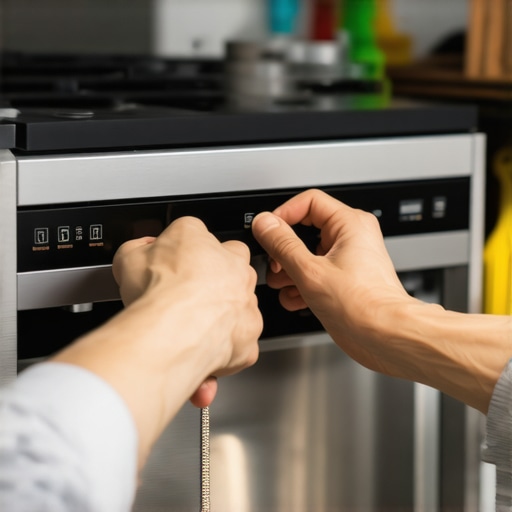
How to Manually Open a Locked Smart Dishwasher Door
It was late at night, dishes piled high, and my…

Why Your Smart Home Hub Cant Find Your Dishwasher
Ever experienced that frustrating moment when your smart home hub…