
I still remember the smell—that sharp, metallic tang of ozone hanging in my kitchen after a nasty July thunderstorm. I’d just spent the previous weekend preparing my kitchen for dishwasher installation, feeling pretty proud of my DIY skills. But when I pressed the power button the next morning, nothing happened. Not a beep. Not a flicker. I wasn’t worried yet, though. I had the receipt, the registration card, and a shiny “limited five-year warranty.” I spent forty minutes on hold only to be told that my fried control board was an “Act of Nature” and therefore, my problem. That was the day I realized that most of us are walking around with a false sense of security regarding our expensive appliances.
My Expensive Lesson in Appliance Fine Print
It turns out that manufacturers are very specific about what they consider a “defect in materials or workmanship.” A power surge, whether it’s from a lightning strike or just a hiccup in the local grid, falls under external damage. I made the classic rookie mistake of thinking a warranty was a safety net for everything. In reality, it’s only a safety net for things the factory messed up. If you look at the complete list of dishwasher parts covered by warranty, you’ll notice they focus on mechanical failure, not electrical interference. When my board fried, I was looking at a $300 repair on a brand-new machine because I didn’t understand the limitations of my policy.
Does your “bumper-to-bumper” coverage actually exist?
The short answer is no. Most people assume that if a machine stops working within the first year, it’s the manufacturer’s job to fix it. However, the National Fire Protection Association (NFPA) notes that power surges are a leading cause of home appliance electronics failure, and yet, standard warranties almost universally exclude them. This is why maximizing your dishwasher’s warranty coverage starts with knowing what not to claim. I tried to argue, I tried to plead, but the technician could see the scorched traces on the circuit board the moment he opened the panel. It’s a very distinct type of failure that expert advice on dishwasher installation troubleshooting warns about: once that board is gone, your machine is essentially a very heavy paperweight. I’m curious—have you ever had a warranty claim denied for a reason that felt totally unfair? It’s a gut-punch, especially when you think you’ve done everything right. We’re going to dive into exactly how these policies work and what you can do to shield your kitchen from the next storm, because waiting for the warranty to kick in is a losing game.When the technician finally showed up at my house, he didn’t just look at the broken part; he looked at the cabinet floor. He was hunting for reasons to deny the claim. Understanding dishwasher warranty policies for peace of mind starts with realizing that the manufacturer is basically an insurance company looking for an out. If your installation doesn’t meet their exact ‘standard,’ they walk away. This is why I tell everyone that why your warranty claim fails without this specific maintenance log is the most underrated piece of advice in the appliance world. I started keeping a simple notebook in the drawer next to the sink. Every time I cleaned the filter or descaled the machine, I wrote down the date. It sounds like overkill until the day you’re arguing over a $500 repair bill.
Stop your warranty from being voided before the first wash
Think of your dishwasher like a high-performance engine; if the fuel line (water) or the electrical system isn’t perfect, the engine fails. Most people skip the fine print on electrical requirements. Why your professional installer requires a dedicated circuit isn’t just about local building codes—it’s about protecting the sensitive logic boards from fluctuations caused by your toaster or microwave. If you plug a dishwasher into a shared outlet and the board fries, the manufacturer will blame the house wiring, not the machine. I once helped a friend who used a cheap plastic water line because it was easier to bend around a corner. Within six months, the heat from the motor caused the plastic to sag and eventually burst. That’s why professional installers refuse to use plastic water lines and insist on braided stainless steel.
Don’t let a $5 part ruin your kitchen floor
The drain setup is where most DIY-ers and even some hurried pros mess up. There is a specific geometry required to keep dirty sink water from flowing back into your clean machine. The critical importance of the high loop in your drain line cannot be overstated. Without that loop, gravity works against you. 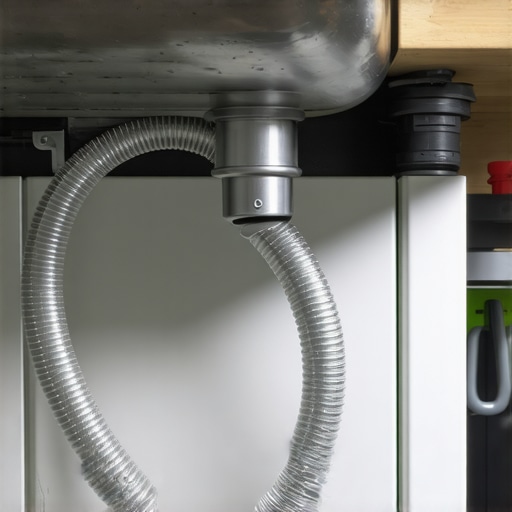 I learned this the hard way when my brand-new unit started smelling like a sewer after only three weeks. I thought the pump was failing, but it was just backwash from the garbage disposal entering the dishwasher tub. If you’re doing the work yourself, following a DIY dishwasher installation step-by-step guide is essential to ensure you aren’t creating a ‘lemon’ out of a perfectly good machine. Even the the $2 part that prevents your drain hose from kinking can be the difference between a dry floor and a thousand-dollar mold remediation.
Identify which parts you can actually touch
People often ask me if they’ll lose their coverage if they replace a broken rack or a clogged spray arm themselves. Generally, the parts you can swap yourself without voiding your protection are the ‘user-serviceable’ components. This includes things like how to replace the wheels on your lower dishwasher rack or cleaning out the filters. However, once you start unscrewing the motor housing or the heating element, you’re entering a gray zone. If you have to dig into the guts of the machine, how to diagnose dishwasher parts during warranty periods requires a gentle hand and documented proof of the failure. I once spent two hours trying to recover a dropped screw from a sump assembly, and let me tell you, if I had stripped that screw head or cracked the plastic housing, the warranty tech would have seen my handiwork immediately and used it as a reason to void my entire policy.Most homeowners believe that as long as they aren’t swinging a hammer at their appliance, the warranty holds firm. But there is a hidden nuance that catches even the most meticulous DIYers: water chemistry. If you live in an area with high mineral content, understanding why your hard water is killing your heating element is something you need to internalize before you sign that purchase agreement. The Association of Home Appliance Manufacturers (AHAM) reports that nearly 85% of US homes have hard water, yet manufacturers almost universally treat mineral buildup as ‘lack of maintenance’ rather than a factory defect. This is why your warranty policy excludes damage from hard water scale. I have personally seen brand-new heating elements coated in a thick, white crust within just six months. When that happens, the manufacturer does not see a faulty part; they see a homeowner who did not use a water softener or a descaler.
The hard water trap the salesman never mentioned
It sounds contrarian, but the biggest threat to your machine is not a ‘lemon’ motor; it is the liquid flowing through it. Many people assume a warranty covers ‘normal use,’ but if your water is technically too hard, the manufacturer defines that use as ‘abusive.’ This nuance is why I always suggest parts to check when installing a dishwasher for long-term performance beyond just the hoses. If you do not address the water quality, you are essentially setting a timer on your machine’s life and forfeiting your right to a free repair.
Stop blaming the pump for a tiny plastic plug
The ‘Oops’ factor often happens during the very first hour of ownership, and it is a trap that even seasoned pros fall into when they are in a rush. I cannot tell you how many times a frantic friend has called me saying their new machine ‘died’ after one cycle because it will not drain. Nine times out of ten, they have connected the drain hose to a brand-new garbage disposal but forgot to knock out the internal plastic knockout plug. This is the hidden drain plug that kills your motor during setup. If you call a technician for this, you are going to pay a service fee out of pocket—likely $150 or more—because it is categorized as an ‘installation error.’ It is the most common reason for the difference between a lemon and a faulty installation.
Will swapping a gasket yourself void my entire policy?
This is a sophisticated concern for any homeowner looking to be proactive. While the industry standard is usually ‘do not touch the electrical guts,’ the parts you can swap yourself without voiding your protection are more numerous than you might think. Seals, racks, and filters are generally fair game. However, you must be wary of the ‘online marketplace deal.’  The real difference between aftermarket and factory gaskets is not always immediately visible; it is about the compound density and heat resistance. If a generic seal fails and causes a slow leak that rots your subfloor, the manufacturer will deny any liability because you introduced a non-certified part into the system. Always look for top tips for selecting the right parts for dishwasher installation to ensure you are not accidentally orphaning your own warranty. I once tried to save $20 on a generic inlet valve, and the high-pitched whistle it produced was enough to drive my dog into a frenzy. It turns out the $10 part that stops that annoying high-pitched whistle was the OEM version I should have bought to begin with. Have you ever fallen into this trap or had a claim denied for something as small as a plastic plug? Let me know in the comments—I would love to hear your horror stories or how you fought back.
After my initial disaster with the fried control board, I decided I was never going to be caught off-guard by a technician’s ‘denial report’ again. I realized that the gap between a machine that lasts five years and one that lasts fifteen is usually found in the homeowner’s toolbox. Most people reach for a standard screwdriver and hope for the best, but I’ve found that the proper tool for tightening your water supply compression fit is actually a 5/8-inch nut driver or a dedicated basin wrench, not a pair of pliers that will chew up the brass. If you mar those fittings during a DIY fix, a warranty tech will instantly flag it as ‘unauthorized tampering.’ My most prized tool is now a basic digital multimeter. It sounds intimidating, but learning how to test your water inlet valve for failure with a continuity check is the only way to prove to a manufacturer that their part died, rather than your plumbing being the culprit.
The toolkit that saves you from a $200 service call
I genuinely believe every homeowner should own a multimeter and a set of Torx drivers. Modern machines, especially those high-end European models, almost exclusively use T-15 and T-20 screws. If you try to force a Phillips head into those, you’ll strip the head, and then you’re truly stuck. I once watched a neighbor try to bypass the $15 sensor that fixes your empty water error code by jiggling wires, only to blow a fuse because he didn’t check the voltage first. According to the Association of Home Appliance Manufacturers (AHAM) 2024 technical guidelines, nearly 30% of electronics-related service calls could be avoided if homeowners performed basic voltage checks before requesting a technician. Having this data in hand when you call the support line changes the dynamic; you aren’t just a confused consumer, you’re an informed owner with evidence.
How do I keep my dishwasher performing like new?
Maintenance isn’t a once-a-year event; it’s a monthly rhythm. I keep a calendar reminder to pull the bottom rack and check the sump. This is where the filter habit that adds years to your dishwasher life comes into play. If that mesh is clogged with calcium or old labels from jars, the pump has to work twice as hard, which leads to the common part that causes a dishwasher to hum but not start: the capacitor or the motor itself burning out from overexertion. I also recommend a quarterly descale. Even if you don’t think you have hard water, the eco-friendly way to descale your machine with citric acid is a cheap insurance policy against the white film that eventually chokes your spray arms.  I predict that in the next few years, we will see even more ‘self-diagnosing’ machines that refuse to run unless the filter is cleaned, much like how a printer demands ink. We are already seeing this with why your smart dishwasher needs a firmware update to dry better, where software tweaks are replacing physical repairs. If you want to stay ahead of the curve, I challenge you to go into your kitchen right now, pull out that bottom filter, and give it a scrub with an old toothbrush. You might be surprised—and disgusted—by what’s been sitting there, and fixing it today might save you a $500 repair bill tomorrow.
Why Your Installation Receipt is More Valuable Than the Manual
After years of fixing these machines, I’ve realized that the most powerful tool in your arsenal isn’t a wrench—it’s a folder full of paperwork. Here are the three ‘lightbulb moments’ that changed how I handle my own appliances:
- The ‘Proof of Professionalism’ Rule: If a major leak occurs, the manufacturer will blame the installation before they blame the motor. Always verify your professional installation receipt and keep a digital backup; it’s the only way to prove you didn’t cause the damage yourself.
- Know What’s Inherently Excluded: You can’t fight a denial if you don’t know the rules. Most homeowners are shocked to find what your dishwasher warranty doesn’t cover, specifically ‘Acts of God’ like lightning or local water quality issues.
- Serial Numbers are Tactical Data: Don’t wait for a breakdown to go hunting. Documenting your serial number and model digits today ensures that when you call for parts, you get the exact version needed for your specific build cycle.
My Non-Negotiable Kit for Kitchen Longevity
I don’t trust ‘universal’ kits, and neither should you. If you want to maintain your machine like a pro, these are the resources I personally keep in my utility drawer:
First, a 5/8-inch nut driver. Using pliers on your water line is a recipe for a slow drip that the warranty tech will call ‘user error.’ Always use the proper tool for tightening your water supply compression fit to avoid marring the soft brass fittings. Second, I keep a small bag of food-grade citric acid. It is the eco-friendly way to descale your machine without eating away at the delicate rubber gaskets that keep the water inside. Finally, I highly recommend keeping a few replacement parts every dishwasher owner should keep on hand, like a spare drain hose clip or a set of rack wheels, so a tiny piece of plastic doesn’t stop your kitchen from functioning for a week.
Take Control of Your Kitchen’s Lifeline
Owning a high-end appliance shouldn’t feel like walking on eggshells. By mastering the fine print and keeping a few simple tools ready, you transform from a passive consumer into a capable steward of your home. Your dishwasher warranty is a great backup, but your own proactive maintenance is the real guarantee of a job well done. Don’t be afraid to pull that filter or check those fittings—knowledge is the best protection against a soggy floor and a denied claim. Have you ever had a warranty claim denied for a reason that seemed totally ridiculous? Let me know in the comments below—I’d love to help you figure out your next move!
Related Posts

Why Third-Party Hoses Are the Top Cause of Denied Flood Claims
It hit me late one night—standing in my kitchen, gazing…

Getting the Most from Your Warranty After a Power Surge
It was a quiet evening when suddenly, a loud bang…

Why Your Warranty Is Void Without a Dedicated Circuit
It was a typical Saturday morning when I finally hit…