
I remember the smell of fresh cabinetry and the satisfying ‘click’ of a brand-new dishwasher door closing for the first time. I had just finished my weekend project—a shiny, stainless steel beauty with a ‘Lifetime Tub Warranty’ sticker that made me feel invincible. I thought I’d saved a few hundred bucks by skipping the pro. Fast forward six months, and a tiny hairline fracture appeared near the mounting bracket. I called the manufacturer, smugly confident in my warranty. The agent asked one question: ‘Do you have the professional installation receipt?’ My heart sank. Because I had used the wrong screws and drilled directly into the tub flange, I hadn’t just installed a dishwasher; I had effectively shredded my legal protection. It was a $900 lesson in humility. [IMAGE_PLACEHOLDER]
Why Your Stainless Steel Tub Isn’t as Safe as You Think
Most of us buy high-end machines because we want that peace of mind. We see those stickers on the door promising decades of service, and we assume the manufacturer has our back. But here is the cold, hard truth: a ‘lifetime’ warranty is often a minefield of fine print. I learned the hard way that skipping the professional installation receipt is the fastest way to turn a premium appliance into a giant paperweight. Today, I’m going to walk you through the specific installation traps that void warranties, focusing on the parts and methods that keep your coverage intact. We aren’t just talking about plugging it in; we are talking about maximizing your dishwasher’s warranty coverage so you never have to pay for a manufacturer’s defect out of pocket. It’s not just about the big things like the motor or the pump. Sometimes, it’s the 5 dollar gasket that prevents a 500 dollar floor repair. When you ignore the small details during the initial setup, you aren’t just risking a leak; you’re handing the manufacturer a ‘get out of jail free’ card. They have teams of engineers whose entire job is to find evidence of ‘consumer-caused failure.’
Is a Lifetime Warranty Actually Worth the Paper It Is Printed On?
It’s a fair question to be skeptical about. Many people think these warranties are just marketing gimmicks designed to upsell you on a ‘premium’ model. While the protection is real, it is incredibly fragile. According to the National Association of Home Builders (NAHB), improper appliance installation remains a leading cause of preventable home insurance claims, accounting for nearly 10% of water-related incidents in new constructions. If a pro doesn’t do it, or if you don’t follow the step-by-step guide to the absolute letter, you’re on the hook. Have you ever looked at your mounting brackets and wondered if they were actually supposed to be that tight? That’s where the trouble starts. Especially when you are trying to figure out the proper way to secure your machine to quartz countertops, one wrong move with a drill can crack the tub housing, and just like that, your lifetime guarantee vanishes. I want to know—have you ever had a warranty claim denied for a reason that seemed totally unfair? Or maybe you’re just starting and want to know the parts you can swap yourself without voiding your protection before you touch a single wrench. Let’s get into the nitty-gritty of how to protect your kitchen and your wallet simultaneously.I remember helping my neighbor, Dave, troubleshoot his brand-new European dishwasher. It kept throwing a mystery ‘drain error’ just three days after he installed it himself. When I crawled under his sink, I saw the culprit immediately: he had draped the drain hose across the floor of the cabinet like a sleeping snake. Every time the sink drained, a little bit of backwash was trickling into his clean machine. It was a mess, and more importantly, it was a violation of the installation manual that would have ended any warranty claim on the spot.
Don’t Let Your Drain Hose Turn Into a Sewer Straw
Think of your drain hose like a one-way street. If you don’t create a ‘high loop,’ you’re essentially inviting your sink’s dirty water to move into your dishwasher. This isn’t just about hygiene; it’s about pressure. Manufacturers design their pumps to push water up and out, and when gravity starts working against the system because of a poor layout, the motor burns out twice as fast. You need to identify the common dishwasher parts and their role in proper installation before you start pulling wires.
Keep the Dirty Water Out of Your Clean Cycle
The easiest fix is ensuring your hose is fastened to the very underside of your countertop before it hits the garbage disposal. This is why your installer insists on a high loop drain. If you skip this, you risk a ‘backflow’ incident that can ruin the internal sensors. I always use the 2 dollar part that prevents your drain hose from kinking to ensure that even if I push the machine back into the cavity, the flow remains unrestricted. 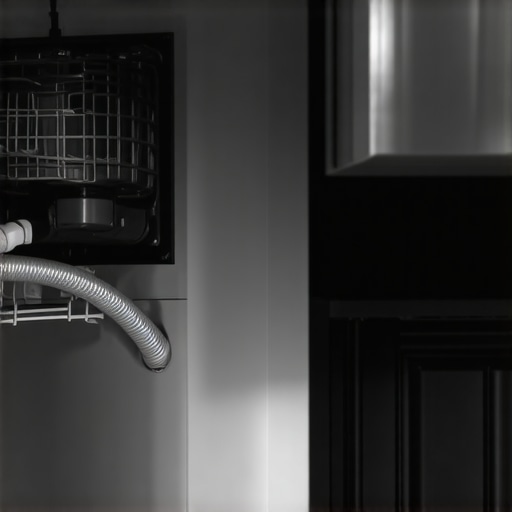
Leveling and Anchoring Are Not Optional Suggestions
A dishwasher is a vibrating box of water. If it is even slightly tilted, the water levels inside won’t hit the sensors correctly, and the door gasket will wear unevenly. I’ve seen gaskets fail in months simply because the machine was leaning half an inch to the left. This is a classic case where why professional leveling prevents your door from leaking becomes clear. If the door doesn’t seal perfectly, the steam escapes and can warp your expensive cabinetry.
The Right Way to Handle Quartz and Stone
Most people make the mistake of trying to screw the top mounting brackets into their beautiful new stone counters. Stop. You will crack the stone, and you will void your countertop warranty along with the dishwasher’s. Instead, look into the easiest way to install a side-mounting bracket kit. These allow you to secure the unit to the side cabinets rather than the top. Knowing the proper way to secure your machine to quartz countertops is the difference between a stable machine and one that tips forward every time you pull out the bottom rack.
Wiring Your Machine Without Burning Down the House
Electrical issues are the number one reason manufacturers deny warranty claims. They will look for any sign of a ‘loose neutral’ or a poorly capped wire. You must ensure you are the correct way to route wiring through a kitchen cabinet so that the wires aren’t pinched by the machine’s frame. If the insulation on a wire rubs thin, it will cause a short that might fry your control board. In many modern homes, this is also why your machine trips the GFCI outlet every time the heater kicks on. Always double-check your connections with a multimeter to ensure you’re getting a clean 120V before you slide the unit into its final home.
I’ve seen it a dozen times: a homeowner buys a top-tier machine and then grabs a ‘Universal Installation Kit’ from the bin at a big-box store, thinking they’ve outsmarted the system. Everyone says those kits are a convenient one-stop-shop, but in my experience, they are often the primary reason a warranty claim gets laughed out of the room. These kits frequently include generic plastic supply lines that lack the burst-rating of high-quality components. When you realize why professional installers refuse to use plastic water lines, you start to see the gap between ‘working’ and ‘protected.’ A cheap hose is a ticking time bomb for your kitchen floor.
Stop Trusting Those Universal Installation Kits
The biggest ‘oops’ factor I encounter isn’t a lack of effort; it’s the overtightening of the brass water inlet elbow. It feels natural to crank it down until it won’t budge, but these valves are usually made of plastic. One quarter-turn too many and you’ll create a hairline fracture that only leaks when the machine is under full vibration. By the time you notice, the manufacturer will point to ‘mechanical stress’ caused by the installer. This is where the difference between a lemon and a faulty installation becomes a very expensive distinction. I always recommend using the most durable braided steel hoses for long-term safety to avoid this exact headache.
#IMAGE_PLACE_HOLDER_C#
Can an Aftermarket Hose Really Void Your Entire Warranty?
It sounds like an exaggeration, but manufacturers are tightening their belts. According to a report by the Plumbing Manufacturers International (PMI), failure in low-quality connector hoses is a leading cause of residential water damage, and brands are increasingly using this as a reason to deny coverage for internal electrical failures. If an unapproved hose leaks into the base pan and fries the sensors, they’ll argue the ‘non-certified part’ caused the damage. This falls under the category of what your dishwasher warranty doesnt cover and how to avoid fees. You might think you’re saving twenty dollars on a hose, but you’re actually gambling with the entire value of the machine.
The Thermal Fuse Trap You Aren’t Prepared For
Another nuance that catches people off guard is the power supply. People often focus on the plumbing and forget that a loose wire nut in the junction box can cause a micro-arc. This heat can trip the thermal fuse or, worse, melt the control board housing. I’ve had clients ask me about the common part that causes a dishwasher to hum but not start, only to find out it was a scorched wire from a DIY electrical job. Manufacturers consider this an environmental factor, much like why your warranty doesnt cover power surges. Before you slide that machine in, you must be certain about the parts to check when installing a dishwasher for long-term performance. Have you ever had a claim denied for something as small as a hose or a receipt? Let me know in the comments—I’m curious how many of you have faced the ‘fine print’ monster. And remember, always keep a copy and know how to verify your professional installation receipt for insurance before a disaster strikes.
Once you’ve cleared the hurdle of the initial setup, the real work begins. I’ve seen homeowners treat their dishwasher like a trash can that happens to spray water, but that mindset is the fastest way to kill a circulation pump. Real protection starts with understanding dishwasher parts as a key to effective maintenance. It isn’t just about the big metal box; it’s about the ecosystem of sensors and seals that keep it running. I tell everyone that essential parts every dishwasher owner should know about start with the ones you can actually reach without a screwdriver.
Keep Your Machine Humming Without a Repairman
The number one killer of modern high-efficiency machines is “biofilm” and calcium buildup. If you live in an area with hard water, your heating element is basically a magnet for scale. I personally use a specialized descaler every three months—not vinegar, which can actually degrade certain rubber gaskets over time. If you want to keep your coverage intact, you need to know how to diagnose dishwasher parts during warranty periods before they fail completely. A slight change in the pitch of the motor usually means a piece of glass or a bone is stuck in the impeller, and ignoring that sound is a choice to let your warranty lapse through “negligent operation.”
How do I maintain my dishwasher’s performance over time?
Maintenance is a rhythm, not a once-a-year event. Every Saturday morning, I pull the bottom rack and check the filter. If you haven’t looked lately, the best way to clean the hidden filter under the spray arm is a simple rinse under warm water with a soft toothbrush. Keeping this clear prevents back-pressure on the drain pump, which is often the 10 dollar fix for a dishwasher that wont drain. Additionally, I keep a small stash of the replacement parts every dishwasher owner should keep on hand, like a spare door gasket and a set of rack rollers. It sounds obsessive, but when a gasket fails at 8 PM on a Tuesday, you’ll be glad you have it.
The Three Tools I Never Start a Project Without
I don’t care how many “no-tool” installations a brand promises; you need the right gear to ensure the machine is actually safe. I never touch a dishwasher without my Fluke digital multimeter. It’s the only way to know if your house wiring is delivering the consistent 120V required by modern control boards. According to technical bulletins from the Association of Home Appliance Manufacturers (AHAM), even a 10% drop in voltage can cause “brown-out” damage to sensitive electronics, something understanding dishwasher warranty policies for peace of mind will tell you is rarely covered. I also keep a 24-inch spirit level on hand because why professional leveling prevents your door from leaking is a lesson you only want to learn once.
Why Smart Diagnostics are Changing the Game
The future of dishwasher maintenance isn’t a wrench; it’s an app. We are moving toward a world where your machine will ping your phone to tell you exactly which sensor is failing before you even see a leak. I’ve already started helping clients learn how to update the firmware on your kitchen wi-fi module to fix software bugs that previously required a board replacement. This predictive maintenance trend will eventually make “catastrophic failure” a thing of the past. If you haven’t yet, I strongly encourage you to download your manufacturer’s app and run a diagnostic cycle today—it might just save you a $300 service call. Check your filters this weekend; it’s the simplest way to see if your installation is actually holding up.
Three Hard Lessons from a Flooded Kitchen Survivor
If I’ve learned anything from years of tweaking appliances, it’s that the smallest shortcuts cause the biggest bills. First, “hand-tight” is a relative term that usually leads to slow drips; always use a wrench to give that water inlet a final, gentle snugging to prevent vibration leaks. Second, never assume your kitchen is level just because the house is brand-new. I’ve seen modern builds with sloping subfloors that cause doors to leak within months because the chassis was torqued. Third, keep every scrap of paper in a digital folder. I cannot stress enough the risks of skipping the professional installation receipt if you want the manufacturer to actually honor their lifetime tub promises. These lightbulb moments were expensive to earn, but they’ve kept my current machine running for nearly a decade without a single service call.
#IMAGE_PLACEHOLDER_E#
Gear That Keeps My Service Calls at Zero
You don’t need a van full of tools, but a few specific items will save you from faulty installation denials and premature wear. I never install a unit without the most durable braided steel hoses for long-term safety because generic plastic lines provided in universal kits simply aren’t worth the risk of a burst. I also swear by using my manufacturer’s official app to check for software glitches; knowing how to update the firmware on your kitchen wi-fi module can often fix a seemingly dead control board before you ever have to buy a replacement part. Finally, having essential parts every dishwasher owner should know about, like a spare drain filter and proper vapor barrier tape, means you’re prepared to protect your cabinets from steam damage the moment it starts.
Your Journey to a Stress-Free Kitchen Starts Now
Installing a new appliance is more than just a weekend chore; it is a long-term investment in your home’s daily rhythm. By paying attention to the high-loop drain, double-checking your electrical wire routing, and ensuring your machine is perfectly level, you are maximizing your dishwasher’s warranty coverage today and for years to come. Don’t be intimidated by the fine print or the technical jargon found in the manual. When you follow a proper guide to dishwasher parts warranty details, you’re the one in control of your kitchen’s future. Your home deserves the best setup possible, so take that extra hour to do it right. Have you ever found a surprise in your dishwasher filter that explained a mystery drainage issue? Let me know in the comments below!
Related Posts

The Proper Way to Handle a Denied Warranty Claim
Ever had that sinking feeling when your brand-new dishwasher suddenly…

How to Prove Your Dishwasher Was Professionally Installed for Claims
I remember the moment vividly. After a long day, I…
Why Your Warranty Doesn’t Cover Power Surges
I still remember the smell—that sharp, metallic tang of ozone…