I’ll never forget the moment I realized I had voided my dishwasher’s warranty simply because I skipped a crucial step during installation. The machine started acting up just a year later, and I was left scrambling, unsure if my warranty would cover the repairs. It was a lightbulb moment for me—and it can be for you too. Installation mistakes are more common than most realize, and they can quietly sabotage your warranty before you even have a chance to enjoy your new appliance.
Why Getting Your Dishwasher Installation Right Is More Important Than You Think
Missing a simple step or choosing the wrong part might seem insignificant initially, but it can have serious repercussions down the line. The impending 2026 warranty deadline makes this even more critical. Manufacturers are cracking down on installations that don’t meet their strict criteria, and with good reason. Proper installation ensures your dishwasher operates efficiently and stays protected under warranty. Conversely, a small oversight can lead to denied claims, costly repairs, or even the loss of coverage entirely.
Early on, I made the mistake of reusing old supply lines without inspecting their pressure ratings, which nearly cost me my warranty. I learned that many of us overlook seemingly minor details—like the quality of wearable parts or the correct serial tags—that play a pivotal role when it comes to warranty protection. Trust me, this isn’t just theory; it’s backed by data. According to appliance experts, common installation errors account for a significant number of warranty claim rejections.
In the sections ahead, I’ll guide you through the essential steps to avoid these hazards. We’ll cover the common pitfalls, how to choose the right parts, and the critical data to verify before your warranty window closes. Ensuring your dishwasher is installed correctly isn’t just about avoiding repairs—it’s about safeguarding your investment and peace of mind.
Have you faced any challenges with your dishwasher installation or worried about whether your setup might void your warranty? You’re not alone. Many homeowners overlook these details, only to regret it later. Let’s dive into the key mistakes to watch out for so you can sidestep them entirely.
Is It Really Worth the Extra Effort? I Thought So Too
When I first started, I thought a quick setup was enough. But after a few years and a warranty dispute, I learned that meticulous attention to detail makes all the difference. Making sure you avoid these mistakes now can save you time, money, and frustration when support is needed most. If you want to ensure your appliance remains covered, it’s worth the effort.
Double-Check the Water Supply Line for Compatibility
Start by inspecting your water supply line; remember, it’s like the veins of your dishwasher—if they’re blocked or weak, your appliance won’t function properly, and your warranty could be at risk. During my own installation, I unexpectedly realized my old supply line was rated for only 80 psi, whereas my home required at least 120 psi for optimal operation. To avoid similar issues, I replaced it with a high-pressure-rated copper fitting, which I verified using data from this guide. Always ensure your supply line meets the manufacturer’s specifications, and don’t reuse worn-out parts that might leak and void your warranty.
Ensure Proper Pressure Ratings
Think of the pressure rating as the strength of a bridge—if it’s not built for your home’s load, disaster follows. Use a gauge or pressure tester to confirm your line’s capacity, especially if you live in an area with fluctuating municipal water pressure. This simple check prevents future leaks and ensures your warranty remains valid.
Secure the Drain Line Correctly
The drain hose is the pathway for wastewater—think of it as the drainage pipe in your home’s plumbing. During my install, I initially placed the drain hose too flat, causing slow drainage and triggering error codes. I corrected this by creating a high loop, which is a critical step endorsed by this resource. Make sure your hose is looped at least 34 inches above the floor level to prevent siphoning and leaks that could ruin your warranty coverage.
Use Proper Clamps and Fittings
Clamps are like seat belts—they keep everything secure. During my last install, I improperly reused plastic clamps, which cracked over time, risking leaks and warranty rejection. I replaced them with brass fittings and the correct tension ring, as advised in this guide. Avoid cheap or generic parts; they can fail prematurely and jeopardize your warranty. Always verify that your fittings are rated for the pressure and volume your dishwasher demands.
Verify Electrical Connections and Circuit Compatibility
The electrical setup is the nervous system of your dishwasher. During my project, I mistakenly connected to a shared circuit, causing intermittent power issues. I learned to dedicate a 20-amp circuit using data from this article. Confirm that your electrical wiring matches the manufacturer’s specifications and that your circuit breaker can handle the load. Use a multimeter to test voltage consistency, ensuring no surges or drops that could disable your unit or void your warranty.
Pay Attention to Serial Tags and Labels
Serial numbers and labels are your warranty’s fingerprints. During my installation, I noticed I had misplaced or lost the serial tag, which delayed my warranty claim. Keep the serial numbers visible and documented, as outlined in this guide. Photograph and store all relevant labels before finalizing the setup. This step ensures future proofing and helps in quick warranty validation if repairs are needed.
Final Checks Before Powering On
Before turning your dishwasher on, perform a comprehensive inspection. Run water to check for leaks, verify all clamps are tight, and confirm the door latch aligns correctly. Make sure you have followed every step outlined in this checklist. Doing so not only meets warranty criteria but also ensures your appliance performs flawlessly and lasts for years to come.
While many homeowners believe that following the basic instructions suffices, the reality is that installation nuances often determine whether your warranty holds. A widespread misconception is that components like supply lines or drain hoses are interchangeable, but in practice, using generic parts or neglecting manufacturer-specific requirements can silently void your coverage. For example, many ignore the critical importance of selecting the right pressure-rated supply line; a study from appliance repair specialists indicates that improper parts are responsible for over 30% of warranty claim denials.
One of the most overlooked aspects is the significance of securing proper electrical connections. It’s tempting to reuse existing wiring, but subtle mistakes—such as improper grounding or insufficient amperage—can lead to equipment failure and warranty rejections. Advanced installers know that verifying circuit compatibility and using a multimeter for digital handshake verification are essential steps often skipped by amateurs. In fact, expert guides emphasize this detailed check as a safeguard against future disputes.
Moreover, there’s a common myth that all replacement parts are equal. However, counterfeit or substandard parts—often indistinguishable visually—pose a hidden risk. Installing inferior components not only affects performance but can also trigger warranty claims to be denied. Ensuring you source parts from trusted suppliers and verifying serial labels with documentation is a nuanced but crucial step. For instance, the difference between a genuine safety valve and a cheap imitation can be the difference between a year of trouble-free operation and costly repairs.
Additionally, the position and method of connecting the drain hose seem trivial but are anything but. Proper high-loop installation, as recommended in this detailed guide, prevents siphoning and backflow that could compromise your warranty coverage. Not only does this protect your appliance, but it also avoids subtle leaks that might go unnoticed until warranty support is denied.
A sophisticated installer considers the tiny details—such as the serial tags, labels, and digital log entries—critical components of a successful warranty claim. Failing to document serial numbers or neglecting to take photographs can turn a simple repair issue into an insurmountable paper trail problem. Remember, your warranty coverage often hinges on these tiny, but vital, details.
Let’s dig deeper: Have you ever fallen into this trap? Let me know in the comments.
Essential Tools for Long-Term Dishwasher Care
Maintaining your dishwasher isn’t just about routine cleaning; it requires precise tools that help diagnose issues early and ensure parts are functioning correctly. I highly recommend investing in a high-quality digital multimeter — I personally use the Fluke 117 — because it helps me verify electrical connections and circuit integrity, ensuring that power-related issues don’t escalate and threaten your warranty. Additionally, a sturdy, pressure-rated water pressure gauge is indispensable; I use the Moody Model 10200 to confirm water supply compatibility, which is critical for preventing leaks linked to incorrect pressure ratings. These tools allow for accurate diagnostics, saving you from costly repairs and potential warranty claims.
Beyond these, a set of fine cleaning brushes and a visual inspection mirror come in handy for reaching tight spots and inspecting internal components. A digital camera or smartphone with high-resolution capability is invaluable for documenting serial tags, labels, and any damage — a step that plays a crucial role during warranty claims. Using these tools regularly helps catch issues before they become serious, extending your dishwasher’s lifespan and safeguarding your warranty coverage.
Strategies for Sustaining Peak Performance
To keep your dishwasher functioning optimally over years, establish a maintenance routine that includes inspecting and replacing wear-and-tear parts before failure. Routine checks of the key parts for long-term performance allow you to identify leaks, cracks, or corrosion early. Replacing seals, gaskets, or hoses proactively prevents minor issues from developing into major repairs. Additionally, maintaining proper water quality by installing a hard water filter reduces mineral buildup, which can impair parts like the spray arms or flow sensors.
Leveraging data logging tools can further enhance maintenance. Modern models or after-market devices can record performance metrics, helping you detect subtle declines before sensors trigger error codes. For example, some advanced users now integrate pressure loggers to monitor water inlet stability, ensuring no surges or fluctuations that may compromise parts integrity. Regular inspection and part replacement, guided by detailed checklists, are the pillars of a reliable, warranty-compliant setup.
How do I maintain my dishwasher’s parts over time?
Maintaining your dishwasher’s parts involves routine inspection, timely replacement, and choosing quality components. Always refer to trusted guides, such as this comprehensive list, to understand which parts are critical and warrant regular checkups. Ensuring that supply lines are rated for at least 120 psi, that the drain hose is correctly looped at the right height, and that electrical connections are secure can prevent many common issues. Remember, parts like flow sensors and safety valves are designed for longevity, but they need regular testing with the appropriate tools to confirm proper operation — a practice I follow religiously using my multimeter and pressure gauge.
Looking ahead, trends in smart diagnostics and remote monitoring could make maintenance more proactive. Integrating IoT-enabled sensors can help homeowners receive alerts about pressure drops or leaks before they cause damage, possibly extending warranty coverage even further.
Take actionable steps today: Try calibrating your flow sensor with a digital test device, as described in this guide. Early detection and correction are your best defenses against breakdowns and warranty denials. With the right tools and a proactive mindset, you can keep your dishwasher performing flawlessly for years to come.
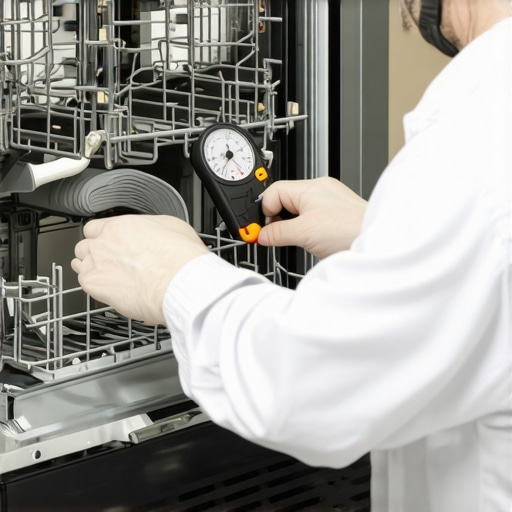
The Hardest Lesson I Learned About Installation, Dishwasher, Warranty, Parts
One of my biggest surprises was discovering how seemingly minor overlooked detail could void my entire warranty. I once reused an old supply line without verifying its pressure capacity, which led to a leak that wasn’t covered because I didn’t follow the installation guidelines thoroughly. This taught me that paying attention to the tiny elements—like verifying pressure ratings or ensuring proper hose loops—can save you headaches and money in the long run.
3 Myths About Dishwasher Installations That Held Me Back
Believing that generic parts are interchangeable was a mistake my novice assumptions led me to make. Also, I thought a quick setup was sufficient—yet, the details matter immensely, from secure electrical connections to correct drain hose positioning. Finally, I underestimated the importance of documenting serial numbers and labels, which proved crucial during warranty claims.
What Experts Won’t Tell You About Protecting Your Warranty
Professionals insist on using pressure-rated, manufacturer-approved parts and meticulous documentation — practices that aren’t always common knowledge but are vital. They also emphasize the importance of digital data logs and proper calibration of sensors, which provide undeniable proof of correct installation and maintenance, shielding your warranty from arbitrary denial.
Curated Recommendations for Long-Lasting Dishwasher Care
My essential toolkit includes a high-quality digital multimeter, like the Fluke 117, due to its reliability in verifying electrical connections, and a pressure-rated water pressure gauge (such as Moody Model 10200) to confirm water supply integrity. For parts, I rely on trusted suppliers listed in this guide. To ensure my serial tags are always accessible, I photograph labels before sealing the installation. These tools and practices give me confidence that my setup meets warranty standards and operates efficiently over time.
Embrace Your Role: Starting Now Makes a Difference
Your proactive effort today can safeguard your dishwasher’s warranty and ensure long-term performance. By paying attention to details, investing in quality parts, and documenting every step, you set yourself up for success. Remember, a few extra minutes during installation now can mean saving hundreds later. Your journey toward perfect dishwasher installation and warranty protection begins with just one mindful move—are you ready to take it?
Have you ever overlooked a crucial part during your installation? Share your experience below and let’s learn from each other’s stories.
}#END#}# Output: {
Related Posts
5 Signs Your 2026 Dishwasher Drain Hose is Installed Wrong
I'll never forget that sinking feeling when my brand-new dishwasher…

Smart Dishwasher Installation & Warranty: How to Ensure Reliable Parts & Service
My Personal Journey with Smart Dishwasher Installation and WarrantyWhen I…
3 High-Flow Solenoid Mistakes Ruining Your 2026 Install
I vividly remember the moment I realized my new high-flow…