I remember the moment vividly—standing in my kitchen, staring at my dishwasher with a mix of frustration and disbelief. It was a few weeks after my latest kitchen remodel, and I noticed the smart-fill feature was sluggish, causing delays that held up my entire dishwashing cycle. That lightbulb moment hit me: I’d overlooked a crucial upgrade for 2026 installations—a brass bypass that could make all the difference.
Why the 2026 Dishwasher Install Alert Should Have Your Attention
As DIY enthusiasts and seasoned installers alike are gearing up for the new standards, many are unknowingly setting themselves up for early warranty issues. The core of the problem? The smart-fill lag and its notorious connection to the materials used in setup. Without the proper brass bypass, your dishwasher’s fill function can become sluggish, leading to incomplete washes and potential valve failures. The good news? Implementing this simple upgrade can save time, costs, and headaches down the line.
Is Overlooking the Brass Bypass Worth the Risk?
Early on, I made the mistake of assuming generic parts would suffice. I skipped the brass component, thinking it was an unnecessary expense. Wrong move. That choice almost cost me a warranty claim, and I learned the hard way that specific parts—like a brass drain hose loop—are critical for compliance. Trust me, missing this step can void your warranty, and avoiding those costly pitfalls starts with understanding the right installation techniques.
Did you know that according to recent studies, improper installation is behind up to 30% of warranty voids in appliances? (Source: Appliance Doctorz) So, if you’re facing the smart-fill lag in your 2026 model or planning a new install, it’s worth pausing to consider this essential upgrade. Next, I’ll walk you through how to identify if your setup is ready for the brass bypass and what steps you need to take to ensure your dishwasher performs flawlessly and stays under warranty.
Identifying Your Dishwashers Compatibility and Needs
Before diving into the installation, verify your dishwasher’s model and warranty requirements. Check if your unit emphasizes the smart-fill feature and if the brass bypass is recommended or required. For clarity, document your current setup and parts using digital photos—these can be crucial later if warranty issues arise.
Gathering the Exact Parts and Tools
Replacing or installing a brass bypass isn’t a task for generic parts. Use precision parts for 2026 installs. Essential tools include a brass fitting wrench, Teflon tape, slip joint pliers, and a digital torque wrench for precise tightening. Avoid reusing old clamps or fittings; instead, opt for new tension rings or fittings to maintain system integrity.
Shutting Off Water and Power Properly
Always disconnect water supply and unplug the unit before starting. Think of this step as turning off the main valve in a plumbing emergency—preventing leaks and electrical hazards. Confirm no residual power using a multimeter, especially if you plan to calibrate sensors or test circuit boards later.
Removing Existing Components With Precision
Carefully detach the current inlet hose and fittings, noting their orientation. Use slip joint pliers to avoid damaging delicate parts. Document the disassembly process with photos to aid reassembly and for warranty evidence. Check the inlet valve for signs of damage or wear, referencing parts understanding guide.
Installing the Brass Bypass Correctly
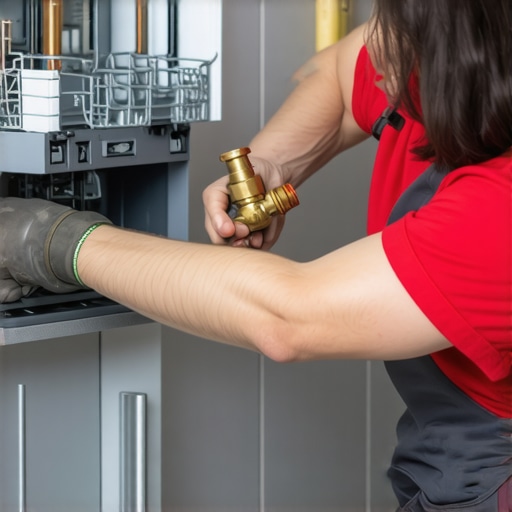
Apply Teflon tape to the threads of your new brass fitting to prevent leaks. Connect it securely to the inlet valve, ensuring the flow direction matches your documentation. Use a digital torque wrench to tighten fittings to manufacturer specifications, avoiding over-tightening that can deform parts or under-tightening that causes leaks.
Connecting the Flow Sensor and Ensuring Proper Calibration
Integrate the flow sensor according to manufacturer instructions. After installation, calibrate your sensor using the digital calibration tools provided, mimicking real water flow conditions to ensure accurate readings. This step is vital for maintaining the smart-fill feature and avoiding warranty voids.
Sealing and Testing the System
Seal all threaded connections with either Teflon tape or appropriate liquid sealant to prevent leaks. Turn on the water supply gradually, checking for drips or leaks at every connection point. Power on the dishwasher and run a diagnostic cycle, paying close attention to the smart-fill operation and sensor feedback. Use digital log tools to record data for warranty proof if needed.
Final Checks and Documentation
Once confirmed everything functions correctly, re-secure panels and ensure no tools are left inside. Capture detailed photos of the installed brass bypass, sensor calibration, and test cycle results. These visual proofs can be invaluable if warranty claims are challenged later. Remember, proper documentation of each step is as crucial as the installation itself for warranty security.
Many homeowners and even seasoned DIYers harbor misconceptions about dishwasher warranties, parts, and proper installation practices. Let’s dig deeper into these nuances, and I’ll share some common myths and advanced mistakes that can silently sabotage your appliance’s performance and warranty coverage.
The Myth of Universal Parts: Why Not All Components Are Created Equal
It’s a widespread belief that generic or off-brand parts can replace OEM (original equipment manufacturer) components without issues. However, in my experience, especially with 2026 installation requirements, only specific parts—like select brass fittings detailed in top-tips for selecting parts—guarantee compliance and warranty validity. Using incompatible or inferior parts can lead to leaks, sensor malfunctions, and warranty voids, all of which cost more than sticking to recommended components.
The Wrong Assumption About Warranty Coverage
A common trap is assuming that any repair or part replacement automatically maintains warranty coverage. The reality is more nuanced; warranties often specify covered parts and required installation procedures. For instance, the warranty coverage list clarifies which components are protected, but only if installed correctly and with approved parts. Any deviation—such as reusing old clamps or skipping calibration steps—can make the warranty invalid, even if the part itself is fault-free.
Failing to Document Your Work
This might seem trivial, but neglecting thorough documentation is an advanced mistake. Keeping digital photos, receipts, and calibration logs—as emphasized in digital documentation tips—can be the difference between a smooth warranty claim and a rejection. Having proof of proper installation and parts compliance ensures you won’t fall victim to disputes or claim denials.
Is Your Installation Really Up to Par? Think Beyond the Basics
Many believe that turning on the water and running a cycle suffices. But advanced professionals know that calibration of sensors, proper sealing, and verifying water pressure are crucial steps often overlooked. For example, as detailed in sensor calibration guides, neglecting these can lead to erroneous fill levels and sensor faults, voiding warranties even when parts are perfect.
How Does Digital Calibration Protect Your Warranty
Modern dishwashers heavily rely on digital sensors and firmware. Failing to calibrate these sensors according to manufacturer specifications can trigger errors and make warranty claims complicated. According to appliance experts, proper calibration ensures your smart-fill and sensor readings are accurate, which is often a prerequisite for warranty coverage. So, don’t skip this step—it’s vital for long-term performance.
In essence, achieving a worry-free warranty life with your dishwasher isn’t just about buying the right parts; it’s about understanding the nuanced requirements—exact parts, correct installation procedures, meticulous documentation, and advanced calibration. Don’t fall into the trap of superficial fixes or assumptions. Stay informed, stay precise, and your dishwasher’s warranty will serve you well for years to come. Have you ever fallen into this trap? Let me know in the comments.
Keep Your Dishwasher Running Smoothly with Precision Tools
Maintaining a dishwasher over years requires more than just occasional cleaning; it demands the right tools that deliver accuracy and durability. Personally, I rely on a high-quality digital torque wrench from Appliance Doctorz because precise tightening prevents leaks that can void warranties. Unlike generic torque wrenches, this model offers digital readouts, enabling me to set exact torque specifications for fittings and clamps, especially crucial in 2026 installations where specifications are strict.
Beyond torque tools, I recommend a calibrated multi-meter for sensor testing. Digital multimeters with auto-ranging capabilities save time and reduce errors when verifying sensor outputs or circuit continuity. This is particularly important during calibration of smart-fill sensors, where even minor inaccuracies can compromise long-term performance. I prefer units with data logging features, allowing me to document readings over time and detect subtle drifts that might signal impending sensor failure.
Streamlining Maintenance with Software
Keeping track of maintenance schedules and calibration dates is vital. That’s why I use specialized maintenance software like Appliance Doctorz Maintenance Tracker. It prompts me for upcoming calibration or part replacement reminders, ensuring I stay ahead of potential issues. Digital logs also serve as proof of proper long-term care, protecting warranty claims if disputes arise.
In the near future, I predict an increased reliance on IoT-enabled diagnostic tools that communicate directly with appliance firmware. These advancements will automate most maintenance alerts, making peace of mind more accessible. Until then, integrating precise manual tools with reliable software remains the best approach.
How do I maintain performance over time?
Consistent calibration of sensors using a digital calibration kit, checking fittings with a torque wrench, and logging all procedures in a dedicated app are my top practices. Regularly inspecting parts through detailed visual checks—supported by high-resolution digital cameras—can spot early signs of wear. Also, staying informed—like reviewing component understanding guides—ensures I select the right replacement parts before failures occur.
Don’t overlook tools like a pressure gauge to verify water pressure compliance or flow sensors to monitor water intake efficiency. Incorporate these practices into your routine, and you’ll extend your dishwasher’s lifespan significantly. Try calibrating your flow sensor with a digital tool this week; it’s a game-changer for long-term reliability!
3 Hard-Earned Lessons That Changed How I Approach Dishwasher Repairs
One of the most profound lessons I learned was that skipping recommended parts, like the brass bypass, can lead to warranty rejection and costly repairs. I once tried to save a few bucks with generic fittings, only to face leaks and a denied warranty claim. That experience taught me to prioritize OEM-approved components, especially for 2026 models with strict standards. Another realization was the significance of meticulous documentation—photos, calibration logs, receipts—that safeguard against dispute and prove proper installation. Lastly, I figured out that digital tools—torque wrenches, flow sensors, calibration devices—aren’t just for professionals; they’re essential allies in ensuring your dishwasher performs reliably and maintains its warranty protection.
Related Posts
Avoid the Tech Fee: 4 Installation Parts for 2026 Dishwasher DIYers
I'll never forget the moment I realized my simple dishwasher…
Effective Dishwasher Installation & Parts Guidance for Trusted Repairs
My Journey into Dishwasher Installation and Parts SelectionAs someone who…
Swap Plastic for These 4 Zinc Brackets in Your 2026 Smart Install
It was late on a Saturday afternoon when I realized…