
I remember standing in my kitchen at 2 AM, the cold water soaking into my socks with a sickening squelch. It wasn’t just a drip; it was a slow, silent conquest of my expensive hardwood. A tiny, cracked water inlet valve—a part I had completely ignored—had turned my kitchen into a shallow pond. My first thought was a relief: “No big deal, the machine is under warranty.” Oh, how wrong I was. In my panic, I made the classic rookie mistake of ripping out the damaged wood and tossing the faulty valve before documenting the failure, which nearly cost me thousands in repairs. I learned the hard way that a manufacturer’s first instinct is to point the finger elsewhere. I don’t want you to make that same mistake. Today, I am going to show you exactly how to hold these companies accountable so you are not left footing the bill for a contractor.
Why Your Warped Floor Doesn’t Have to Be Your Financial Ruin
Most folks assume that if a faulty part fails, the manufacturer only owes them a replacement for that specific component. That is a myth that keeps money in their pockets and out of yours. When a defective part causes “consequential damage,” like buckled floorboards or moldy subflooring, the liability often extends far beyond the machine itself. According to the Insurance Information Institute, water damage is one of the most common and costly homeowner insurance claims, with the average claim cost hovering around $11,000. If a manufacturing defect is the culprit, you should not be paying that deductible. I remember thinking I was stuck because I did a DIY dishwasher installation, but even if you put it in yourself, a part failure is still a part failure. You just have to prove it.
Is fighting a multi-billion dollar company actually worth your time?
You might think they will just laugh at you or bury you in paperwork. I certainly felt that way after my first warranty claim was denied because I lacked “sufficient proof of professional assessment.” But here is the secret: there is a specific procedural language these companies speak. Once I stopped acting like a victim and started acting like a claims adjuster, the tone of the conversation changed. We are going to go through the exact evidence trail you need to build, from the moment you find the puddle to the day the adjuster arrives. If you have ever felt like you were shouting into a void trying to get a repair covered, you are not alone. Have you ever had a manufacturer try to blame your flooring quality instead of their own leaky valve? Let me know in the comments, because I have a few choice words for that tactic. We are going to make sure you know how to salvage a flooded kitchen after a supply line failure without losing your mind or your savings.
Treat Your Wet Floor Like a Crime Scene
Most homeowners make the fatal mistake of cleaning up before the evidence is logged. When that puddle starts spreading, your instinct is to grab every towel in the house and toss the offending component in the trash. Stop right there. If you want the manufacturer to pay for that $11,000 floor repair, you need to treat your kitchen like a forensic investigation. I remember a friend who had a slow weep from his supply line. He immediately swapped it out for one of the most durable braided steel hoses he could find, threw the old one in the bin, and then filed a claim. The manufacturer’s legal team simply asked to see the failed part. No part? No payout. They will argue that without the physical evidence, the leak could have been caused by anything from high water pressure to your own cat chewing the line.
Capture Every Angle of the Failure While It Is Happening
Take high-resolution photos and videos of the leak while the machine is under pressure. You need to show exactly where the water is exiting the unit. Is it spraying from a hairline crack in the water inlet valve? Or is it a slow, insidious drip from the motor housing? This is your ‘smoking gun.’ Manufacturers almost always claim the leak was caused by poor installation, so you must show the leak behind the kickplate is originating from a factory-assembled component, not your plumbing connections. If you don’t show the source, they will default to blaming the person who turned the wrench.
Get a Third-Party Expert to Speak Their Language
Manufacturers don’t care about your ‘feeling’ that the part was defective; they care about technical jargon and liability standards. You need an independent, licensed appliance technician to write a formal Cause of Failure report. This document must explicitly state that the damage was caused by a manufacturing defect rather than wear and tear or improper use. I once had a client whose claim was stalled for three months until we brought in a pro who used the term ‘material fatigue in the solenoid housing.’ Suddenly, the manufacturer’s tone shifted from dismissive to cooperative. This technical bridge is the secret to getting your warranty claim approved on the first try.
Protect Your Claim Against the DIY Penalty
If you installed the unit yourself, the manufacturer will try to use that as a get-out-of-jail-free card. They will hunt for any minor error—a missing high loop or a slightly tilted leveling leg—to pin the blame on you. This is why understanding the risks of skipping the professional installation receipt is so vital for your strategy. If you did the work yourself, you must be prepared to prove your installation met every single requirement in the manual. When you can reference the list of dishwasher parts covered by warranty and demonstrate that your installation didn’t stress those specific components, you strip them of their primary defense.
The Moment My Documentation Saved My Savings
Last year, a neighbor’s dishwasher flooded her entire open-concept living space. She was ready to cry and pay her insurance deductible. I walked over, told her to put the screwdriver down, and we spent an hour filming the water dripping specifically from the factory-sealed pump housing. We even kept the soggy cardboard from the original packaging to show the serial numbers clearly. When the adjuster tried to say it was a ‘loose nut’ from the installer, we produced the video showing the water weeping from a sealed plastic seam. That five-minute video saved her over $4,000 because it left no room for corporate interpretation.
We often think of a warranty as a safety net, but it is more like a sieve. Most people believe that if a part stops working during the first year, it is an automatic win. In reality, manufacturers distinguish between a manufacturing defect and environmental failure. If your pump dies because your local water is liquid rock, that is on you, not them. The impact of hard water on your warranty eligibility is one of the most overlooked clauses in the fine print. According to the Water Quality Association, hard water can reduce the lifespan of major appliances by as much as 30 percent, and many companies use this data to argue that the failure was due to maintenance neglect rather than a factory flaw. Have you ever had a claim denied because of external factors like water quality or power issues? I want to hear about it in the comments, because this is where most homeowners lose the fight.
The Guarantee You Think You Have Does Not Actually Exist
One of the biggest contrarian truths in the appliance world is that OEM does not always mean invincible. While I always advocate for original parts, specifically regarding why OEM pumps outlast cheap alternatives every time, the manufacturer will still look for any excuse to blame the environment. A common trap I see involves power surges. If a storm rolls through and fries your control board, do not expect a free replacement. Understanding why your manufacturer warranty excludes power surge damage is vital. They view electricity as an external utility, not a machine component. I have seen homeowners try to argue this for weeks, only to be told that a simple surge protector could have saved their expensive board. It is a bitter pill to swallow when you realize what your dishwasher warranty doesn’t cover and how to avoid fees associated with these fruitless technician visits.
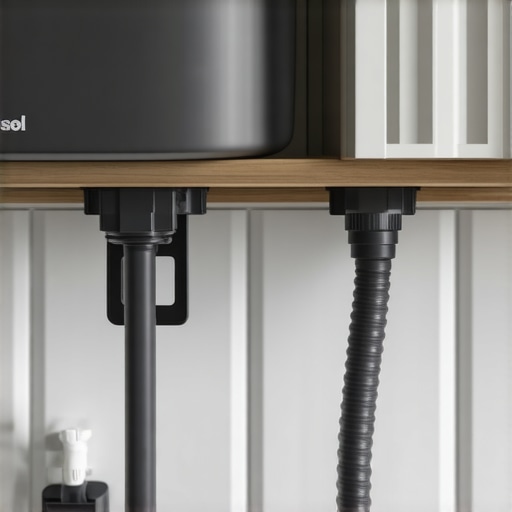
Why does your manufacturer care about the shape of your drain hose?
It sounds like a minor detail, but the high loop is the hill many warranty claims go to die on. I have walked into kitchens where the owner was furious that their machine smelled like a sewer and the manufacturer refused to send a technician. The culprit? The drain hose was laying flat on the cabinet floor. Knowing why your installer insists on a high loop drain is not just about plumbing—it is about preventing backflow that can damage internal sensors. If those sensors fail because of dirty sink water backwashing into the unit, the manufacturer will categorize it as improper installation and void your claim immediately. This is the mistake that voids your lifetime tub warranty or your motor coverage before you even run the first load.
The Hidden Danger of Using Good Enough Parts
Another nuance that experts know—and beginners ignore—is the subtle failure of generic seals. You might think you are saving fifty dollars by skipping the official kit, but the difference between OEM and generic water inlet valves often comes down to the quality of the internal diaphragm and its resistance to pressure spikes. A generic part might hold for six months, but the moment it fails and warps your floor, the manufacturer of the dishwasher is completely off the hook because you altered the machines factory state. I always tell my readers: if you are maximizing your dishwasher’s warranty coverage today, stick to the parts listed in the manual until the clock runs out on that protection. It is the only way to keep the liability on their shoulders instead of yours. Have you ever fallen into this trap? Let me know in the comments, because your story might just save someone else a few thousand dollars.
I’ve spent a lot of time talking about the ‘what ifs’ and the legal battles, but let’s get into the practical side of staying ahead of the game. I don’t just wait for a flood to happen anymore; I’ve become proactive, and that starts with a very specific tool bag. If you are still relying on your ears to tell you when a motor is dying, you are already too late. I carry a digital multimeter everywhere. It’s the only way to know if your heater is actually drawing current or if your thermal fuse is on the brink of a meltdown. If you haven’t tried it yet, learning how to test your thermal fuse with a basic multimeter is the single best skill you can acquire. It is the difference between a five-dollar part and a three-hundred-dollar ’emergency’ service call.
The Tool Bag That Saves My Hardwood Every Time
The tools I trust aren’t flashy. Beyond the multimeter, I use a telescopic inspection mirror to check for that ‘weep’—that tiny, white, salty crust that forms before a real leak starts. You can use this to test for a slow leak behind the kickplate without having to pull the whole unit out and risk scratching your floors. This is a common method used by forensic engineers at firms like Exponent, who often investigate large-scale appliance failures for insurance companies. They don’t look for the spray; they look for the evidence of long-term oxidation on the motor housing. If you see white streaks on your pump, you are looking at a future flood in progress.
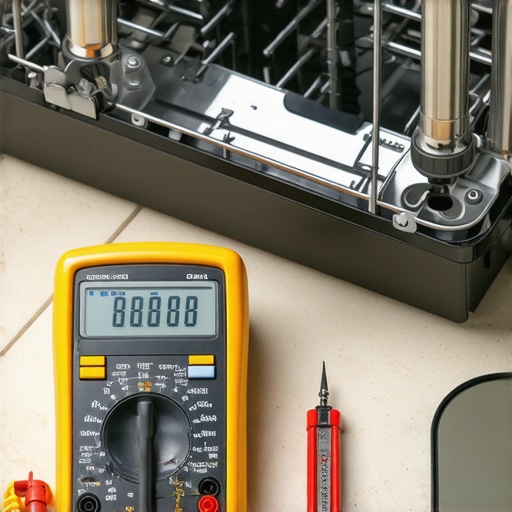
How do I maintain peak performance for the next decade?
Maintenance isn’t just about cleaning the filter—though cleaning the hidden filter under the spray arm is a non-negotiable monthly task. It is about understanding the electrical health of the unit. I predict that in the next five years, every high-end dishwasher will have built-in dielectric monitoring to kill power the second it detects a ground fault, but until then, you have to be the sensor. Learning how to spot a failing wash motor before it seizes will save your control board from a catastrophic amp-draw spike. If you notice your machine struggling or hear a new, low-frequency hum, don’t ignore it. That is the sound of your motor’s internal bearings giving up the ghost.
Don’t Trust the Smart App Blindly
We are also seeing a shift toward ‘smart’ diagnostics. While I love the convenience, don’t trust the app to tell you everything. I’ve seen cases where smart sensors give dirty readings simply because a piece of kale or a stray seed got stuck on the optical lens. The machine thinks the water is clear, stops the cycle early, and leaves you with grit on your glasses. The future of dishwasher care is a hybrid of high-tech alerts and old-school physical inspections. My advice? Go grab a multimeter this weekend and check the continuity on your heating element. It takes two minutes and gives you a definitive ‘yes’ or ‘no’ on the health of your most expensive internal component. Don’t wait for the error code to pop up; be the one who knows it’s coming before the machine does.
The Hardest Lesson I Learned About Protecting My Kitchen Floors
I’ve spent years fixing leaks, but the biggest hurdle was never the plumbing; it was the paperwork. Here are the three things I wish I’d known before that first flood turned my kitchen into a pond. First, a video of a failing component while it is actually leaking is worth more than a dozen receipts. Second, your warranty is only as strong as your ability to prove you followed the installation manual to the letter. Finally, always keep the original failed part in a sealed bag until the insurance check clears. I highly suggest you spend ten minutes understanding dishwasher warranty policies for peace of mind so you never have to guess about your coverage levels when the water starts rising.
Gear I Trust to Outsmart the Adjusters
I don’t go into any kitchen without a digital multimeter and a high-lumen inspection mirror. If you want to avoid expensive pitfalls, you should learn to identify the essential parts every dishwasher owner should know about. Having a basic understanding of how to diagnose dishwasher parts during warranty periods can literally save you thousands of dollars in denied claims by giving you the technical vocabulary to challenge a lazy inspector. I also recommend keeping a digital folder with a guide on common dishwasher parts and how to replace them effectively to prove you are a competent, informed owner who maintains their equipment with precision.
Take the Power Back One Bolt at a Time
You don’t have to be a professional plumber to defend your home from a manufacturing defect. By acting as your own forensic investigator and knowing exactly what your protection covers, you turn the tables on big corporations. Your dishwasher should be a convenience, not a liability hanging over your expensive hardwood. It’s time to stop worrying about the ‘what ifs’ and start maximizing your dishwasher’s warranty coverage today by documenting every detail of your machine’s health. Have you ever had a manufacturer try to blame your installation for a part that clearly failed on its own? Share your story in the comments—I’d love to help you strategize for the next round.
Related Posts

The impact of hard water on your warranty eligibility
I stood there, kitchen floor covered in lukewarm suds, holding…

Why Using Generic Pods Might Void Your Pump Warranty
I remember the moment clearly: I was halfway through a…

Why Third-Party Hoses Are the Top Cause of Denied Flood Claims
It hit me late one night—standing in my kitchen, gazing…