
I remember standing in my kitchen two years ago, water up to my elbows, scrubbing a stack of plates that felt like they had been glued together with dried oatmeal. I honestly thought I was doing the right thing for the planet by avoiding the dishwasher for ‘small’ loads. I was dead wrong. Not only were my hands a wrinkly mess, but my water bill was climbing like a hiker on a mission. It took a minor flood under my sink and a very honest conversation with a repair tech to realize that my DIY approach to water conservation was actually a disaster. I had made the classic error of trying to save a few pennies while literally pouring gallons down the drain.
Ditch the Scrubber and Trust Your Machine
Today, I want to show you exactly how I flipped the script. We are going to dive into how you can stop worrying about every drop and start using your appliance the way it was designed. We’ll look at why modern engineering is smarter than your kitchen sponge and how specific essential parts every dishwasher owner should know about can make or break your efficiency goals. If you have ever looked at a half-full rack and hesitated to press ‘Start,’ this is for you. My early mistake was thinking that less water meant less power, but I learned that why the heavy cycle is actually better for your machine health changed the game for me. It sounds counterintuitive, but using the right settings actually prevents the grease buildup that forces you to run the machine twice. Have you ever felt like your ‘Eco’ mode was leaving your plates grittier than when they went in?
Is saving water actually worth the hassle?
I get the skepticism. You think a ‘water-saving’ dishwasher is just a fancy way of saying ‘I have to wash these again by hand.’ I thought the same until I realized I was falling for the cold water pre-rinse myth that wastes energy and water simultaneously. According to the Natural Resources Defense Council (NRDC), an Energy Star-certified dishwasher can save more than 8,000 gallons of water over its lifetime compared to hand washing. That is not just a drop in the bucket; it is a whole swimming pool. The secret lies in the sensors. If your machine is installed correctly—avoiding the most common mistakes professional installers see—it can detect exactly how much gunk is on your plates and adjust the flow. I once tried to save money by using a garden hose adapter for my water line, and let me tell you, that was the fastest way to ruin my warranty and my flooring in one go. Using the right common dishwasher parts and their role in proper installation ensures that every ounce of water is used for cleaning, not for leaking onto your baseboards.
Stop the Backflow Before It Starts
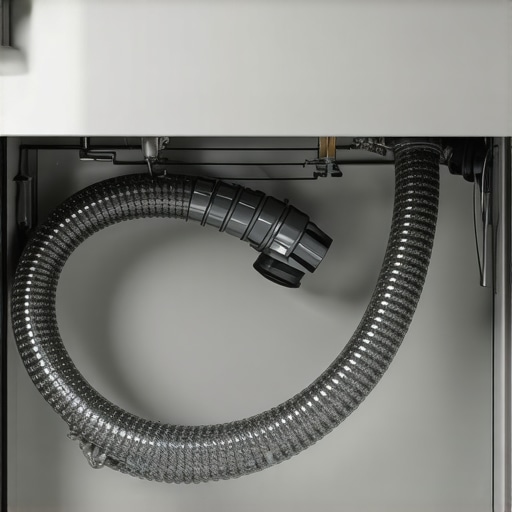
If you look under your sink and see a single hose drooping sadly toward the floor before it hits the drain, you have found your first efficiency killer. I remember my first DIY attempt; I just shoved the drain hose into the garbage disposal and called it a day. Two weeks later, I realized my dishes were coming out with a filmy residue that smelled like old soup. I had skipped the high loop. Think of the high loop like a physical gatekeeper. Without it, the dirty water from your sink—and all the bits of food that go with it—can actually slide right back into your dishwasher tub. This is exactly why your installer insists on a high loop drain during the setup process. If you are handling the job yourself, follow a diy-dishwasher-installation-step-by-step-guide to ensure you are not just recirculating yesterday’s grease into today’s rinse cycle.
The One Part That Actually Controls Your Cleanliness
We often treat our dishwashers like magical boxes where dirt simply disappears, but that debris has to go somewhere. It ends up in the filter. I once went six months without checking mine, and when I finally pulled it out, it looked like a grey, waxy science experiment. If your glasses are coming out cloudy, you need to know the best way to clean a filter that is coated in grease. It is not just about hygiene; a clogged filter forces the circulation pump to work twice as hard. This is a one-way ticket to premature motor burnout. When that happens, you will be stuck researching the difference between oem and generic water inlet valves or pumps because the constant stress on the system will eventually cause a major component failure. A clean filter is like a fresh set of lungs for your machine; without it, the whole system suffocates.
Keep Your Paperwork as Clean as Your Plates
Nothing kills the joy of a kitchen upgrade faster than a denied warranty claim. I learned this the hard way when a tiny leak under the motor housing turned into a massive repair bill because I could not find my original installation records. To avoid this, you must understand how to get your warranty claim approved on the first try. Manufacturers are looking for any reason to say no, and an uncertified DIY installation is their favorite excuse if it was not done perfectly to spec. Before you even unbox the unit, you should learn how to prepare your kitchen for dishwasher installation to ensure everything from your water pressure to your electrical outlet meets their rigid requirements. Using the wrong parts, like an old brass fitting from a previous unit, is an invitation for a flood. Professional installers have a reason for their thoroughness, and why your professional installer insists on a new water valve is usually to prevent the exact kind of slow-drip leak that eventually voids your entire protection plan.
We often assume that as long as the machine is humming and the lights are on, everything is fine. But here is the contrarian truth that most big-box retailers won’t tell you: your standard homeowner’s insurance is almost certainly not the safety net you think it is for appliance mishaps. I used to believe that if a hose burst, I’d just file a claim and move on. In reality, why your home insurance might not cover a diy installation leak often comes down to the fine print regarding ‘gradual seepage’ versus ‘sudden failure.’ If an adjuster sees even a hint of a slow drip from an old fitting you decided to reuse, they will walk away, leaving you with a five-figure flooring bill. This is exactly why your professional installer refuses to reuse your old brass fittings; they aren’t trying to upsell you on a ten-dollar part, they are protecting their liability and your subfloor.
Stop Reusing Old Parts to Save a Few Bucks
One of the biggest ‘oops’ factors I see—and one I fell for myself—is the temptation to use the power cord or the water line from the previous machine. It’s a classic trap. You think, ‘It worked for the old dishwasher, why wouldn’t it work for this one?’ Well, insulation degrades and copper becomes brittle over a decade of heat cycles. Using an aged cord is a massive fire risk, which is why your professional installer refused your old cord during the setup. Beyond the safety aspect, manufacturers are increasingly savvy. According to a study by the Association of Home Appliance Manufacturers (AHAM), improper installation accounts for a significant percentage of early-life component failures. If you don’t use top-tips-for-selecting-the-right-parts-for-dishwasher-installation, you are essentially gambling with your machine’s logic board. 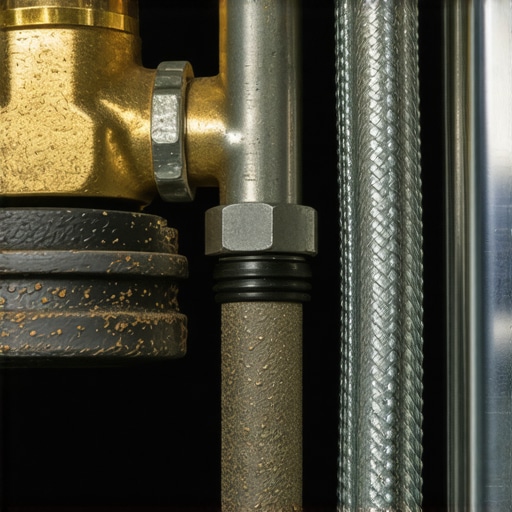
Does your local water quality dictate your warranty coverage?
This is a question that most people don’t ask until it’s too late. I’ve seen homeowners get their claims denied because they failed to disclose they were on a well system without a softener. The mineral buildup isn’t just a nuisance; it’s considered an ‘environmental factor’ rather than a ‘manufacturer defect.’ You need to understand the impact of hard water on your warranty eligibility before you call for service. If a technician pulls out a heating element coated in three millimeters of calcium, the manufacturer will likely hand you the bill for the visit. This is where understanding dishwasher parts a key to effective maintenance becomes your best financial defense. By knowing when to replace dishwasher parts for optimal performance, you can swap out a twenty-dollar sensor or valve before it leads to a catastrophic failure that the warranty won’t touch.
Make Your Paperwork Bulletproof
The real secret to winning a warranty battle is the ‘Authorized Receipt.’ I learned this the hard way: a handwritten note from a local handyman doesn’t count. You must know why your warranty claim fails without an authorized receipt from a licensed professional or a certified retailer. To stay ahead of the game, I always recommend following a strict parts-to-check-when-installing-a-dishwasher-for-long-term-performance list and keeping a digital folder with photos of the installation process. This proof of ‘correctness’ is your leverage. Have you ever fallen into this trap where a tiny installation oversight cost you your entire warranty? Let me know in the comments, and let’s figure out how to avoid those ‘hidden’ fees together. If you’re still unsure about your specific coverage, take a look at guide-to-dishwasher-parts-warranty-what-you-need-to-know to see what’s actually included versus what’s just marketing fluff.
Stop Guessing and Start Testing Your Components
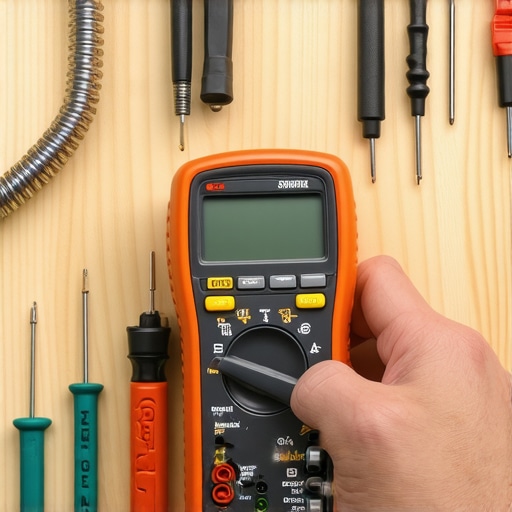
I used to be a ‘parts-swapper.’ If the machine didn’t start, I’d buy a new latch. If it didn’t drain, I’d buy a new pump. I spent hundreds of dollars on a ‘hunch’ until an old-school technician showed me a basic multimeter. This ten-dollar tool changed my life. Instead of guessing, I learned how to test your thermal fuse with a basic multimeter to see if it actually had continuity. It turns out, half the parts I was replacing were perfectly fine; the issue was usually a loose wire or a dirty contact. If you want to take your maintenance seriously, you have to stop playing the guessing game and start using actual data to how to diagnose dishwasher parts during warranty periods. Being able to tell a service agent exactly which circuit is open makes you a much more formidable advocate for your own repair claim.
How do I keep my dishwasher running like new for a decade?
The secret isn’t some expensive chemical cleaner; it is physical maintenance. Most people know about the main filter, but few ever find the hidden drain screen you probably forgot to clean. This tiny mesh sits right before the pump intake and catches the seeds, glass shards, and plastic bits that slip past the primary basket. According to the Association of Home Appliance Manufacturers (AHAM) technical standards, a 10% blockage in the intake screen can increase motor heat by nearly 20 degrees, significantly shortening its lifespan. I make it a habit to check this every three months. While I am down there, I also look for the most durable braided steel hoses for long-term safety. If your supply line is still that old-fashioned reinforced rubber, you are living on borrowed time. Modern braided steel is essentially a ‘set it and forget it’ upgrade that prevents the kind of catastrophic burst that ruins entire kitchens.
The 15-Dollar Investment That Saves Your Hardwood Floors
If you have a newer unit, you might feel safe, but even the best machines can have a sensor failure. I am a huge proponent of installing the 15-dollar sensor that stops your smart dishwasher from overfilling. It’s a simple float-switch or moisture-wicking alarm that sits in the base pan. In my kitchen, this little gadget saved me from a slow leak that was hiding behind the kickplate—a leak I wouldn’t have noticed until the floorboards started cupping. Looking toward the future, I predict we will see ‘predictive vibration analysis’ become standard in high-end units. Essentially, the machine’s software will listen to the frequency of the wash motor and alert you that a bearing is failing weeks before it actually seizes up. Until then, we have to rely on our own senses and essential parts for troubleshooting dishwasher installation issues to keep things running. I want you to try one thing this weekend: pull off your bottom kickplate and use a flashlight to check for any signs of white, crusty mineral buildup. That is your early warning sign of a weep leak. If you find one, don’t wait—grab your multimeter and check the valve.
The Expensive Lessons Only a Flood Can Teach You
Reflecting on my early days of homeownership, I wish I could tell my younger self that being ‘cheap’ is often the most expensive way to live. I used to think skipping a ten-dollar part was a win, but I’ve learned that understanding dishwasher warranty policies for peace of mind is worth far more than the loose change saved at the hardware store. Here is the truth: your machine is a delicate balance of electronics and high-pressure water. If you compromise on the most popular dishwasher parts and how they improve performance, you aren’t just risking a bad wash; you are risking your home’s foundation. I’ve realized that a professional touch—or at least a professional-grade mindset—is what separates a three-year appliance from a fifteen-year one. Don’t let a simple mistake like an old brass fitting be the reason what your dishwasher warranty doesn’t cover and how to avoid fees becomes your reality.
#IMAGE_PLACEHOLDER_E#
My Essential Kit for an Invisible Installation
I don’t start any kitchen project without a few non-negotiables. First, always keep a digital copy of your receipt; it is the only way to ensure maximizing your dishwashers warranty coverage today actually happens when a motor fails. Second, I swear by my basic multimeter for checking continuity—it has saved me from buying at least three control boards I didn’t actually need. Finally, I never install a unit without a leak-detection sensor. It’s the cheapest insurance you can buy. If you’re stuck on a specific technical step, I highly recommend checking out some expert advice on dishwasher installation troubleshooting to see how the pros handle tight spaces and awkward plumbing.
Taking the Fear Out of Your First Solo Repair
It is easy to feel overwhelmed by the wires and the technical jargon, but remember that every master was once a beginner with a leaky sink. By taking the time to learn the ‘why’ behind each step, you are doing more than just fixing a machine; you are gaining independence from overpriced service calls. Your dishwasher is one of the hardest-working tools in your home, and with the right parts and a little patience, you can keep it running at peak efficiency for a decade or more. Have you ever had a warranty claim denied for a reason that completely surprised you? Let’s talk about it in the comments below.
Related Posts

Why Water Hardness Settings Matter for Energy Efficiency
It was a frustrating Saturday afternoon when I finally realized…
The Water Hardness Setting Most People Never Configure
It was a typical Wednesday when I finally looked under…
Why Your Machine Is Taking 4 Hours to Finish a Load
I remember sitting on my kitchen floor at midnight, staring…