
There I was, wedged into a kitchen cabinet roughly the size of a shoebox, with a cold drip hitting my forehead every three seconds. I’d just bought a beautiful new dishwasher and was following a diy dishwasher installation step-by-step guide, feeling pretty proud of myself. But as I cranked down on that water supply line with my trusty old slip-joint pliers, I heard it. *Crack.* That sickening sound of plastic threads surrendering to metal teeth. I wasn’t just out of a connector; I was staring at a potential flood and a voided warranty. It’s a classic rookie move, and honestly, even after years of tinkering, I still fell for the “it’s just a nut” trap. Today, I’m going to make sure you never hear that sound.
Stop Destroying Your Fittings with the Wrong Wrench
Most folks assume a wrench is a wrench, but when it comes to the most durable braided steel hoses, the margin for error is razor-thin. If you use a tool with teeth—like those channel locks you love—you’re basically chewing through the structural integrity of the fitting. I learned the hard way that why your installer refuses to reuse your old brass fittings isn’t just a way to pad the bill; it’s because metal-on-metal tools can micro-fracture those parts, leading to a disaster a month later. According to the Insurance Institute for Business & Home Safety, water damage from appliance failures is a leading cause of home insurance claims, often totaling over $10,000 per incident. A simple tool choice determines if you’re part of that statistic.
Is a specialized tool really worth the extra ten dollars?
I get the skepticism. You’re already spending hundreds on the appliance and maybe even essential parts for troubleshooting dishwasher installation issues. Why buy a specific wrench? Because “hand-tight” is a recipe for a slow leak, and “pliers-tight” is a recipe for a broken valve. We’re going to look at the one tool that fits into those tight spaces and provides the exact torque you need without the “crunch.” Have you ever overtightened something and spent the next hour praying it wouldn’t leak? Drop a comment below, I’d love to hear your “oh no” moments. We’re going to fix this once and for all so you can enjoy your clean dishes without salvaging a flooded kitchen after a supply line failure.
Get the Torque Right Without the Teeth
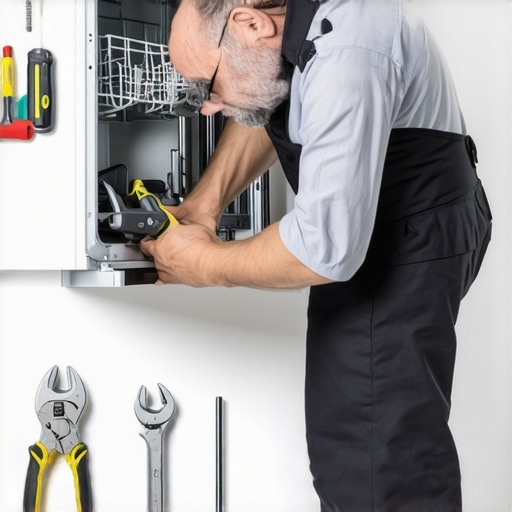
I remember my first solo install in a rental unit back in my early twenties. I didn’t have a proper adjustable wrench on hand, so I grabbed a pair of multi-purpose pliers. I thought if I was just “gentle” enough, I could tighten the brass elbow without a problem. I was wrong. Those metal teeth acted like a saw, and one slight slip meant I had a permanent, jagged groove in the fitting that wouldn’t allow a watertight seal. I ended up having to buy common dishwasher parts and their role in proper installation all over again. The lesson? Use a smooth-jawed adjustable wrench. You want the tool to embrace the flat sides of the nut, not bite into the metal. When you are selecting the right parts for dishwasher installation, remember that the brass is softer than your tools. One turn too many—or one with the wrong tool—and you are looking at a slow drip that will rot your subfloor over the next six months.
Why Your Drain Line Needs a Literal High Point
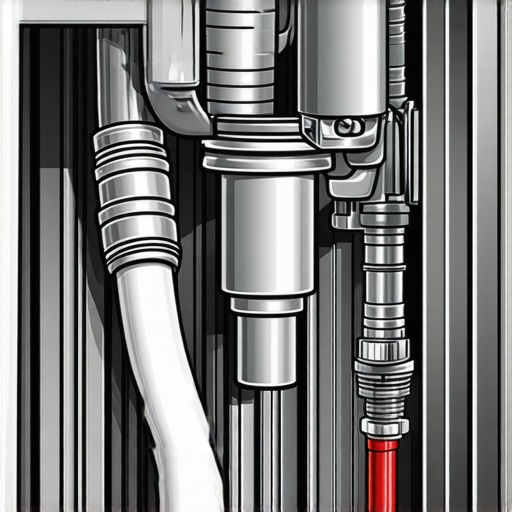
Think of your drain hose like a roller coaster. If it stays flat on the floor, the dirty sink water from your garbage disposal is going to take a nap right inside your clean dishwasher. This is known as backflow, and it is the number one reason why new machines start to smell like a swamp after three weeks. This is why your installer insists on a high loop drain. You must secure the hose to the very top of the cabinet under the sink, higher than the entry point to the disposal or tailpiece. 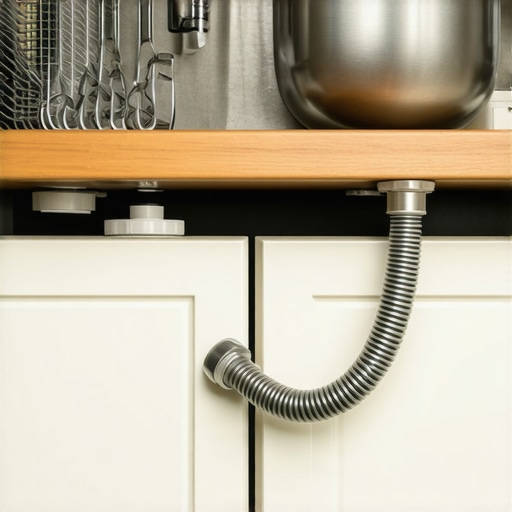 It is one of those parts to check when installing a dishwasher for long-term performance. I have seen countless DIYers call a repairman for a “broken pump” when the only issue was gravity pushing dirty water back into the tub.
Don’t Shortcut the Power Connection
It is incredibly tempting to use that old power cord from the unit you just hauled to the curb, but why your professional installer refused your old cord is rooted in fire safety. Modern high-efficiency machines have different amperage draws and sensitive control boards. Reusing a cord with even a tiny amount of internal oxidation can cause a voltage drop that fries your new electronics. Furthermore, why you should never use an extension cord for your dishwasher is a hard rule in the plumbing and electrical world. I once discovered a melted extension cord behind a built-in that looked like a piece of charred licorice. It was a miracle the house didn’t go up in flames. Always hardwire the unit or use a brand-new, UL-listed appliance cord specifically rated for your model’s wattage.
Keep Your Paperwork or Pay the Price Later
The moment you slice open that cardboard box, find the receipt and the manual. Understanding dishwasher warranty policies for peace of mind starts with physical proof of purchase. If you lose that paper, your “lifetime” tub warranty is essentially a myth. I once helped a neighbor who spent weeks negotiating a replacement when your warranty parts are backordered, and the only reason the manufacturer finally budged was because we could prove the unit was professionally installed (or at least installed with new parts) via a timestamped photo of the receipt and the box. Why your warranty claim fails without an authorized receipt is a lesson you do not want to learn while staring at a $400 repair bill for a machine you just bought.I’ve spent enough time in the trenches to tell you that “compatible” is often a dirty word when it comes to plumbing. Many DIYers believe that a water inlet valve is just a simple gate, so why pay $60 for the brand name when a $15 knockoff looks identical? This is where the difference between oem and generic water inlet valves becomes a matter of home safety. Generic valves often use lower-grade solenoids that can overheat or stick open. If that valve sticks while you’re at work, you aren’t just looking at a wet floor; you’re looking at a flooded basement because the machine doesn’t know how to stop the in-flow. I’ve seen this exact scenario play out, and it’s why why oem pumps outlast cheap alternatives every time is more than just marketing fluff. It is about the precision of the seals and the durability of the motor windings that generic brands simply don’t replicate.
Can a third-party sensor really fry your entire control board?
In short, yes. Modern dishwashers are essentially rolling computers with a plumbing attachment. These machines rely on precise resistance levels to communicate between the sensor and the main module. When you install a “fits-all” part, the voltage fluctuations can be just enough to cause a catastrophic short. I highly recommend learning how to spot a fake replacement part before it fries your control board because the $20 you save today could cost you a $300 board tomorrow. 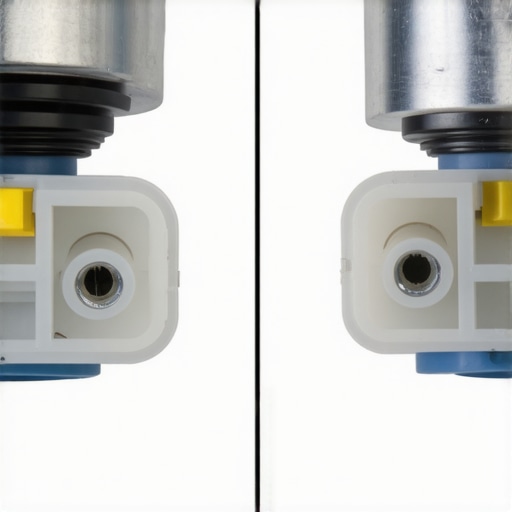 According to research from the Association of Home Appliance Manufacturers (AHAM), non-certified parts are one of the primary drivers of premature appliance failure, often lacking the rigorous stress-testing that factory components undergo under high-heat conditions.
The Stealthy Reason Your Warranty Claim Might Get Denied
Most people assume that as long as they didn’t drop the machine down the stairs, they are covered. But there is a massive “Oops” factor that catches even the smartest homeowners: the electrical environment. Did you know that why your manufacturer warranty excludes power surge damage is one of the most common reasons for a rejected claim? If your dishwasher’s control board fails due to a local grid spike, the manufacturer sees that as an “act of God” or an external utility issue, not a factory defect. To protect yourself, always look into maximizing your dishwashers warranty through proper parts selection and consider a dedicated surge protector for your high-end appliances. Furthermore, what your dishwasher warranty doesnt cover and how to avoid fees often includes labor costs if the failure was caused by your own installation mistakes, such as using an unapproved drain hose.
Don’t Ignore the Nuance of Water Chemistry
Another hidden trap is your water itself. We talk a lot about parts to check when installing a dishwasher for long-term performance, but we rarely talk about what’s running through them. If you have an industrial-strength water softener, you might actually be damaging the machine. It sounds backwards, but why soft water is ruining your dishwasher interior faster than hard water is a real phenomenon where the water becomes so “hungry” for minerals that it etches the glass and eats at the metal seals. It’s all about finding that middle ground. Before you finalize your setup, make sure you are how to diagnose dishwasher parts during warranty periods so you can catch these issues before the one-year mark hits. Have you ever fallen into this trap? Let me know in the comments—I’ve seen some wild “it worked yesterday” stories that turned into total kitchen overhauls.Every time I open my toolkit, there is one device that saves me more money than all my wrenches combined: a digital multimeter. I don’t care if you aren’t an electrician; if you want to stop guessing which of your common dishwasher parts and how to replace them effectively is failing, you need one. I personally use a Fluke 117 because it handles non-contact voltage detection, which is a literal lifesaver when you are poking around a wet machine. Most ‘broken’ dishwashers are actually just victims of a blown fuse or a loose wire. Learning how to test your thermal fuse with a basic multimeter can turn a $300 repair bill into a $15 DIY fix in under ten minutes.
Keep Your Electronics from Frying with One Cheap Tool
When I first started doing my own repairs, I wasted a fortune replacing parts that were perfectly fine just because I didn’t know how to test for continuity. Now, I never pull a motor without checking the resistance first. This level of precision is exactly what the most common mistakes professional installers see often boils down to—assuming a part is dead when the signal just isn’t reaching it. 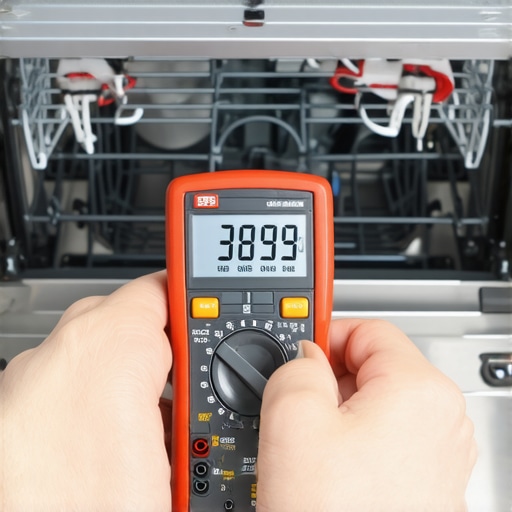 According to the National Electrical Code (NFPA 70), proper grounding and circuit testing are the only ways to ensure your appliance won’t become a fire hazard over years of vibration and heat cycles. If you’re serious about understanding dishwasher parts a key to effective maintenance, start by measuring the voltage at the junction box before you blame the machine.
How do I maintain my dishwasher parts for the long haul?
Maintenance isn’t just about fixing things when they snap; it is about preventing the slow decay of the seals and motors. I make it a habit to inspect my door gasket every three months. I’ve seen enough mold growth and dry-rot to know that a simple wipe-down saves you from what your dishwasher warranty doesnt cover and how to avoid fees later on. You should also be looking at the best way to clean the hidden filter under the spray arm. If that filter gets clogged with grease, your wash motor has to work twice as hard, leading to a premature (and expensive) burnout. I predict that in the next five years, we will see ‘self-cleaning’ filtration systems become standard in all mid-range units, but until then, your hands and a soft toothbrush are your best friends.
The Smart Future of Kitchen Maintenance
We are moving toward an era where your dishwasher will tell you exactly which part is failing before it even leaks. If you have a newer unit, you should be learning how to update the firmware on your kitchen wi-fi module. Manufacturers are now pushing software patches that can actually adjust the motor torque to compensate for aging bearings. I’ve even started installing the 20 smart sensor that detects leaks before your kitchen floods as a standard part of my setup. These tiny pucks can shut off your main water valve via a smart hub the second they detect a single drop. My big tip for you today: grab a multimeter and test your thermal fuse this weekend—you’ll be amazed at how much confidence a little bit of data gives you.
Hard Truths About My Most Expensive Plumbing Mistakes
One thing I’ve learned is that a $5 part is never just a $5 part—it’s the only thing standing between your kitchen and a $5,000 restoration bill. When you are selecting when to replace dishwasher parts for optimal performance, always lean toward “now” rather than “later.” I once thought I could save twenty minutes by skipping the vapor barrier, only to find my cabinet underside warped and molding six months later. The best way to tape your vapor barrier during installation is to be meticulous; it’s a silent protector of your home’s value. Also, never assume the floor is level just because it looks flat. Why professional leveling prevents your door from leaking is a lesson in physics: if the chassis is torqued, the gasket won’t seat, and the leak will be invisible until it’s a disaster. Finally, keep every single receipt from the complete list of dishwasher parts covered by warranty. The manufacturer is looking for any reason to say “no,” so don’t give them one by losing your paperwork.
The Setup I Keep in My Own Cabinet
If you want to move beyond the “hope and pray” method of installation, you need a few non-negotiables in your toolbox. I personally swear by the most durable braided steel hoses because the rubber ones are essentially ticking time bombs in a modern high-pressure system. I also suggest a simple water pressure gauge to ensure your home isn’t exceeding 60-80 PSI, which is how to tell if your water pressure is too low for your unit or, conversely, too high for your valves. For those who love data, the most reliable way to test a thermal fuse is with a Fluke multimeter; it removes the guesswork and tells you exactly where the electricity stops. Lastly, I always recommend keeping essential parts every dishwasher owner should know about, like a spare drain pump or door cable, in a small bin under the sink—being prepared is the best way to avoid emergency plumber rates.
Your Future as a Home Maintenance Pro
Installing an appliance isn’t just about getting the dishes clean; it’s about taking ownership of the mechanical heart of your home. By mastering the nuances of top tips for seamless dishwasher installation in 2025, you aren’t just saving money—you’re gaining the peace of mind that comes from knowing the job was done right. Take the time to follow through on maximizing your dishwashers warranty coverage today so you can sleep soundly during the next storm. You’ve got the tools, the knowledge, and now the plan. Go make it happen! Have you ever had a “small” part cause a massive headache during an installation? Let me know in the comments below.
Related Posts
The Cabinet Steam Barrier Most DIYers Skip Until the Wood Rots
I remember the first time I encountered this problem—my DIY…
Why Your Drain Hose Needs This Specific High-Loop Bracket
I remember the first time my dishwasher backed up entirely—water…
4 Tools Every DIY Dishwasher Installer Needs to Avoid a Leak
I still remember the moment I turned on my first…