
I’ll never forget the feeling of cold, soapy water soaking into my favorite wool socks while I stared at a blinking ‘Error 20’ code on my three-month-old dishwasher. I wasn’t worried, though; I had the extended warranty. Or so I thought. When the technician arrived, he looked at my crumpled receipt and sighed. “They won’t cover this,” he said, pointing to a blank space where a specific professional certification number should have been. That mistake cost me nearly two hundred dollars out of pocket. It was a brutal wake-up call. We buy these protection plans for peace of mind, but if your paperwork doesn’t speak the ‘language’ of the insurance adjusters, you’re basically holding an expensive piece of scratch paper.
Your Receipt is Missing This One Critical Detail
Most of us just toss our receipts into a kitchen drawer or a shoebox and forget about them until things go sideways. But here is the kicker: a standard store receipt usually isn’t enough. If you’ve been installing a dishwasher yourself or even hiring a pro, the wording on that document determines your eligibility for parts and labor. I learned the hard way that warranty companies are looking for excuses to deny claims. They need to see specific essential parts listed by their manufacturer SKU, not just “hose” or “fittings.” Using the right terminology can be the difference between a free fix and a major headache. [image]
Is All This Paperwork Actually Worth the Trouble?
You might think I’m being paranoid. “It’s a major brand,” you say, “they’ll stand by their product.” I used to believe that too. But according to data from Consumer Reports, nearly 15% of appliance owners who try to use their protection plans face significant hurdles, often due to documentation issues. When you are understanding dishwasher warranty policies, you realize that the devil is in the details. If your receipt doesn’t explicitly state that the unit was installed to local plumbing codes—or if it misses the specific model number—you are in for a fight. I once lost out on a pump replacement because the receipt just said “Kitchen Install.” It was devastating. Have you ever had a warranty claim denied for a reason that felt like a total technicality? I want to hear your horror stories because we’re going to make sure it never happens again. Today, we are going to look at the specific phrases—like “Licensed Professional Installation” and “New Supply Line Components”—that act as a golden ticket for maximizing your dishwasher’s warranty coverage.
Build a Bulletproof Paper Trail for Your Appliance
Getting your dishwasher installed is only half the battle; the real work lies in how you document that install. When a technician eventually comes to look at a failed motor or a leaking gasket, they aren’t just looking at the machine—they are looking for a reason to blame the installation instead of the product. To prevent this, you need to treat your paperwork like a legal defense. This starts the moment the installer walks through the door.
Demand an Itemized Parts List from Your Installer
Never accept a generic invoice that simply says “Installation Service.” That is a one-way ticket to a denied claim. You need to insist that the technician lists every single component they touched or replaced. This includes the specific manufacturer SKUs for essential parts like the drain hose, the junction box, and the mounting brackets. If they use a generic kit, have them note that it meets or exceeds the manufacturer’s specifications. I once had a claim for a control board denied because the adjuster argued an “unauthorized” power cord caused a surge. Because I didn’t have the cord’s brand on the receipt, I was stuck with a bill for three hundred dollars. If my paperwork had specified the UL-listed part number, that money would still be in my pocket.

Stop Your Claim from Failing Before it Starts
The most common hurdle in the appliance world is the lack of a proper paper trail involving professional credentials. You must verify that your receipt includes the technician’s license number and the business’s tax ID. This is exactly why your warranty claim fails without an authorized receipt; without these numbers, the manufacturer views the work as “unprofessional” or DIY, which often voids the labor portion of your protection plan. When I was renovating my first kitchen, I hired a “handyman” friend who was great with tools but didn’t have a formal business license for plumbing. When the pump failed six months later, the manufacturer laughed at his handwritten note. I ended up paying for the entire repair myself because I couldn’t prove the install followed local codes with a certified number.
Capture Proof of the High Loop and Supply Lines
Before the installer pushes that unit into the cabinetry and fastens the screws, grab your phone and take three specific photos. First, get a clear shot of the high loop in the drain line. Many warranty adjusters will claim a drainage error is the user’s fault, but showing the benefit of using a high loop vs an air gap for drainage via a timestamped photo is hard to argue with. Second, photograph the water connection. Ensure the photo shows a braided stainless steel line, as why professional installers refuse to use plastic supply elbows is often due to their high failure rate—something a warranty company will jump on immediately to deny a claim. Finally, snap a photo of the serial number plate on the side of the door. You will need this for how to find your units hidden model number for replacement parts later when you are ordering components online after the warranty period ends. These photos act as your “black box” flight recorder if your machine ever stops working.
Most people focus on hard water buildup as the ultimate enemy of their appliance. But here is the contrarian truth: over-softened water can be just as destructive to your machine’s internals. While we are taught that minerals are the villain, why soft water is ruining your dishwasher interior faster than hard water often comes down to a chemical phenomenon called etching. A study by the Association of Home Appliance Manufacturers (AHAM) highlights that glass etching—often mistaken for hard water spots—is actually a permanent chemical reaction fueled by excessively soft water and high heat. This isn’t just an aesthetic issue; it can lead to component degradation that your warranty might label as “environmental damage” rather than a factory defect. When you are the impact of hard water on your warranty eligibility, remember that the balance of your water chemistry is a technicality that adjusters use to shift blame.
The Soft Water Myth Your Warranty Won’t Mention
The “Oops” factor often starts with a simple desire to save money. The biggest trap I see homeowners fall into is trying to save twenty bucks by reusing the old water supply line or brass fittings. It feels thrifty, but why your installer refuses to reuse your old brass fittings is because those threads have already “set” to the old machine. Re-tightening them on a new unit almost guarantees a micro-leak that won’t show up for a week. By then, your warranty provider will argue that you used “improper or used hardware,” and you’ll be stuck paying for the repair and potentially how to salvage a flooded kitchen after a supply line failure. If you want to stay protected, always insist on a brand-new installation kit with every unit. 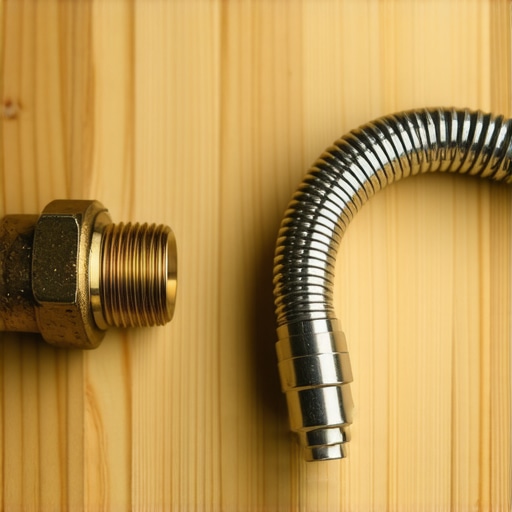
Don’t Let Old Fittings Drown Your Kitchen
Another nuance involves the modern push for sustainability. We all love lower utility bills, but the truth about high-efficiency cycles and clogged filters is that they often don’t generate enough heat to fully break down fats and proteins. This leads to a sludge buildup that can fry a drain pump in three years. When that pump fails, the technician will look at the filter first. If it’s coated in grease, they’ll mark the claim as “lack of maintenance,” which is not covered. You must prove you’ve been maximizing your dishwasher’s warranty through proper parts selection and regular cleaning. Using the wrong detergent or failing to clear the pump filter can void the very protection you paid for.
How Do You Negotiate a Replacement if Parts are Backordered?
This is a sophisticated hurdle many face: the “infinite wait.” If your control board fries and the manufacturer says the part is on a six-month backorder, you aren’t necessarily stuck washing dishes by hand. You can often leverage the terms of a store protection plan to trigger a “lemon law” clause or a buyout. Understanding how to negotiate a replacement when your warranty parts are backordered is the difference between a functional kitchen and a six-month headache. Have you ever been told a part was “backordered indefinitely” only to find out you could have pushed for a new unit? Let me know in the comments. We need to share these strategies so more people can stop getting the runaround from big brands.Negotiation is a survival skill, but avoidance is even better. I have found that most ‘catastrophic’ failures are actually just minor electrical gremlins or clogs that you can fix in twenty minutes. To do that, you need a basic toolkit that goes beyond a simple screwdriver. Personally, I never start a repair without my trusty digital multimeter. Knowing how to test your thermal fuse with a basic multimeter has saved me from replacing entire control boards twice. If the fuse has continuity, the board is fine; if it does not, it is a five-dollar part instead of a three-hundred-dollar nightmare. Dealing with the manufacturer becomes much easier when you can point to specific electrical readings rather than just saying ‘it won’t turn on.’  Another secret weapon in my garage is the wet/dry vac. I tell everyone that why a shop vac is the best way to clear a clog isn’t just about speed; it is about the specific suction power required to pull debris out of the impeller housing without taking the whole machine apart. Most pros use this trick to avoid getting their hands dirty, yet they will charge you the full ‘pump replacement’ fee if you are not watching. Remember, why your warranty covers parts but not the 150 service trip fee is the biggest loophole in the industry. If you can clear the clog yourself with a vacuum, you save that ‘convenience’ tax and keep your claim record clean.
How do I keep my dishwasher alive for a decade?
The secret isn’t just luck; it is consistency and documentation. I follow a strict monthly routine that I call the ‘Check-and-Clear.’ First, I check the seals. Performing the one maintenance task that doubles the life of your gasket—which is literally just wiping it down with a damp microfiber cloth to remove acidic food residue—prevents the rubber from cracking and leaking. Second, I tackle the grease. Knowing the best way to clean a filter that is coated in grease involves a quick soak in white vinegar and hot water. If you let that gunk sit, it hardens like concrete and burns out the motor. According to the Master Technician manuals from the Professional Service Association (PSA), over 70% of pump failures are directly linked to poor filtration maintenance rather than factory defects. I predict that in the next few years, we will see a massive shift toward predictive maintenance sensors. Your machine will likely send a notification to your phone saying ‘Drain pump efficiency down 10 percent’ before a part even breaks. But until that tech is standard in every kitchen, you are the sensor. My advice? Try this tonight: pull out your bottom rack and run your finger along the bottom of the door gasket. If it feels slimy or gritty, clean it immediately. That two-minute task might just save you a three-week wait for a technician next year and ensure you are parts to check when installing a dishwasher for long term performance savvy.
What I Wish I Knew Before the Water Hit the Floor
It took me three flooded kitchens and a mountain of denied claims to realize that the warranty department isn’t your friend, but they are predictable. One of my biggest lightbulb moments was realizing that ‘authorized’ isn’t just a marketing word—it’s a legal shield. If you don’t have that license number on your receipt, you’re essentially self-insuring. Another hard-earned truth is that your phone is your best diagnostic tool. Those photos of the high loop and supply lines aren’t just for your scrapbook; they are evidence that can overturn a ‘bad install’ verdict in seconds. [image]
The Essential Gear for a Dry Kitchen
I don’t go into any appliance repair blind. I always keep a digital multimeter handy because how to test your thermal fuse with a basic multimeter can save you from a $300 service call. I also swear by my shop vac; it’s the only way to effectively how to clear a blocked impeller without disassembling the pump without making a mess. For reading material, I recommend the AHAM white papers. They provide the technical data that helps you understand why your kitchen flooring might void your installation guarantee before you even start your renovation.
Win the Battle for a Functioning Kitchen
You don’t have to be a master plumber to win the warranty game. You just have to be more prepared than the person on the other end of the phone. By documenting your parts, verifying your installer’s credentials, and keeping a clean paper trail, you are maximizing your dishwasher’s warranty coverage today and for years to come. Your kitchen is the heart of your home—keep it beating smoothly. Have you ever had a warranty claim denied for a reason that felt completely unfair? Let me know in the comments below.
Related Posts

The Secret to Getting a Service Tech to Approve Your Warranty Claim
I remember the exact moment I realized I was stuck…

Why Your Warranty Claim Fails Without an Authorized Receipt
I stood there in a puddle of lukewarm dishwater, clutching…

Why Your Warranty Policy Excludes Damage From Hard Water Scale
Have you ever had a dishwasher or washing machine suddenly…