
It was 7:15 PM on a Tuesday, and I was trying to enjoy a quiet glass of wine when it started again. That rhythmic, teeth-grating thrum-thrum-thrum of the dishwasher side panel vibrating against my custom shaker cabinets. I’d spent thousands on a ‘silent’ model, yet here I was, feeling like I lived inside a drum kit. Years ago, when I was first learning the ropes, I made a massive mistake: I thought the insulation blanket should never be removed, but I actually tucked it in so tightly it compressed, losing its ability to absorb shock. It was a rookie move born out of frustration, and I ended up with a machine that sounded like a tractor. I even remember a dinner party where I actually apologized for the ‘ghost in the machine.’ My guest, an engineer, laughed and told me I was essentially running a giant resonant chamber. I felt like an idiot. But today, I’m going to show you how to kill that noise for good in less time than it takes to brew a pot of coffee.
Stop the Rattle for Good
Most of the time, that rattling isn’t a mechanical failure; it’s a physics problem. When your unit isn’t perfectly snug, the rapid movement of the wash arms creates resonance that travels through the metal skin of the machine. I’ve seen homeowners go crazy trying to diagnose dishwasher parts during warranty periods, thinking a motor is dying, when the culprit is simply a loose side panel or an unbalanced base. A study by the Noise Pollution Clearinghouse suggests that chronic low-level household noise can elevate cortisol levels, meaning that annoying rattle is literally stressing you out. Fixing this isn’t just about the appliance—it’s about reclaiming your home’s peace. Since then, I’ve obsessed over the tiny gaps and loose fittings that turn a luxury appliance into a noisy nuisance. We are going to look at the sound dampening tricks professionals use to isolate these vibrations without needing a toolbox the size of a sedan. Have you ever had to yell over your ‘silent’ dishwasher just to have a conversation?
Can you really fix this in two minutes?
I get the skepticism. You’ve probably tried tightening every screw you can see and it still rattles. The secret isn’t in tightening; it’s in dampening. By the end of this guide, you’ll understand how common dishwasher parts like the mounting brackets and insulation play a role in this harmony—or lack thereof. [image_placeholder] If your machine is constantly moving when you open the door, that’s your first clue that the vibration has a physical root we can tackle right now. We are going to use the same mounting bracket trick used for high-end granite installs to stabilize the unit once and for all. You don’t need a degree or a technician; you just need to know exactly where to put your hands.Start by pulling the unit out just about six inches from its cavity to inspect the exterior shell. If you see the insulation blanket is bunched up at the back, you’ve found your primary noise culprit. To fix this, you need to follow top tips for seamless dishwasher installation in 2025 by ensuring that the blanket is draped evenly over the top and sides, held in place by industrial-grade tape if the factory clips have failed. When the blanket is compressed, it loses the air pockets required to break up sound waves, turning that expensive insulation into a useless piece of felt.
Stop the Shell from Vibrating Against Your Woodwork
One afternoon, I was called to a house where the owner was convinced their motor was exploding. It turned out to be a single loose side panel vibrating against the cabinet wall. I applied a few strips of high-density adhesive foam—one of the key the sound dampening tricks professionals use—directly to the cabinet interior where the dishwasher made contact. The silence was immediate. You aren’t trying to jam the machine into the hole; you are trying to create a soft buffer. If your kitchen isn’t quite ready for this level of detail, take a moment to how to prepare your kitchen for dishwasher installation to ensure you have the clearance needed for these buffers.
Fix the Common Mounting Screw Mistake
A major source of ‘mechanical’ noise is actually the machine shifting because of poor anchoring. Check the top or side mounting brackets. I often see the mounting screw mistake that blocks your top rack from closing where the screw is driven in at an angle, leaving the head protruding. This not only snags your racks but allows the unit to wiggle during the high-speed drain cycle. If you find a hole is already mangled, you can learn how to tighten a stripped mounting hole in your cabinet using a simple wood shim and wood glue trick. Once those screws are flush and tight, the entire chassis becomes a rigid part of the cabinetry, which naturally absorbs the motor’s hum. 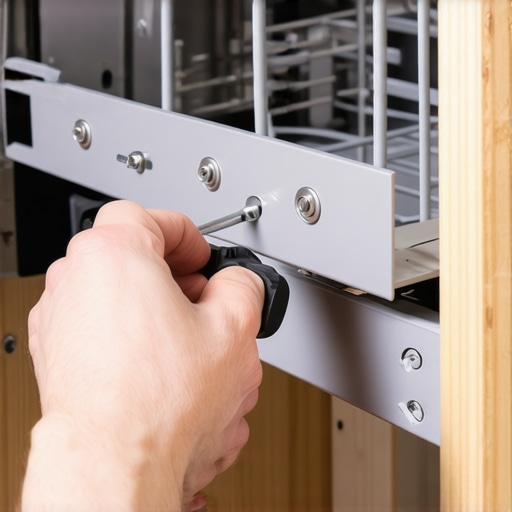
Check for Interference Inside the Tub
Sometimes the noise isn’t external. If you hear a rhythmic clicking, it’s likely an internal component. Before you start to how to diagnose dishwasher parts during warranty periods, look at the spray arm. A common issue is the spray arm alignment error that leaves the top rack dirty and causes it to tap against the heating element or a dangling rack clip. Spin the arms by hand; they should move freely with zero friction. These are essential parts every dishwasher owner should know about because they are the most frequent causes of user-serviceable noise. Finally, ensure your leveling legs are locked. A machine that isn’t level will eventually start to stop your machine from tipping forward when the racks are full, which places uneven stress on the frame and increases the likelihood of a permanent, structural rattle.
People often assume that a 12-month manufacturer warranty is a golden ticket to peace of mind. In my experience, it’s closer to a maze designed to exhaust you. One of the most common myths is that ‘parts and labor’ covers every possible failure. It doesn’t. I’ve seen countless homeowners get hit with a hefty ‘diagnostic fee’ just for a technician to tell them the problem was a clogged drain line—something usually excluded because it is classified as maintenance rather than a factory defect. Understanding why your warranty covers parts but not the 150 service trip fee is vital before you make that service call. Before you pick up the phone, you should how to diagnose dishwasher parts during warranty periods yourself to see if the issue is a genuine part failure or a simple installation oversight.
The Critical Step Most DIYers Skip
Here is the ‘oops’ factor that almost nobody talks about: the debris hiding in your home’s existing plumbing. When you disconnect an old unit and install a new one, the sudden change in water pressure can knock loose years of sediment and scale from your copper pipes. If you do not follow the critical reason to flush your water lines before hooking up a new machine, that grit flows straight into your brand-new inlet valve. It is an instant death sentence for a component that should last a decade. I have seen high-end machines effectively ruined in twenty minutes because a handful of sand from the hot water tank jammed the internal screens.
Why does your high-end smart sensor fail so quickly?
You would think more technology leads to a better wash, but why most smart dishwasher sensors fail within two years often boils down to chemical interference. A technical report by the Association of Home Appliance Manufacturers suggests that modern turbidity sensors are incredibly sensitive to the ‘filming’ caused by certain eco-friendly detergents that fail to dissolve at lower temperatures. This residue coats the sensor lens, tricking the machine into thinking the water is perpetually dirty. This results in the unit running for four hours straight, which spikes your energy bill and wears out the motor. To prevent this, you must be selective about selecting the right parts for dishwasher installation and using compatible additives.

Another nuance involves your paper trail. If you ever need a full machine replacement, you will discover that the specific receipt wording that saves your extended warranty is your only real protection. If a receipt lacks a professional installation stamp or specifies ‘self-installed,’ many manufacturers will reflexively deny claims involving leaks or electrical shorts, citing potential user error. It is a harsh reality of the modern appliance industry. Have you ever fallen into this trap? Let me know in the comments.
If you want to stop playing detective every time your kitchen floors get damp, you need to stop relying on luck and start building a proper diagnostic kit. I used to think a screwdriver and a prayer were enough, but experience—and several flooded floorboards—taught me better. The first thing I tell anyone is that why a shop vac is the best way to clear a clog isn’t just a suggestion; it’s a rule. I’ve seen people try to snake a line and puncture the soft rubber housing, turning a $20 clog into a $400 repair. A shop vac allows you to suck the obstruction out without ever touching the delicate internal impellers. If you’re dealing with a unit that won’t move water, it’s one of the most essential parts for troubleshooting dishwasher installation issues that isn’t actually part of the machine.
How do I maintain my dishwasher performance over years of use?
Maintenance isn’t a once-a-year event; it’s a series of small, intentional habits. I personally check my gaskets every three months because I found that the one maintenance task that doubles the life of your gasket is simply wiping it down with a damp microfiber cloth to remove the biofilm that eats away at the rubber. Without this, the seal becomes brittle, leading to those mystery drips. You should also be looking at parts to check when installing a dishwasher for long-term performance, specifically the spray arm nozzles. I use a simple toothpick to clear mineral deposits. According to the National Kitchen & Bath Association (NKBA) guidelines, water pressure consistency is the silent killer of appliances. If your pressure is too high, you’ll blow the inlet valve; if it’s too low, the sensors won’t trigger the wash cycle. Learning how to test your thermal fuse with a basic multimeter can save you a week of waiting for a technician just to find out a $10 part tripped during a power surge. 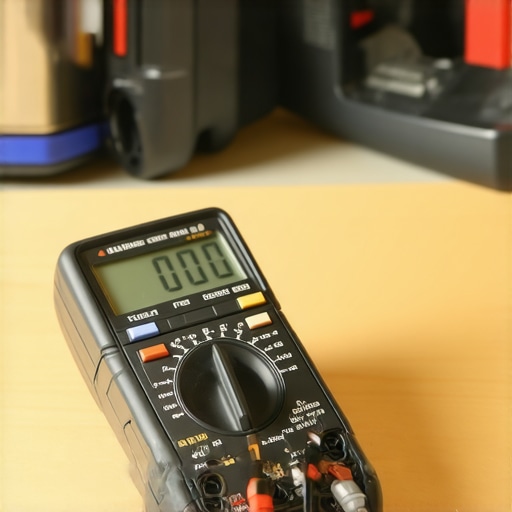
Why Your Future Machine Will Fix Itself
We are heading toward an era where why your smart dishwasher keeps asking for a software update will be more about predictive failure than just new wash cycles. I predict that by 2027, most mid-range units will include internal flow-rate sensors that can detect a drain clog before it even happens, automatically reversing the pump to clear it. For now, you have to be the brain of the operation. This means understanding dishwasher parts a key to effective maintenance is your best defense against planned obsolescence. Don’t wait for the ‘check water’ light to blink. Take ten minutes this weekend to follow the proper way to clean your unit without harsh chemicals. Try the shop vac trick next time your machine won’t drain; it’s an absolute game-changer for clearing lines without making a mess.
What My Years of Repair Calls Taught Me
I’ve spent a decade crawling under sinks, and if there is one thing I’ve realized, it’s that the ‘manual’ is just the starting line. Here is the real-world wisdom you won’t find in the box:
- The ‘Self-Install’ Penalty: Many people don’t realize that why your warranty claim fails without an authorized receipt often comes down to the technician’s notes. If they suspect a DIY error, the manufacturer will fight you on every penny.
- Software Isn’t Always the Answer: While we see why your smart dishwasher keeps asking for a software update as a sign of progress, it’s often a patch for a physical sensor struggling with hard water.
- Documentation is King: I always tell my clients to save the physical receipt with specific wording. Knowing the specific receipt wording that saves your extended warranty is the difference between a free replacement and a $900 bill.
- Maintenance Beats Repairs: It sounds simple, but understanding dishwasher parts a key to effective maintenance is the only way to avoid the ‘planned obsolescence’ trap that plagues modern machines.
[image_placeholder]
My Go-To Resources for a Flawless Setup
You don’t need a massive workshop to keep your kitchen running smoothly. I rely on a few specific items to ensure expert advice on dishwasher installation troubleshooting stays practical:
- A Reliable Multimeter: You cannot guess if an electrical component is dead. Learning how to test your thermal fuse with a basic multimeter turns you from a frustrated owner into a surgical fixer.
- The Shop Vac: It sounds overkill until your kitchen floor is an inch deep in greywater. I’ve found why a shop vac is the best way to clear a clog is the number one secret for clearing lines without damaging the pump.
- High-Density Buffers: Standard insulation isn’t enough for high-end cabinets. Using the sound dampening tricks professionals use, like adhesive foam strips, is the only way to get true silence.
Take Back Control of Your Kitchen Silence
Your dishwasher should be a tool that serves you, not a source of stress that rattles your nerves or drains your bank account. By mastering these small adjustments—from the mounting screws to the sensor hygiene—you are ensuring your investment lasts as long as the cabinets it sits in. Don’t be afraid to get your hands a little dirty to keep things running clean. Mastering top tips for seamless dishwasher installation in 2025 is within your reach. Have you ever felt like your ‘silent’ machine was actually a ghost in the machine? Let me know your loudest dishwasher stories in the comments below!
Related Posts
How to Spot a Failing Drain Pump Before Your Kitchen Floods
Ever had that sinking feeling when you open your dishwasher…
The Truth About DIY Dishwasher Door Spring Repair
Have you ever stood in front of your dishwasher, water…
How to Clear a Stubborn Clog in Your Circulation Pump Housing
It was a morning like any other, but as I…