
I was staring at a literal mountain of lasagna-crusted plates when my machine decided it was “open” even though I had slammed it shut three times. The silence was deafening. No hum, no water—just a blinking light mocking my life choices. We have all been there, right? You are ready to clean up after a long day, and a tiny, plastic component decides it is the boss of you. Last year, I made the huge mistake of trying to jam a screwdriver into the latch mechanism to “trick” it, which nearly fried my entire control board. Don’t do that. It was a costly lesson in why understanding common dishwasher parts and how to replace them effectively is better than brute force. Today, I am going to show you how to handle this situation without a panic attack. We are talking about a temporary fix that keeps your kitchen from smelling like a swamp while you wait for the repairman.
Don’t Let a Broken Sensor Ruin Your Kitchen
Dealing with a faulty sensor is more than just an annoyance; it can actually lead to standing water that ruins your flooring. If your unit refuses to recognize that it is closed, you cannot even run a drain cycle. I have found that knowing how to bypass a faulty door latch for emergency drainage is a literal lifesaver when the tub is full of grey water. It is about taking control of the machine until you can look into how to diagnose dishwasher parts during warranty periods. Have you ever been stuck with a full dishwasher that simply refuses to start? Tell me your horror stories in the comments!
Is This Little Trick Actually Safe?
I know what you are thinking. Messing with door sensors sounds like a recipe for a flooded kitchen or an electrical fire. You are right to be skeptical. According to the Electrical Safety Foundation International (ESFI), nearly 51,000 home electrical fires occur each year, and many involve household appliances. This is exactly why we aren’t “rewiring” the brain of the machine. We are using a focused, safe method for emergency use only. This isn’t a permanent lifestyle change for your dishwasher; it’s a bridge to get you through the night. If you’re still worried, remember that even why your warranty covers parts but not the trip fee makes it worth learning these small DIY saves. Now, let’s get into the nitty-gritty of how these latches actually communicate with your control board.The door latch is basically a gatekeeper that tells the control board, ‘Hey, the coast is clear, go ahead and drown those plates.’ Think of it like a secret handshake between the mechanical handle and the electrical brain. Most modern machines use a magnetic reed switch or a microswitch. If the plastic housing cracks—which happens more than you would think—the handshake never happens. I remember one Friday night when I was hosting a housewarming party and the unit just quit with three inches of soapy water in the bottom. I could not even get it to drain because the latch was physically ‘open’ in the eyes of the machine. I had to quickly learn how to find your units hidden model number for replacement parts while holding a flashlight between my teeth just to figure out what kind of sensor I was dealing with.
Fool the Sensor to Force a Drain Cycle
If your machine uses a mechanical switch, you can often use a small, non-conductive tool like a plastic toothpick to gently depress the internal lever. For magnetic sensors, a simple refrigerator magnet placed over the sensor area can sometimes trick the board into thinking the door is sealed. However, you must be incredibly careful. If you over-pressurize the latch or use the wrong force, you might need to look at common dishwasher parts and how to replace them effectively sooner than planned. This ‘trick’ is solely to allow the machine to run a 2-minute drain cycle. Never run a full wash this way; you will end up with a literal indoor pool. 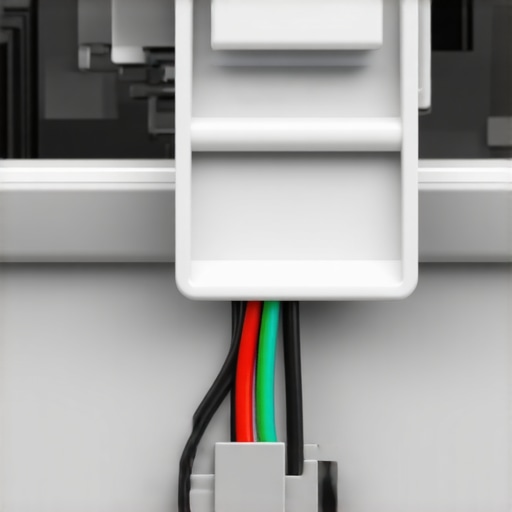
Protect Your Future Warranty Claims
One thing most people forget is that ‘creative’ fixes can leave marks. If you gouge the plastic or short the wires, you are going to have a hard time when you try how to get your warranty claim approved on the first try. When I did my emergency fix during that housewarming party, I was careful to use a plastic shim instead of a metal screwdriver to avoid scratching the contact points. This helped me later when I had to explain the situation to a technician. You should also understand the difference between mechanical and digital float switches, as these often work in tandem with the door latch to prevent overflows. If the latch is bypassed but the float switch is stuck, the machine still will not start, and you might think the latch fix failed when the real problem is deeper in the tub.
Verify Proper Alignment Before Final Assembly
Sometimes the latch is not actually ‘broken,’ it is just displaced. I once spent forty minutes trying to bypass a sensor only to realize the mounting bracket had shifted slightly because I had not used the proper tool to use when tightening your water supply line during a previous maintenance check, which caused the whole machine to sit crooked. A slight tilt can prevent the latch from seating correctly. Before you start pulling wires, check the level of your machine. This is one of the essential parts for troubleshooting dishwasher installation issues that can save you a $150 service call. If the unit is level and the latch is definitely the problem, then you can proceed with the emergency use bypass to get that nasty water out of your kitchen. Always document your steps, as knowing how to diagnose dishwasher parts during warranty periods requires clear evidence of what happened and when.Once you have managed to drain your machine using the emergency bypass, you might feel like a DIY hero. But this is exactly where most homeowners walk into a financial trap. We are taught that a manufacturer’s warranty is a safety net, but in reality, it is often a sieve. One of the most contrarian takes I have is that your standard warranty is frequently less valuable than a well-vetted third-party insurance plan. Why? Because most people do not realize that why your warranty covers parts but not the trip fee can leave you with a $200 bill for a $5 sensor. If you are not careful, you will end up paying more for the ‘free’ repair than you would have spent on the part itself.
The Fine Print That Costs You Hundreds
Most people assume that if a part fails, it is covered. However, I have seen dozens of claims denied because of environmental factors. For example, did you know that having a water softener can actually backfire? It sounds crazy, but why soft water is ruining your dishwasher interior faster than hard water is a real phenomenon where the lack of minerals causes the water to strip ions directly from the metal and glass, leading to etching and premature seal failure. This isn’t considered a ‘manufacturer defect,’ and it is a quick way to get your claim tossed out. 
Why Your Professional Installer Refused Your Old Parts
Here is the ‘oops’ factor that ruins many weekend projects: the temptation to reuse the old brass fittings or the power cord from your previous machine. You might think you are being frugal, but why your professional installer refused your old cord is actually about fire safety and preventing slow-growth leaks. An old brass fitting has already been crushed to fit the previous valve; forcing it onto a new one is a recipe for a leak that won’t show up for three weeks—usually right after you’ve put your tools away and forgotten about it. This is why understanding dishwasher warranty policies for peace of mind starts with using brand-new installation kits every single time.
Can You Actually Win a Warranty Dispute Without a Pro?
According to a report by the Association of Home Appliance Manufacturers (AHAM), the average dishwasher is designed for a 10-year lifespan, yet many ‘total failures’ are actually just neglected maintenance issues that void your coverage. To win a dispute, you need a paper trail. If you cannot prove you performed the one maintenance task that doubles the life of your gasket, the manufacturer can claim ‘user neglect.’ When I deal with these companies, I always show them my log of filter cleanings and seal inspections. It makes it nearly impossible for them to argue that the failure was my fault. It is all part of how to get your warranty claim approved on the first try. Before you call the 1-800 number, make sure you know exactly what your dishwasher warranty doesnt cover and how to avoid fees. Have you ever had a warranty claim denied for a ridiculous reason? Let me know in the comments, I’d love to hear how you handled it!If you want to avoid those high-stress nights where you are manually scooping water out of a tub, you need to invest in a few key pieces of gear. In my experience, the most underrated tool in any homeowner’s arsenal isn’t a fancy wrench—it is a standard wet/dry vacuum. I’ve found that why a shop vac is the best way to clear a clog becomes incredibly clear the moment you realize it can pull debris out of a drain hose that a plunger could never touch. Beyond that, I keep a basic multimeter in my junk drawer. Being able to check for continuity means I can figure out how to test your thermal fuse with a basic multimeter in five minutes, rather than waiting three days for a tech to tell me the same thing.
Put a Stop to Leaks Before They Start
I’m a huge advocate for proactive scaling. Most people wait for a puddle to appear before they act, but by then, the subfloor is already soaking up moisture. I personally use the $20 smart sensor that detects leaks before your kitchen floods. These little pucks sit under the kickplate and scream (or alert your phone) the second a drop hits the floor. It is a tiny investment that protects your kitchen and helps with maximizing your dishwashers warranty coverage today because you can catch failures before they cause ‘secondary damage,’ which is almost never covered by standard policies. 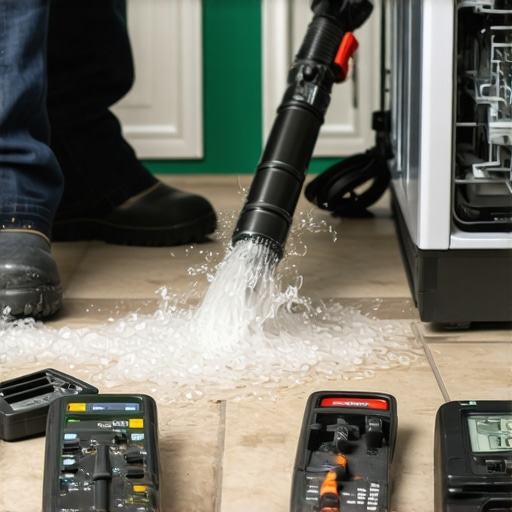
How do I maintain my dishwasher components over the long haul?
Maintenance isn’t about deep cleaning the door once a year; it’s about the small, repetitive actions that protect moving parts. I’ve discovered that the one maintenance task that doubles the life of your gasket is simply wiping down the rubber seal with a damp cloth every single week to remove food acids. Additionally, you should perform the 3-minute hack to clear your spray arm nozzles every month. If those holes get plugged with mineral deposits, the pump has to work harder, which leads to premature motor burnout. According to the Residential Construction Performance Guidelines by the National Association of Home Builders (NAHB), dishwasher drain-line loops should be inspected every six months to ensure no sagging has occurred, which can cause ‘stinky dishwasher’ syndrome.
The Shift Toward Self-Diagnostic Hardware
Looking ahead, the trend is moving toward machines that tell you exactly which part is failing before it actually dies. We are seeing more units with internal flow-rate sensors that can detect a failing water inlet valve days before it stops opening. This shift makes understanding dishwasher parts a key to effective maintenance even more critical. If your machine gives you an error code, don’t just reset it—lookup the specific voltage requirements for that sensor. If you really want to stay ahead of the game, I challenge you to go under your sink right now and check your drain hose; if it doesn’t have a high loop, fix it tonight to prevent backflow contamination immediately.
What Most Technicians Won’t Admit About Your Machine
After years of tinkering with latches and pumps, I’ve realized that the biggest threat to your appliance isn’t a mechanical failure—it’s a lack of proof. You can follow every step in my guide, but if you don’t know how to prove pre-existing damage before your installer leaves, you’re at the mercy of their corporate policy. I’ve also learned that why your warranty claim fails without an authorized receipt is the number one reason people lose hundreds of dollars. It’s not just about fixing the part; it’s about managing the paperwork as if it were a legal defense. My lightbulb moment came when I realized that a $5 gasket is worth $500 in flooring repairs if you catch it early.
My Go-To Gear for Appliance Troubleshooting
If you want to move beyond simple ‘tricks’ and actually master your kitchen, you need three specific tools. First, stop guessing about electrical issues and learn how to test your thermal fuse with a basic multimeter; it’s the difference between a 10-minute fix and a $300 service call. Second, I cannot recommend the $20 smart sensor that detects leaks before your kitchen floods enough—it is the best insurance you can buy. Finally, remember that why a shop vac is the best way to clear a clog is a secret weapon for removing standing water and debris without getting your hands dirty. These aren’t just gadgets; they are the frontline of defense for your home.
You Are More Capable Than You Think
Don’t let the blinking lights and complex sensors intimidate you. Most of the time, the solution is just a matter of patience and having the right information at hand. By maximizing your dishwashers warranty coverage today through proactive maintenance, you ensure that your kitchen remains a place of convenience rather than a source of stress. Remember, understanding dishwasher parts a key to effective maintenance is a skill that pays for itself every single year. Have you ever successfully talked a manufacturer into covering a repair they initially denied? Let me know in the comments below!
Related Posts
Why Your Door Springs Are Squeaking and How to Fix Them
I remember the first time it happened. I was trying…

The $5 Gasket That Fixes 90% of Door Edge Leaks
It was a frustrating weekend when I finally realized that…
The Most Reliable Way to Test a Thermal Fuse
I was standing in a puddle of cold, greasy water…